Episode #377: Legal essentials that help dentists grow with confidence with attorney Evan Sampson
Listen Now
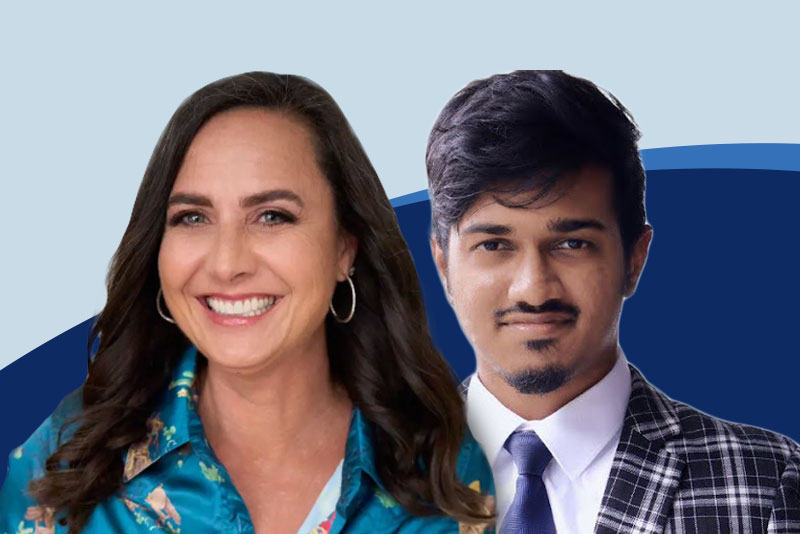
In this episode of the Less Insurance Dependence Podcast, Don Adeesha and Naren Arulrajah dive into a powerful topic: how to earn your patients’ trust—so much that they value your care more than their insurance.
Naren shares real-life tips, simple examples (like a gift card analogy), and personal stories to show how trust can be built at every step—from the first phone call to every patient visit. You’ll learn why most patients already trust you more than their insurance, and how your team can reinforce that trust by being caring, personal, and consistent.
If you’re ready to create lifelong patients who say “yes” to ideal care—not just what insurance allows—this episode is for you.
Podcast: Play in new window | Download
Subscribe: RSS
Naren Arulrajah: This is the Less Insurance Dependence podcast show with my good friend Gary Takacs and myself, Naren Arulrajah.
Gary Takacs: We appreciate your listenership, your time, and most of all, we appreciate your intention to reduce insurance dependence in your practice. Our goal is to provide information that will help you successfully reduce insurance dependence and convert your practice into a thriving and profitable dental practice that provides you with personal, professional and financial satisfaction.
Don Adeesha: Welcome back to another episode of the Less Insurance Dependence podcast. Today we are talking about something that really gets to the heart of dentistry. How do you build a practice that patients trust more than their insurance company? I’m Don Adeesha, your co-host for this episode. Let’s face it. Insurance was never designed to define ideal care. Yet too often patients let their benefits dictate what they’ll say yes to. To dive into this, I’m joined by my co-host, Naren Arulrajah, CEO of Ekwa Marketing, and someone who’s passionate about helping dentists create freedom by helping patients choose quality care over insurance limitations. Naren, welcome back to the Less Insurance Dependence podcast.
Naren Arulrajah: Thank you so much, Don, for having me. This is an awesome topic. How do you build a practice patients trust more than their insurance, and I’m really looking forward to this conversation. How do you build a practice patients trust more than their insurance? And the reason I’m excited about this topic is, at the end of the day, healthcare is one of those places where trust is perhaps the most important currency. You remember, healthcare is personal to everyone, right? I mean, that’s the number one thing we worry about, right? Death and pain and suffering that comes with illness. So when you are this provider who helps with solving those problems, they have to trust you. So knowing that’s the highest orbit, that’s the most important thing, and being able to harness that, I think is a very powerful way to thrive regardless whether you’re a PPO practice or not. So really, like building patient trust is a conversation I’m really looking forward to having, Don.
Don Adeesha: Absolutely love that introduction, Naren. So now, you talk a lot about helping dentists create independence from insurance. Why is it so many patients still trust their insurance more than their dentist?
Naren Arulrajah: You know, that’s a great, great, great question, right? Unfortunately, or fortunately, humans are creatures of habit. And you know, most people, those who are employed, perhaps have something that the employer gave them as a benefit called this, you know, insurance coverage. And they’re like, oh, well, just kind of like the Christmas holidays, right? You get gifts and sometimes you get gift cards, and you are not a huge fan of that particular store, but you have a gift card, so you will use it, right? You don’t want it to go to waste. So it’s kind of the same thing. So when you go to that store, you ask the question, "Hey, I have this gift card. Do you take it?" Of course, if they’re not gonna take the gift card, you don’t want to buy from that store because you’re not a huge fan of that store.
Naren Arulrajah: So the only reason you’re there is because of that gift card. Now, unfortunately—or fortunately—for practice owners and dentists, that’s different. Nobody’s choosing you because you are on the PPO plan. They’re choosing you because you had wonderful Google reviews. They’re choosing you because you showed up on Google for everything they were looking for. So they’re choosing you, and then they ask the question, "Oh, by the way, I have this plan. Do you take my insurance?" So really, they’re trusting not the gift card or that free benefit they got that they didn’t pay for—remember, we don’t appreciate things we don’t pay for. They’re really trusting you. That’s why they went to Google. That’s why they looked up your reviews. That’s why they are calling you versus everybody else based on what they saw. So you really need to play into that trust.
Naren Arulrajah: So I think the mistake that practices make is when that patient asks the question, "Do you take this insurance?" they think that there’s no trust. They think they are not that important. So instead of building on that trust and that belief that the patient had even before they made that call, they start going down this rabbit hole of, you know, "Yeah, we are on this plan, we are not on this plan, we… you have to pay copays," and this and that. And nobody’s asking about copays, because I’ve listened to hundreds and hundreds of calls from—thousands of calls from—our clients. And patients are not asking for that. They’re just like, "I trust you, that’s why I’m calling your office because of everything I saw online. But I do happen to have this benefit—would you take it?"
Naren Arulrajah: So the way to deal with that is to say, "Yeah, of course, we have many, many patients from X, Y, Z employer," because, you know, more than likely these are big companies, "and we would love to help you just like we help all your colleagues. We have an insurance coordinator who will fight for you and will help you get every penny." That’s all they want to hear. And then book that appointment, right? So I do think this idea of leaning in on that trust and building that trust—not just on the first phone call but overall—is a great way to go. Instead of assuming patients trust the insurance—they don’t. The only reason they’re even mentioning it is because it’s a free benefit they have, and they don’t want to not use it. That’s all.
Don Adeesha: I love it. I love that gift card analogy right there, because that just makes it so much more easier to digest. As well as, of course, patients already trust you a little bit, but they want to ensure, you know, if they can use their gift card, why not go ahead and do it?
Naren Arulrajah: Exactly.
Naren Arulrajah: It is just a method of payment or method of reducing payment, versus the reason they come to you is because they trust you. So remember that—it’s all about trust. So the marketing and the Google reviews, those things will build trust. But then your job is, even during every visit, every conversation, to continue to reinforce that trust. Continue to show them you are not about getting paid, but rather you are about taking care of them. You know, you are about—"For example, I suggest we do this because…" For example, somebody has gum disease, because we know there’s a correlation between gum disease and heart attacks. And I remember when you first came in as a patient, you said you have people in your family who have heart disease. So we really need to take care of this because we don’t want to be waking up one day and, you know, because we didn’t take care of your gums…
Naren Arulrajah: You are now, you know, at much higher risk of getting a heart attack. So educating, showing that you care, helping them understand why they came to you—for better health, better smile, those outcomes—and connecting the dots, because they don’t know what they don’t know. You have to show them that you are the advocate and that they’re in good hands. And that’s how you build a lifelong relationship. I have clients who have patients from three, four generations—the dad, then of course the granddad because the granddad is the first client, then the dad, and then the kids, and then the kids’ kids—like four generations. We have clients where patients fly in from the new town they moved to, you know, 2,000 miles away, because they have this amazing relationship.
So really, really build on that trust. Treat them like family. Educate them. Help them understand things they don’t know. And that’s how that bond strengthens. And then they invite all of their family to be part of your practice, and they tell all of their friends to be part of your practice. So, sorry for going off on the tangent, but hopefully it really illuminates what I’m trying to say about trust.
Don Adeesha: Absolutely, Naren. And you know, I truly love that—educating the patients, showing not just telling, right? But trust doesn’t happen overnight. How do practices build lasting trust so patients come to believe in their recommendation?
Naren Arulrajah: Yeah, I think there’s a few tips that I would recommend. And trust is perceived as well as real. So real means, you know, the way you communicate with them, the way you talk to them. And trust me, we trust people who we like. So, you know, even something as simple as remembering some personal details about something happening in their family—for example, let’s say they went on a vacation, asking them about the vacation. So we’re like, "Oh, this person cares about me so much that they know me as a human being, not just as this patient in their appointment book," right? Or they have a daughter who’s in university and, you know, inquiring about that daughter—somebody they’re very proud of and excited about.
So trust can be built by being interested. I love that quote from Dale Carnegie. He says, you know, the best word in the dictionary for any one of us is our name—using our name, asking about things that we care about. The more I’m interested in you, the more you are interested in me. So I really think that’s where trust starts. It’s not about showing how smart you are and how many degrees you have and bragging about yourself—"I won this award" and "I won that award." If you want to transmit those messages, do it humbly, meaning it’s on your website, it’s hanging on a wall somewhere without you bragging about it, right?
You want those things to come out—or let somebody else do that bragging for you. So your team, your receptionist—"Oh, by the way, patient is interested in implants. Our doctor has done 400 implant cases over the last 20 years. Here are some of the cases he has done. Look at the walls and the beautiful smiles he has created." It’s much better coming from someone else.
So you can build trust. If I were you, the doctor, I would build trust by being interested in people. I would credential you through the website and through other people. I would get Google reviews—another way, you know, to build trust. Like today, the minimum requirement in my mind is you have to get 10 or more five-star Google reviews every month. So that’s another way of building trust. Because when you keep accumulating these Google reviews, even Google trusts you more and sends you more patients, and your patients trust you more because you have these wonderful paragraph five-star reviews. And they’re piling up—piling up. Every month, more and more ones are getting added.
Naren Arulrajah: So trust is something that you have to work on—direct, indirect. And part of this is helping your team to understand this thing about trust, helping your team to understand you are not an insurance practice. You are rather a practice that’s about helping patients and building that trust. So they also start changing—instead of getting caught up on "what insurance," and "what’s a copay," and this and that, and all the other nonsense which reduces trust. Now it makes you a commodity.
They’re interested in finding out about the patient. Some new patient calls and wants a beautiful smile. Why? Oh, they’re having a wedding coming up for their daughter—talking about that. Oh, a military family moved into town—and, you know, appreciating the spouse who’s in the military and saying, "We are so grateful and thankful for you. By the way, we have a special membership plan where you save money with our membership plan because you’re in the military."
You know, like really making them feel appreciated, really building that relationship and that trust. So I do think this is something people have to work on. It’s almost like a cultural thing—realizing you are in a unique business where people are worried about not doing the right thing. So trust becomes key. That relationship becomes key. And working on it, even in the morning huddle—reviewing the patients you’re going to see that day and knowing a little bit about each of them so you can personalize those conversations. You know, "Hey, for Sally, it’s her daughter in university." "For Sam, it’s the vacation he just took." Just 10 minutes, five minutes, just reading through the notes and getting ready for the day. These are all wonderful ideas to build trust.
Don Adeesha: Absolutely. And Naren, you know, I really like that quote you made—"Know me as a person and not just as a patient." So I’m wondering over here, what role does marketing play into all of this trust, right? How do you use marketing to support that idea of care, and not just discounts or coverage?
Naren Arulrajah: Yeah, that’s a great, great, great question. And the way I think about it is—you know, you go to a conference and you have the keynote speaker, and he’s not a paid speaker, meaning he’s not a sponsored speaker where some sponsor is paying him money to give that talk, right? Who do you trust? You trust the one who is unpaid—who’s the keynote speaker. I mean, not unpaid in the sense of not being compensated at all—you might have paid him as the conference to bring him there—but he’s not paid for by XYZ company to pitch ABC product, right? So that is huge.
We all know the minute somebody’s paying someone to speak or say something, we don’t trust them, right? You don’t trust people who are paid versus those who are lecturing to speak. You know, like for example, Dr. Kois. I know a lot of people have such a huge admiration for him because he’s not paid for by sponsors. He’s paid for by his clients for his wisdom and his knowledge, right?
So I think today most people use Google. Like, we use Google 12 billion times a day. Three billion users are using Google every day. In the US, Google has a 92% market share. That’s how we figure out things today—whether it’s a restaurant, or a dentist, or "I need implants, who can we go to?"—we just use Google.
And there are two parts to Google. One is SEO, where you show up organically—it’s kind of like that keynote speaker. Versus Google Ads, which is like the sponsored speaker. We don’t trust the sponsored speaker. So studies are showing that the average person who clicks on a Google Ads link can only give you 15 seconds. Why? They don’t trust you. The minute they see something that spooks them, they leave.
The person who clicks on SEO—they trust you. That’s why they started using Google in the first place—to find out what the organic results are. So they stay 90 seconds—six times more, 600% more—on your website. Not looking to find a reason to leave, but rather looking to find a reason to make that phone call: "Yeah, I want to… I’m pretty sure he’s good, but let me double-check. I’m looking at the reviews, I’m looking at the cases," and so forth.
So I really think that’s another example of trust. SEO is about patients trusting you the minute they land on your website. Versus Google Ads, which is about patients mistrusting you. And that’s why Google Ads can cost tens of thousands of dollars. And also you have a lot of no-shows because people don’t trust you. So they’re not committed to you. Because they’re not committed to you, they don’t show up.
Or even conversion rates, right? The amount of people who book appointments versus not. When you compare the conversion rate of Google Ads, it’s much lower because they don’t trust you.
So, you know, I really think on the marketing side, I would lean into SEO. Another thing that all of us can do is Google reviews. So 10 or more five-star Google reviews—that’s my recommendation, Don, when it comes to Google, right?
Focus on SEO because it comes with trust. Don’t focus on ads because it comes with no trust—because it’s an ad. Same thing, right? Everything organic that we talked about in the practice—the way you build relationships, the way you speak to clients—these are all organic ways of building trust. And I’m a very big fan of organic because that works. There’s no catch, there’s no nothing. It’s just real.
SEO is real. So are those honest conversations. Ads are ads. Anybody can pay for it and get it. So lean more toward things that are real versus, you know, artificial like ads.
Don Adeesha: Really appreciate that analogy right there, Naren—you know, the keynote speaker that’s unsponsored at an event—and how that just correlates into organic Google results. How both of those organic movements just build trust immediately, instead of looking at it from a perspective where they’re getting paid by XYZ sponsor. You mentioned it absolutely explicitly, and that’s fantastic. Thank you so much.
Now, Naren, this is such a great perspective to really think through, right? Now, for practices ready to move in this direction to help patients choose that ideal care, what’s really the next step?
Final Thoughts
Naren Arulrajah: Yeah, I think the next step is booking what we call a Marketing Strategy Meeting. The link is .lessinsurancedependence.com/marketing-strategy-meeting. And just go to that link and you book a Marketing Strategy Meeting. Our team will look at every one of your competitors. We look at your town, your city, your own website, your own marketing, and we’ll tell you how you are doing on everything from trust to SEO. Are you ranking? Are you not ranking? If you’re not ranking, why? If you are ranking, why? So they’ll do a thorough analysis on giving you a "State of the Union," so to speak—where are we?
And also they’ll give you a plan—like, okay, you are currently a C or a D when it comes to NAP (Name, Address, Phone consistency). One of the things that Google cares about for SEO—here’s what you need to do to get to an A.
So not only will they give you a report card, State of the Union, but also they’ll give you a plan on where you get to that top 5%, top 10% that’s dominating the market. See, marketing, like anything else in life—just like the degree you got to become a dentist—can be achieved. You need to work on it. There’s a plan to it. You need to just stick with it, and you’ll get there.
So get the report card that tells you where you are and get the plan. That’s our gift to you as we reign in this new year. So, lessinsurancedependence.com/msm—go to that link, book that Marketing Strategy Meeting, and get the report card and the plan. And then what you do with it is up to you. Hopefully, you take advantage of it and you decide you want to build trust, you want to dominate SEO, and you want to do really well in 2026.
Don Adeesha: Wonderful. And that’s such a powerful reminder right there—building trust isn’t about competing with insurance, it’s about showing patients that ideal care is worth it. When patients understand that your goal is their long-term health and not just a quick fix, they’ll follow your lead every single time.
So with that being said, thank you, Naren, and thank you to everyone listening in. We’ll see you next week on the Less Insurance Dependence podcast.
Patients don’t come to you for your PPO plan—they come because they saw your reviews and trusted what they read.
Naren Arulrajah
Building trust isn’t about telling—it’s about showing. Patients believe in care when they see that you care.
Don Adeesha
 One of Gary's most significant achievements as a dental practice management coach is transforming his own practice, LifeSmiles, from one that was infected with PPO plans, no effective marketing strategy, and an overhead of 80% to a very successful dental practice that is currently one of the top-performing practices in the US.
 As CEO of Ekwa Marketing, Naren has over a decade of experience working with dental practices and helping them attract the ideal type of patients to their practices. It is his goal to help dentists do more of the type of dentistry they love with the help and support of effective digital marketing.