Episode #375: How do you build a practice that patients trust more than their insurance company
Listen Now
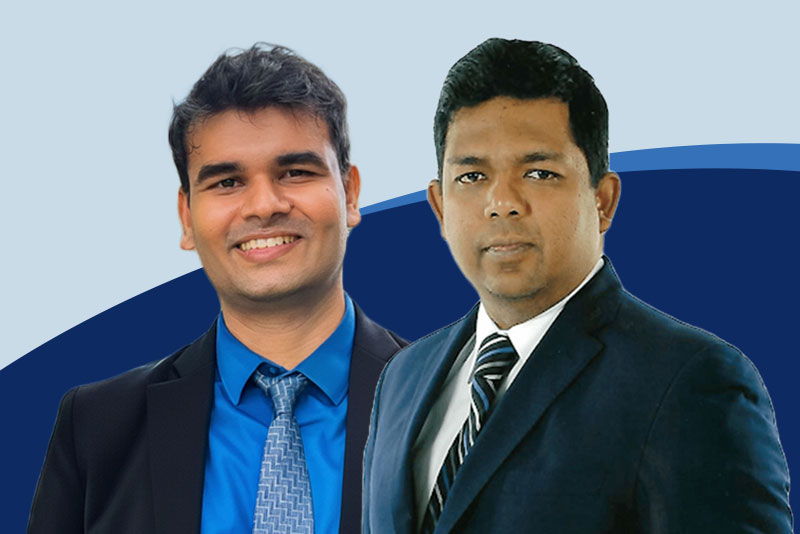
In this episode of the Less Insurance Dependence Podcast, Lester De Alwis sits down with Dr. Vishal Sharma, Director of Clinical Education at Spear Education, to explore how hybrid clinical education and AI-supported learning are reshaping the future of dentistry. Together, they unpack how blending in-person training with virtual tools improves accessibility, accelerates skill development, and empowers dentists to deliver higher-value care, without relying on insurance-driven models. This conversation highlights why modern education models are no longer optional, but essential for dentists seeking clinical excellence, efficiency, and long-term practice independence.
Podcast: Play in new window | Download
Subscribe: RSS
Intro: This is the Less Insurance Dependence podcast show with my good friend Gary Takacs and myself, Naren Arulrajah.
Intro: We appreciate your listenership, your time, and most of all, we appreciate your intention to reduce insurance dependence in your practice. Our goal is to provide information that will help you successfully reduce insurance dependence and convert your practice into a thriving and profitable dental practice that provides you with personal, professional, and financial satisfaction.
Lester De Alwis: Welcome to another episode of the Less Insurance Dependence podcast, your trusted source for strategies and insights that help dental professionals take control of their practices and careers. I’m your co-host, Lester De Alwis, and today we are diving into one of the most exciting shifts happening in dentistry: the rise of hybrid clinical education.
Joining me is Dr. Vishal Sharma, Director of Clinical Education at Spear Education and a practicing clinician who is helping lead this transformation. Dr. Sharma’s work focuses on blending in-person instruction with advanced virtual tools, giving dentists access to hands-on training without the traditional barriers of travel, time, or cost.
In today’s episode, How Hybrid Training is Transforming Dentistry, we’ll explore how new training models are making continuing education more accessible, how they improve clinical performance, and how they empower dentists to deliver high-value care that supports independence from insurance.
But before we begin, a quick message from our sponsor. Ekwa Marketing is offering a complimentary marketing strategy meeting where their experts will show you how to attract high-quality patients, rank one on Google locally, and grow your practice organically. So if you’ve ever wondered about your online visibility, visit lessinsurancedependence.com/marketing-strategy-meeting to book your session.
And if you’re looking for mentorship to build a thriving fee-for-service practice, schedule a complimentary coaching strategy meeting with Gary Takacs at thrivingdentist.com/csm.
Now, let’s dive in. Dr. Sharma, we’re excited to have you here. Thank you so much for joining us.
Dr. Vishal Sharma: Lester, thank you. It’s a pleasure to be here. I’m looking forward to our conversation, and thank you for having me as a guest.
Lester De Alwis: Alright. So to begin, what sparked your interest in hybrid learning models, and why do you believe they are so important for the future of dental education?
Dr. Vishal Sharma: It’s a great question. Dental technology has been integral to the growth of my personal career and my practices, so that is a lever that has always been near and dear to my heart.
The better part of maybe nine years ago—nearing ten years ago—I had the opportunity to start teaching in-person workshops and seminars on that technology that was so impactful for my personal career.
And as time has gone by, you’ve listed some of the difficulties with in-person education: the cost of travel, time away from home, the difficulty with travel as well. I’m in Canada right now, where we’re in the midst of quite a snowstorm. I’ve got a flight tomorrow, and we’ll see if that flight is on time.
So with my background in technology and teaching on that technology, and as the evolution of our cohort—our customers or students—has progressed, you needed to really meet them where they were. I think the hybrid model is the next evolution of incorporating technology and reducing the impact of, and the difficulties of, in-person education.
That’s where the hybrid model comes into play: where you still focus on that in-person education, but there’s other supporting remote educational platforms that can help lessen the impact of traveling for a dental course.
Lester De Alwis: Amazing. And that’s a great foundation. So let’s talk about accessibility now. Hybrid training removes many traditional barriers to CE. How does this model improve accessibility for dentists looking to upskill?
Dr. Vishal Sharma: Yeah, historically, how dental education has worked is you came out of dental school with a base fundamental knowledge. Obviously, as the years have progressed, that level has to become much more sophisticated. When I graduated, we understood implants, we understood ortho, we understood aesthetics, but there wasn’t any focus on that because you were just coming out of school with the fundamentals.
Now, I think as a clinical practitioner, you are required to have at least a fairly deep understanding of that—maybe not an advanced understanding, but certainly much more profound than the rudimentary understanding that I had coming out of school. So you have that knowledge base, and you go into private practice.
For a lot of these early-career dentists, they have a significant debt load. School has become much more expensive. Running a practice has become much more expensive.
So now they’re needing to continue to invest in their skillset because that base level isn’t sufficient to support career growth. It’s just the base level of understanding.
So historically what we would do is sign up for courses based on pain points that you had as a dentist. If you needed to do better endo, or you felt that your surgical skills weren’t that profound, you would sign up for these courses and invest in the cost of travel, curriculum, tuition, etc.
Now, with the cost of education, dental education, the debt loads, the fact that a lot of these earlier-career dentists are working evenings and particularly on weekends—which is when we offer these courses—it now becomes difficult to justify traveling to upskill when you’re losing so much revenue and already have so much debt.
So that, I think, is where the hybrid model is so impactful. You can still get a high quality of education without all of the negatives associated with travel and dental education.
And we’re at a point now where the technology can support that. Whereas 10 or 15 years ago, the scanners that we had, the AI tools on prep analysis, the ability to print 3D endo or tech models, was really limited. Now we’re at a point where we have the technology, we have the communication platforms—like you and I are doing a Zoom meeting right now in two very different locations.
Yeah, melding all of that together allows us to take this hybrid approach, which certainly makes education more accessible for, I think, those professionals that would benefit from it the most.
Lester De Alwis: Exactly. So basically, what was once a dream is now just one click away. That’s great to hear about all this evolution that has taken place. Now, AI—how does hybrid learning impact clinical quality and support a dentist’s ability to deliver high-value care that isn’t driven by insurance restrictions?
Dr. Vishal Sharma: Well, I think it’s all about access, right? As we understand, you come out of dental school with that same base level of knowledge, but now if you’re starting to offer more advanced services—services that make you more appealing to a less insurance-driven patient—you have to have that skill set from somewhere.
And so with the hybrid aspect or the AI tools that support this, that access is now increased. More people can access it faster, more readily. We’re reducing a lot of the barriers that have historically been there.
So, if you talk about an insurance-based practice where it’s basic dentistry—which is still the lifeblood of a lot of practices: fillings, extractions, root canals—you still need that foundation. And these AI and hybrid learning models can help make those treatments more efficient, for sure.
But now, when you’re starting to add more complexity—implant restorations, orthodontics—having that availability at your fingertips, as you mentioned, Lester, before, that really just opens up access. So dentists get upskilled faster, at an economical aspect, and they have more breadth of education available.
So to me, that helps support not only every practice, but specifically those practitioners who want to become less dependent on an insurance-based model. Fee-for-service is what we aspire to, and I think having more advanced skills supports that.
Lester De Alwis: Amazing, amazing points. Great points. Now, AI is becoming more integrated into clinical training. How is AI being used to support diagnostic learning and objective skill evaluation?
Dr. Vishal Sharma: Yeah, I think it’s really the objective aspect that you were discussing. Historically, with dental education—especially in our model—it’s so subjective. And that’s really interesting because our career, the profession of dentistry, is all about microns and it’s all about megapascals. Outside of engineers, no one loves numbers more than—maybe—a mathematician and an engineer, and then dentists would be number three.
So it’s a profession that aspires to objectivity, and we’re moving away from the subjectivity. Even being able to analyze the quality of a root canal, the placement of an implant, and to be able to compare it with objective AI-supported evaluations—I think that gives more credence to the educational feedback from the subjective analysis. So that’s one component.
The other aspect, of course, is the machine learning components. Let’s take radiology, for example. Where you have bitewings that are determining decay—well, as more and more of those radiographs have been shared and taken, and you’re now having practitioners from all over the world either validating or listing this as a false positive—the sophistication, I’ve personally seen, has improved immensely.
So if you’re seeing that level of improvement on radiology, on all these other tools—prep analysis tools, how smooth your preparation is, how close to the endodontic orifice you are, how effective your fill is—all of that, under the lens or light of AI, it’s all going to be improved.
Lester De Alwis: Yeah, it’s fascinating to hear how, like I said, what was once a dream has basically evolved so fast.
Dr. Vishal Sharma: Yeah, it’s exciting stuff. Definitely.
Lester De Alwis: Exactly. Now, some dentists worry that training wastes production time. How can hybrid and AI-supported learning actually increase efficiency and revenue?
Dr. Vishal Sharma: Well, we know that whenever you are training, it’s an investment in the future. So it is going to have some level of cost. It’s your time, it’s your efforts, it’s the cost of education and travel. That gets compounded, Lester, if you’re now taking productive time away from your clinic. Most dentists who heavily invest in education will tell you that it’s certainly worth it, but there is an immediate expense.
If you can start to reduce the impact on your clinical time and your travel time—and even costs that are harder to put a figure to, like time away from your family—that just makes training more accessible.
So with the hybrid approach that we take, there is still an immense amount of value for in-person education. Being immersed in an environment where there’s 20 or 30 or 40 like-minded dentists, the sense of community, the access to a world-class instructor—you can’t substitute that, at least today. But you can still take that and augment and support it with remote learning.
Even hands-on hybrid exercises, where you can prep veneers or certain inlay or onlay preparations—things that are not within your current wheelhouse—where you can prep that in the comfort of your own clinic and get objective, virtual, and still subjective analysis from an instructor, that just makes things more accessible.
So that, I think, is how this hybrid AI-supported virtual learning is going to support the in-person workshops. It will decrease our reliance on in-person workshops—it won’t substitute, at least for the time being—but it’ll decrease our reliance on that. So it increases accessibility, decreases cost. That’s how I see it working, and that’s how, preliminarily, it has been working so far.
Lester De Alwis: Amazing advice. Now, for dentists wanting to adopt these technologies, what steps should they take now to prepare their practice and team for the future of education?
Dr. Vishal Sharma: You know, dentistry—one thing that I’ve always really liked about dentistry—is that it’s not so much an early adopter mentality. I think dentists by nature are a little bit more skeptical and cautious. That might change now with the next generation of dentists coming through, but in my cohort, and certainly the generation previous to me, there was always healthy skepticism.
I thought that was a good thing because we were never trying things on real patients in clinic, en masse, that would prove to be ineffective later on. Obviously, there’s going to be failures—that happens in any healthcare career—but this is one component with AI where I don’t think you can be left behind. It’s going to make your business and your clinical skills obsolete.
So my suggestion and advice would be: every office has some pain point or some area that they want to improve upon, or a skill set they want to strengthen. Target what that is. Seek out the tools that are going to allow you to solve that pain point, improve that weakness, or augment that strength. Then look at the technology that’s going to support that.
Now you’ve got all sorts of webinars that are available, or educational institutes that can support that investment. But before making that investment, do your due diligence. Take a course. If you’re interested in doing radiology, for example—which I think every office at this point should incorporate AI radiology—sign up for one of the webinars that one of the major companies have. Do some diligence.
If you are interested in doing in-office, same-day or same-visit crowns—which is a huge value from a patient’s perspective and an experience perspective—instead of investing in the technology and taking courses after, sign up for a course beforehand. Low-cost, maybe even a free webinar.
So you can get immersed in that technology or exposed to it to see if it’ll actually effectively solve your pain point. The one thing—and we’ve invested in a lot of technology in my clinical practice over the years, or when I was the Director of Operations for Canada’s largest DSO for a number of years, and we evaluated technology—the technology was supposed to solve that pain point, as I’ve mentioned. But sometimes, the technology is not yet sophisticated or mature enough to solve it.
So the other advice I would have is: not only do your due diligence before investing, but if it’s not effectively solving your pain point, wait a year. The technology can change so significantly. Maybe something will come out that will solve that pain point.
Lester De Alwis: Exactly. Exactly. Now, Dr. Sharma, if any one of our listeners is curious to get in touch with you or ask any questions they have, is there any way that they can reach out to you?
Dr. Vishal Sharma: Yeah, Vishal Sharma on LinkedIn is one great way. I’m hyper-responsive to electronic communication, so you can reach out that way. My email address is vsharma@cdocs.com.
CDOCS is an educational institute underneath the Spear umbrella, and I do some technical training on dental technology. So those would probably be the best ways.
And then I would encourage all of the listeners to go visit speareducation.com. We’ve relaunched our website. Our focus now is going to be heavily on next-generation learning experiences—these hybrid learning models where we may send you some hands-on exercises to your practice with supporting videos and AI tools. You may have an avatar who can answer questions that you have. You go through these exercises and either you’re sending that model back to us or digitally scanning it in, depending on what type of model it is.
We now have objective ways to analyze that work, give constructive feedback. We still do a subjective analysis. We still have one of our world-class faculty members—whether it’s endo, oral surgery, or prosth—evaluate that. And then we’re now sending supporting videos and education after that hands-on exercise to augment that skillset.
All of it eventually leads to an in-person workshop. But by the time you get to that in-person workshop, you have already augmented your skills, grown your skillset, so your time on campus is therefore more optimized. And instead of maybe coming back with a 15 or 20% skillset, we’re optimistic that you’re going to get a lot more out of that workshop.
Lester De Alwis: Amazing to hear. So to anyone listening in, if you want to get everything in one place, visit speareducation.com to get more insights and basically get the education and knowledge that you’ve been looking for.
So, Dr. Sharma, thank you for joining us today and sharing your mission for how hybrid learning is transforming dentistry.
Dr. Vishal Sharma: Thanks, Lester. Appreciate you having me on as a guest.
Lester De Alwis: So the key takeaway—when dentists embrace modern, flexible training models, including hybrid learning and AI, they improve clinical skills faster, deliver high-value care, and build practices that are stronger and less dependent on insurance.
And as always, this podcast is about taking action. First, schedule a complimentary marketing strategy meeting with Ekwa Marketing at lessinsurance.com/marketing-strategy-meeting if you ever want to have a health check on your online visibility.
And secondly, if you are looking for mentorship, book a complimentary coaching strategy meeting with Gary Takacs at thrivingdentist.com/csm. These are all free sessions—complimentary—and are designed to help you make the shift toward a thriving, insurance-independent practice.
Dr. Sharma, thank you again for being part of today’s conversation. And thank you to all of our recent listeners for joining us.
Until next time—keep moving forward, toward a thriving, independent practice.
If you want to attract patients who are less driven by insurance, you need advanced skills, and hybrid education gives dentists access to those skills faster and more economically.
Dr. Vishal Sharma
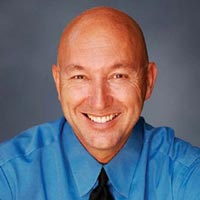 One of Gary's most significant achievements as a dental practice management coach is transforming his own practice, LifeSmiles, from one that was infected with PPO plans, no effective marketing strategy, and an overhead of 80% to a very successful dental practice that is currently one of the top-performing practices in the US.
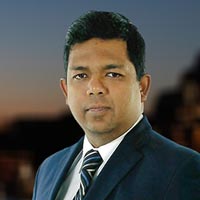 As CEO of Ekwa Marketing, Naren has over a decade of experience working with dental practices and helping them attract the ideal type of patients to their practices. It is his goal to help dentists do more of the type of dentistry they love with the help and support of effective digital marketing.