Episode #377: Legal essentials that help dentists grow with confidence with attorney Evan Sampson
Listen Now
In this episode of the Less Insurance Dependence podcast, co-host Lester De Alwis talks with Joanne Villani, co-founder of PreVu Software. Joanne has worked in dentistry for over 35 years and is on a mission to help more people feel confident about their smiles.
She shares real tips on how dental teams can get more patients to say “yes” to treatment — especially higher-value, fee-for-service care. They talk about why patients don’t move forward with treatment, how to build trust, and how tools like smile simulations can change everything.
Joanne explains why it’s not just about the money — it’s about showing people the value of what you’re offering. Whether it’s better communication, visuals, or using data, this episode gives you real ways to help more patients choose the care they need — and want.
Podcast: Play in new window | Download
Subscribe: RSS
Naren Arulrajah: This is the Less Insurance Dependence podcast show with my good friend Gary Takacs and myself, Naren Arulrajah.
Gary Takacs: We appreciate your listenership, your time, and most of all, we appreciate your intention to reduce insurance dependence in your practice. Our goal is to provide information that will help you successfully reduce insurance dependence and convert your practice into a thriving and profitable dental practice that provides you with personal, professional, and financial satisfaction.
Lester De Alwis: Welcome to another episode of the Less Insurance Dependence podcast, your trusted source for insights, strategies, and expert advice to help dental professionals take control of their practices and careers. I’m your co-host, Lester De Alwis, and today we are diving into a topic that’s top of mind for many practice owners, and that is how to dramatically increase fee-for-service case acceptance and grow revenue without being tied to insurance reimbursements. So joining me is Joanne Villani, co-founder and product specialist at PreVu Software, with over 35 years in the dental field—first as a clinical dental hygienist, and then as a sales and marketing executive focused on periodontal health, cosmetic, and implant dentistry. Joanne is passionate about one core belief, and that is everyone deserves a smile they feel confident about. She has helped dental practices skyrocket case acceptance for cosmetic treatments, smile makeovers, and full arch reconstructive cases, adding seven figures of annual revenue to many of them.
Lester De Alwis: But before we begin, I want to jump to a quick message from our sponsor. Ekwa Marketing is offering a complimentary marketing strategy meeting. In this meeting, their experts will show you how to attract high-quality new patients, rank #1 on Google locally, and grow your patient flow organically and sustainably. So if you ever wondered how your online presence is and where it stands, you can visit lessinsurancedependence.com/marketing-strategy-meeting to book your complimentary session. And if you’re looking for mentorship and ready to take your practice to the next level, schedule a complimentary coaching strategy meeting with Gary Takacs at thrivingdentist.com/csm .
And now, let’s get started. Joanne, we’re thrilled to have you here. Thank you so much for joining us.
Joanne Villani: Thanks, Lester. Thanks for having me.
Lester De Alwis: So, to kick things off, what inspired your focus on helping dentists increase fee-for-service case acceptance? And why is this so important for financial independence?
Joanne Villani: So my inspiration really wasn’t the dentist. My inspiration were patients. As someone who was a clinical hygienist for many, many, many years, I just loved helping patients to have beautiful smiles. As you said in the intro, one of my missions is to help people have smiles that they love and make them feel proud and make them feel confident. And I feel like if people have smiles that they love, they interact in the world in a different way, and it opens up a lot of possibilities in terms of their personal life. Smiles are the number one thing that people judge each other against when they’re meeting in dating situations. It’s the first part of a first impression—if people are smiling or not smiling, people are judging you for that.
So it was really one of the things that I loved to do—help patients to say yes to often cosmetic treatment, but sometimes things that they needed—to help them want it by seeing their aesthetic benefits from it as well.
Joanne Villani: But how that relates to dentists and increasing their fee-for-service is that many times those fee-for-service procedures are often aesthetic in nature. They’re more profitable for the practice, and you can do fewer procedures in a day and be less stressed if you’re doing more high-value. From a business perspective, it’s really important for the dentist to do things that increase revenue, especially since if you look at the numbers, a lot of times doctors are delaying retirement. Only about 4%, they say, are retiring financially free. And sometimes when they’re getting to that point in their career, when they’re looking to sell their practice, their practice really isn’t at the numbers that they need to be to be acquired for what they want.
So from my perspective, I just feel like it’s a win-win where we can really help patients, and by doing good for patients and offering them a higher level of service—where we’re also focusing on aesthetics or using aesthetics to help them to get the functional dentistry, which is often out of pocket or fee-for-service—we can also help dentists build their practices.
Joanne Villani: So it’s a win-win: helping patients and helping the business part of the dental practice.
Lester De Alwis: Exactly. It’s a win-win. I think that’s such a compelling origin story where you explained about the first impression—that basically, the smile is your first impression. Now it’s clear your passion comes from all those real-world experiences that you have been through. And speaking of roadblocks, let’s dig into roadblocks. So, in your experience, what are the most common barriers that prevent patients from saying yes to fee-for-service treatment plans?
Joanne Villani: There’s a lot of them, and there are so many that doctors don’t even think about. The first reason patients don’t say yes to treatment can often be because of trust. Especially if it’s a new patient in the practice, they just don’t know us enough to say yes. And sometimes, from a new patient, we don’t know where that patient came from, what their experience was, and if that dentist diagnosed the same. Because there’s really sort of a lack of standardization, I think, with patients—where, you know, they feel, rightly or wrongly, that if they go to one dentist and that dentist says they need this, and they go to another dentist and they say, “Oh no, you don’t need that”—patients don’t really know what to do. So they sort of need to wait from a new patient perspective and keep coming back into the office and build the trust.
Joanne Villani: So that would be one reason that they don’t move forward. Another reason would be treatment was never discussed. It’s really easy to talk to patients about things where there’s an issue—you’re in pain, your tooth is broken. It’s often less comfortable for many dentists and dental hygienists to actually talk to patients about things that are purely aesthetic. They don’t want to sell, they don’t want to offend. So oftentimes they’re waiting for those patients to ask them, and many times the patients actually don’t ask them. So there’s sort of a gap in things that were not discussed, and that is actually leaving a lot of money on the table. As a matter of fact, when we just talk about purely cosmetics, if you look at some of the research, they do say that practices can increase their revenue by 15 to 30% simply by focusing on aesthetics.
Joanne Villani: And really, if we think about it, the aesthetic part—cosmetic dentistry—that’s really the small side of this whole aesthetic boom. People are getting facelifts earlier than ever. Men are getting facelifts, men are getting hair transplants, they’re getting tummy tucks, mommies are getting mommy makeovers. So a lot of people are investing in themselves to look good and feel good, but in dentistry, we kind of feel awkward about some of these conversations. So they don’t happen.
Another reason is the patient doesn’t think it’s a problem—that we’re not showing them concretely it’s a problem. They’re coming in and many times they’re not having symptoms, so it’s not a problem enough to them to acknowledge and agree that it actually needs to be fixed. Or if they think it might be a problem, they don’t think it’s worth the fee they’re being asked to pay. You know, people have different values in what they want to spend their money on.
Joanne Villani: So a lot of times, patients—especially when we look at fee-for-service, more comprehensive dentistry, elective care, cosmetic care—it can be very costly to the patient. Often a car. So whenever we’re asking a patient to pay something that is significant in cost to them—and significant in cost to them can be $1,000, significant in cost to them could be $100,000 or anywhere in between—there is always some sort of process that the patient has to go through to see what is the cost and benefit, what am I getting?
And unfortunately, when it’s dentistry—especially if it’s functional and something that is really needed, full-mouth rehabilitation, for example—we’re focusing on the function and health, which absolutely we should. But often what triggers the “yes” is seeing the aesthetic, seeing the transformation and envisioning.
Joanne Villani: So by not helping patients understand the full benefits, they’re not saying yes. And I’d say the last one, probably—but this is really where doctors think this is the reason—is finances. I think that dentists who believe, and there are a lot that really believe this, and treatment coordinators as well: “My patients want it, they just can’t afford it. But if they could, they would do it. So it’s purely a money issue.” It’s never purely a money issue.
Sometimes it is the financing, but sometimes they can get that financing, but they’re not willing to do it. If you talk to some of the financing companies, they’ll say, “Yeah, people get approved, but they don’t say yes.” Money is expensive these days. It’s at high interest rates. People are being asked to pay those interest rates. They’re being asked to pay higher monthly payments or for a longer term, and they just don’t want to do it because we haven’t shown them all the value to do it.
Joanne Villani: And they use finances as a smoke screen. And sometimes it’s just out of fear. They don’t want to make the wrong decision. Sometimes doctors don’t realize that—especially if doctors are marketing for bigger cases or wanting to get into offering more comprehensive care in their marketing—people have other dentists they can go to. And when I started in dentistry, advertising was illegal. They couldn’t do it. Everything was word of mouth referrals. But now, especially for certain treatments, it’s highly competitive. The patients are going on multiple consults, and the doctors aren’t differentiating themselves. They’re not using all the tools, they’re not actually giving the patient experience that is needed or communicating things to a patient in a way that they need to see it and understand it.
So it’s pretty complex in terms of why a patient doesn’t say yes to treatment, but there’s a lot of reasons for it. And a lot of these reasons could be addressed in what we do in our exams.
Lester De Alwis: Perfect. I think, yeah, those barriers you just mentioned make total sense. And that’s so relatable from what I’ve heard from other dentists and other conversations that I’ve had with other experts. And all overcoming them starts on how we connect with the patients.
So, which brings me to the team dynamic part. How can the dental team—from front office to chairside—better communicate the value to patients and help them understand the long-term benefits of treatment?
Joanne Villani: So that’s tough because with our words, we can’t really convey things. So I think the use of visuals really helps. But I think it all starts with training your team and getting your team in alignment with what your vision and goals are as a dentist. Because unfortunately—and I see this a lot—even though we have great dental teams out there and great people as part of dental teams, a lot of times when it comes to things that are especially elective, a lot of the teams are sort of like, “Well, what’s in it for me? Why am I gonna take the extra step or go the extra mile and try to have this conversation with a patient about something that I don’t get anything for?”
So one of the things we kind of focus on when we work with teams is, this is the business that we all work for, and this business has to thrive.
Joanne Villani: I’ve talked to dentists that can’t even make payroll, where they’re just starting up and they’re really concerned and finances are an issue. And sometimes teams just think, “Well, I have a job and I come and I just do what I need to do.” But we all need to be in alignment with what is the vision of this office. And I do believe that case acceptance—I call it a team sport, if you want to say—it takes a team effort. It does start from the first phone call.
I think a lot of doctors don’t realize how their front office may be representing them—and maybe not in the best way. It’s so important to answer the phone and not have it go to voicemail, and be compassionate, and build rapport even from the phone. And show people on the phone what you do differently in your practice.
Joanne Villani: And then carry that through in the patient experience when they actually come into the office. It’s all about everyone having the same mission and understanding that the patient does not have to choose your office. While there are rural offices—and there certainly are areas where access to care is more challenging—in many areas, it’s highly competitive.
So when we come to work every single day, every single patient that’s in that chair, we have to try to give them the best experience possible. And I will say, when I started practicing, again, there was no advertising, but there were also no review sites like Yelp. And I do feel that there are a lot of reviews out there that are unfortunate and misguided, just because patients didn’t go to dental school and they don’t understand what’s needed. And they’ll talk about the team, and they’ll talk about the tone in the office.
So I think that offices really need—especially if you want to start doing more fee-for-service, and you are asking people to reach into their pocket and pull out their discretionary income and give it to you when there are just so many things they can spend that money on—you really have to do everything to give them the greatest experience in your practice that builds trust, that educates them, and inspires them to get the dentistry that they need, want, or sometimes don’t know they need or want, in your practice.
Lester De Alwis: Exactly. I think—I love how you’re emphasizing that this is not just the dentist’s role, it’s the whole team’s role, and it’s a game changer. And consistency is everything. You need to be consistent in what you do and how you basically get them to give the exceptional care and value for their money.
And now, in today’s tech-driven world, I’m curious about the tools that can spotlight those gaps. What role does technology or data tracking play in identifying where case acceptance might be falling short?
Joanne Villani: Well, shockingly, most offices—or I would say many, many offices—they actually don’t know their numbers. They don’t even track case acceptance. So if you were to ask them, they think their case acceptance is a lot higher than it actually is. But there’s a difference. If we’re talking about insurance-based—“What does my insurance cover and what is my case acceptance for that?”—that’s one thing. But when we start getting into fee-for-service and higher numbers, we always have to remember: the higher the treatment plan cost, the lower the case acceptance.
And sometimes offices don’t differentiate. So the impression of the office is that, “Hey, our case acceptance is really high,” but the fact is, probably 50% of treatment plans aren’t accepted. If you look at the average numbers, offices are leaving about $500,000 in revenue due to unaccepted treatment.
Joanne Villani: And that’s really on average. I spoke to one of our clients about this, and literally he said, “You know what? This morning we had a meeting about this, and we actually had about $2 million in cases that haven’t been accepted.” So I always talk about, what’s in your pipeline? What is in your pipeline of patients who are actively considering higher-value treatment plans?
And if you don’t have that pipeline, it’s because you’re not talking about it. Because the higher the treatment plan, the more time people potentially need to think about it. Anytime we spend money that is significant to us, we don’t do that on impulse. So a lot of times teams—the treatment plan coordinator, the hygienist, the dentist—they’ll get discouraged because they think, “Oh, we presented this really great,” and the patient didn’t run to the front desk to schedule.
Joanne Villani: There is an actual documented process that is very similar to what they call the buyer’s journey that each of our patients go through. But we need to nurture that process. And we have the best touchpoint system ever in dentistry to help nurture that process, which is actually recare.
So to answer your question, we really need to be tracking and actually understand: What is our case acceptance? What are we leaving on the table? And then, what is our plan, and what tools do we need to try to capture that revenue?
And then, from what we do from a technology standpoint, is we do full-face smile simulations, and they can be created chairside. From a technology standpoint, it just brings the use of visuals or pictures to the next level. We all know that showing radiographs can be helpful, but people don’t really understand what’s going on in the radiograph—and that’s also not going to trigger high-value case acceptance, things like smile makeover cases.
Joanne Villani: Because you can’t see that on an x-ray. If we do simulations that focus on the smile and not the face, we don’t see the transformative effect on that. And even though our regular intraoral photography is really great, we can’t show people a glimpse into the future.
But we do need to be using all of these visuals in an exam scenario, because it’s those few minutes that we have in a new patient exam, in a recare appointment, an emergency appointment—it’s those few minutes that generate every dollar of production in our practice. So we need all the tools and technology, like the visuals, to be able to explain to patients so that they understand they have a problem and actually inspire them.
So knowing the numbers—where are you at in case acceptance—and also using the visuals that help you educate people so they understand they have an issue and they want to move forward.
Lester De Alwis: Exactly. Spot on. I think, like you mentioned, the data doesn’t lie. And visualizing those insights can really accelerate your progress. I think the previous day when we spoke, you showed me some simulations, and I was actually surprised to see—it was very, I mean, amazing to see those results after the whole simulation was working on. So I think that’s something really a game changer, and most practices are not using the full potential of it.
Joanne Villani: Practices—can I just, I want to add on that—they think it’s a nice-to-have and not a need-to-have. And the fact is, if you are doing fee-for-service, which is full arch, full mouth, elective cosmetic, you need to help patients visualize. Otherwise, they will not invest their money. So if you want to do fee-for-service dentistry, you have to be doing things like full-face smile simulations.
Lester De Alwis: Exactly. Now, for practices eyeing a shift away from insurance, and for dentists who want to start reducing their insurance participation, how can increasing fee-for-service case acceptance support that transition?
Joanne Villani: Yeah, because the office needs revenue, right? So why do we take insurances—especially in a startup practice? We need instant patients. But, you know, I come from a time when I was practicing in the ‘90s in California where everything was a dental HMO, and we were very well versed in talking about optimal care because you couldn’t even get a regular prophy without a copayment. Because, you know, most people are just not healthy.
So I think if you want to move—so to me, I’m not against having insurances, because I think just because someone comes in with insurance doesn’t mean they won’t invest in their smile. We are conditioned to believe that because we always hear every single day from almost every patient: “Does my insurance cover it? Does my insurance cover this?” And if somebody won’t move forward with an extra recare appointment—they won’t come in every three or four months instead of six—we automatically make the assumption that they actually won’t invest in their smile.
Joanne Villani: And that’s just simply not true. People sort of have, on principle, things that they think they should pay for and things they think they shouldn’t pay for. And then for some of the reasons that we said before.
So if you have patients coming into your office who have insurance, the first thing to do is start being coached—and that’s sort of part of what we do—to have conversations that will start building your pipeline. You don’t want to be heavily insurance one day and then not the next day. A lot of offices will sort of pick the insurances where they have the lowest reimbursement and start kind of dropping one at a time.
But it does take a while to start building a pipeline, so you need a plan in place to start having more of those conversations.
Joanne Villani: And I would say it all starts with being very comfortable doing these procedures. Some offices are not comfortable doing full-mouth reconstruction or veneer cases. There are amazing courses out there—like Dr. Dean Vafiadis has FMR out of New York for veneers, Dr. Shaggy has a great course out of Dallas called The Veneer Lounge, Todd Snyder has one called The Ultimate Veneer Course, there’s Aesthetic Advantage—so take these courses so you feel really comfortable.
And as you are taking these courses, start talking to your patients from a more comprehensive level, where we’re not just looking at a broken tooth here or a broken tooth there. And then we’re also looking at improving people’s smiles from an aesthetic standpoint.
Those yeses don’t happen overnight, so let’s put a plan in place to start having more conversations, building that pipeline. So by the time you start reducing—possibly—the number of insurance plans, you already have patients who have thought about this and they have come back and they want to schedule these more profitable procedures.
And it can be done. You can reduce your reliance on insurance, but you have to do it with a plan, and you have to do it over time.
Lester De Alwis: Exactly. This does not happen overnight. It has to happen with a plan.
And finally, what are your top two or three actionable steps a dentist can take right now to begin improving case acceptance and overall profitability?
Joanne Villani: Oh, so I would say number one: start looking at how you’re handling your exams. When patients come in for a new patient exam, when people come back for a recare appointment and you have an exam in that—those are your primary touchpoints with your patients to have the most effective, impactful conversations that you can. That can either get people to say yes to things they need right away or build your pipeline for things that may need to be put off or are not as important in that moment.
So, you know, how long are your exams? I literally just spoke to an associate dentist who has 20 to 30 minutes to do a new patient exam, and she accesses the hygienist. And how are you going to have an effective conversation with a patient to build trust, build rapport, get them to see that the issues that they have are significant—to really think about it?
Joanne Villani: So look at the time that you’re giving for your exams. Look at the time that you’re giving for your recare appointments. And then, what are you doing in those appointments? Are they all absolutely necessary for getting people to understand their issues and moving forward?
Especially when it comes to hygiene, there’s a lot of tasks in hygiene that people keep adding in, where hygienists feel like, “I just have too much to do and I can’t add anything else.” Normally, it’s because there’s a lot of tasks with no system.
So look at your system of hygiene, but go through the tasks and make sure that you even have sort of a workflow where almost every minute is accounted for. “We take the first three minutes to do this. We take the next five minutes to do that. We take the next thirty minutes to do that.”
Joanne Villani: And that your hygienists know that there’s actually a workflow in place so that everything that needs to be done is able to be done. It’s not an afterthought—it’s built into the workflow where people can be more seamless and use some of these tools that are necessary.
And then also realizing: include these visuals. Because even if it takes you a moment to get the visual, it’s going to save time in explanation, and it will help you ultimately get more fee-for-service.
So I think—look at what you are doing in your exam workflows.
Lester De Alwis: Amazing. Amazing. And now finally, as you know, our podcast is about taking action. And to anyone listening to this episode—if anyone wants to take action—tell us, tell the listeners, how can they get in touch or reach out to you about anything we mentioned today?
Joanne Villani: Yeah, we would love to speak to any of your viewers or listeners who want to increase their fee-for-service—whether it’s cosmetics, whether they want to increase the number of cosmetic conversations they have, or if they want to help patients get the dentistry from a functional standpoint that they need.
So they can certainly go to our website, which is prevudental.com—we spell it P-R-E-V as in Victor, U, dental.com—and schedule a demo. The demos that we do are very consultative. We want to hear about your practice, we want to hear about what your goals are, and we want to see how we can help you reach these goals.
Because we really consider what we do to be revenue-generating, and that’s the purpose of us working and partnering with practices—to help them grow their practice just by doing better for their patients. So, website, schedule a demo, and we’d love to talk to them.
Lester De Alwis: Amazing. Joanne, thank you so much for joining us today and sharing so much powerful and real-world strategies for dramatically increasing fee-for-service case acceptance.
Joanne Villani: Thanks for having me. Thanks for having me.
Lester De Alwis: So the key takeaway is: when dentists and the team master the art of communicating value, visualizing outcomes, and building patient confidence, case acceptance skyrockets. And that’s the fastest path to replacing insurance revenue with profitable, life-changing dentistry that patients happily pay for out of pocket.
As always, this podcast is about taking action. First off, if you are wondering about how well you’re doing on your online visibility, schedule a complimentary marketing strategy meeting with Ekwa Marketing at lessinsurancedependence.com/marketing-strategy-meeting to attract more high-value, fee-for-service patients who are ready to invest in their smiles.
Secondly, if you’re looking for mentorship, book a complimentary coaching strategy meeting with Gary Takacs at thrivedentist.com/csm for personalized guidance on resigning from PPOs and building a truly thriving insurance-independent practice.
And once again, thank you for spending your time with us today, and thank you again, Joanne, for being part of this episode. Until next time, keep moving towards a thriving, less insurance dependence practice.
There is an actual documented process that is very similar to what they call the buyer’s journey that each of our patients go through. But we need to sort of nurture that process… and we have the best touchpoint system ever in dentistry to help nurture that process, which is actually rare.
Joanne Villani
The key takeaway is — when dentists and the team master the art of communicating value, visualizing outcomes, and building patient confidence — case acceptance skyrockets.
Lester De Alwis
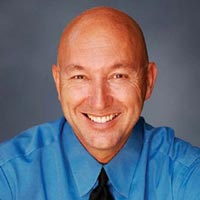 One of Gary's most significant achievements as a dental practice management coach is transforming his own practice, LifeSmiles, from one that was infected with PPO plans, no effective marketing strategy, and an overhead of 80% to a very successful dental practice that is currently one of the top-performing practices in the US.
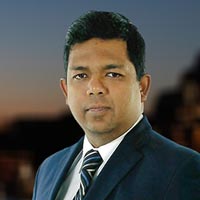 As CEO of Ekwa Marketing, Naren has over a decade of experience working with dental practices and helping them attract the ideal type of patients to their practices. It is his goal to help dentists do more of the type of dentistry they love with the help and support of effective digital marketing.