In this powerful episode of the Less Insurance Dependence Podcast, Lester and guest co-host Don break down the biggest lessons from the 2024 RIDA Annual Summit. If you missed the event, don’t worry—we’ve got you covered with all the highlights, insights, and real talk that happened on stage.

You’ll hear what top speakers like Rebecca, Jordan Comstock, and Gary Takacs had to say about building a practice that’s strong without PPOs. From creating smart membership plans to avoiding common mistakes and mastering patient communication, this episode gives you a clear roadmap to more freedom, less stress, and better profits.

Whether you’re just thinking about dropping PPOs or you’ve already started, this episode gives you practical steps, real numbers, and the encouragement you need to take the next step with confidence.

Key Takeaways
  1. You need a system—not guesswork—to reduce PPO dependence.
    Dropping plans out of fear doesn’t work. Follow a proven step-by-step process.
  2. PPOs can quietly eat up 40–55% of your production.
    Most doctors don’t realize how much write-offs are costing them until they see the real data.
  3. Insurance is not your business model—it’s just a payment option.
    Don’t let insurance plans control your decisions or define your success.
  4. Membership plans create stability and loyalty.
    Patients with plans like unlimited whitening or periodontal care stay longer and buy more.

Episode Timestamps

  • 00:00:00 – Introduction to the Episode
    • Lester and Don introduce the episode and recap the RIDA Annual Summit.
    • Theme: You don’t have to guess—reducing PPO dependence is possible with a system.

    Naren Arulrajah: This is the Less Insurance Dependence podcast show with my good friend Gary Takacs and myself, Naren Arulrajah.

    Narrator: We appreciate your listenership, your time, and most of all, we appreciate your intention to reduce insurance dependence in your practice. Our goal is to provide information that will help you successfully reduce insurance dependence and convert your practice into a thriving and profitable dental practice that provides you with personal, professional, and financial satisfaction.

    Lester De Alwis: Welcome back to another episode of the Less Insurance Dependence podcast. I’m Lester, your host, and today’s episode is a very special one. And if you missed the RIDA Annual Summit this year, don’t worry, we got you covered. We are giving you the full breakdown, the insights, the big moments, and the key lessons from more than four hours and 15 minutes of content. And joining me is someone who was right there on the stage with speakers, guiding conversations and keeping the energy high. My co-host today is Don. How are you doing, Don?

    Don Adeesha: Hey Lester, thanks so much for having me. And yeah, I was lucky enough to co-host the summit with Nen until the final stretch. It was a packed room full of doctors who want one thing: freedom from PPOs. So the summit gave real tools, real numbers, and very real encouragement. You know, it wasn’t just theory, it wasn’t just hype, it was a blueprint — very practical and precise.

  • 00:01:54 – The Big Truth About PPO Write-Offs
    • PPOs take 40–55% of production.
    • Dentists are working harder but taking home less.
    • Fear fades when data becomes clear.

    Lester De Alwis: Alright, so let’s start with the big theme that came through — every speaker, every panel, and every Q&A. Reducing insurance dependence is 100% possible when you follow a system. Not when you guess. Not when you panic-drop a plan. Not when you rely on fear, Facebook threads, or wishful thinking. There needs to be a system.

    Don Adeesha: That’s right, that’s right. That’s why dentists showed up. You know, they wanted the truth. And one of the first truths revealed in this was that many practices are working harder and harder but taking home less and less. Not because they’re bad clinicians, not because patients don’t value them, but because PPO write-offs quietly drain around 40 to 55 — even in some cases — percent of their production. And you could feel the room shift when doctors saw the math laid out clearly.

  • 00:02:54 – Rebecca’s Wake-Up Call: Insurance Is Not Your Business Model
    • Insurance is just a payment method, not your whole plan.
    • Replace fear with data to take back control.

    Lester De Alwis: Exactly. And one of the earliest standout speakers was Rebecca. So we’ll go speaker-wise. And Rebecca — she said something that shook people awake. She said, "Insurance is not your business model, it’s a payment option." And she went deeper into this. She explained how most dentists were trained to believe — as you know — they think, "If I take all PPOs, my schedule stays full," or "If I drop a plan, I’ll lose everyone." Or, you know, they have this common thought in mind: "My town has too much competition. I can’t change anything."

    Don Adeesha: Absolutely. You know, those beliefs are so common that doctors think that they’re facts. But Rebecca really broke it down. She showed practices that calculated their actual write-offs — not estimated, not guessed — actual write-offs. And that’s when the fear finally moved aside, right? She said something very powerful that stuck with me. It goes something like, "When you replace fear with data, your logical brain turns back on." So that’s when the practice owners began to see that staying in 20 to 25, or even 30 at times, PPO plans is not safety — it’s slow financial decline.

  • 00:04:12 – Jordan Comstock on Membership Plans
    • Real examples of practices earning $200K–$300K yearly through memberships.
    • Patients buy more care when they’re on a plan.
    • Creative ideas like whitening, Botox, perio, and kids’ plans.

    Lester De Alwis: Exactly. And then came Jordan Comstock. And if there was one speaker dentists couldn’t stop talking about afterward, it was him. You know, Jordan brought the membership plan conversation to life. He gave actual examples — practices with hundreds of active members. They spend over $200,000 to $300,000 a year in recurring revenue. And patients who stay loyal — yeah, patients who stay loyal because they invested that much. So he showed a membership plan can become the buffer when a practice starts dropping PPOs.

    Don Adeesha: Right, Lester. You know, what I loved was how he kept showing creative plan types — not just the typical preventive plan. He talked about unlimited whitening plans — imagine that — perio maintenance plans, Botox membership plans, and pediatric membership tiers. So he explained why all these membership patients buy two to three times more dentistry — because they want to use the benefits they’re already paying for. It kind of felt like a lightbulb moment, you know, for the entire room at that time.

  • 00:05:26 – Gary Takacs: 5 Big Mistakes That Hold Practices Back
    • Mistake 1: Running a transactional (not relational) practice
    • Mistake 2: Not knowing your PPO data
    • Mistake 3: Dropping plans without a marketing plan
    • Mistake 4: Undertraining your team
    • Mistake 5: Poor patient communication
    • Every write-off = money you pay for insurance marketing

    Lester De Alwis: Exactly, exactly. And one of the key highlights is the keynote from Gary — Gary Takacs. It was one of the most anticipated sessions. Gary has coached over 400 practices to successfully resign from PPOs, so people were taking notes the second he started. And he listed the five mistakes that derail practices. The five mistakes go like this:

    Mistake one is running a transactional practice instead of a relational one.
    Mistake two is not understanding their PPO data.
    Mistake three is dropping PPO plans before having a marketing plan.
    Mistake four is undertraining the team.
    And lastly, it’s poor patient communication and messaging.

    So Gary explained why these are critical mistakes. It isn’t about the clinical skill — it’s about these mistakes. And there are systems that you could overcome them.

    Don Adeesha: Right, right. You know, when he said, "Every dollar of write-off is a dollar you paid the insurance company for marketing," the room definitely got a little quiet there. He has helped doctors understand that PPOs are marketing — extremely expensive marketing. And once you stop relying on them, you need to own your engine. But that engine doesn’t have to cost anywhere near 45% of your revenue. So it was truly refreshing and grounding.

    Lester De Alwis: And the next segment was the clinical panel — the hidden hazards that kill profits. So then we got into this clinical panel, which I think was one of the most underrated portions. Lisa Copeland talked about communication and leadership. She explained how dental teams often unconsciously send mixed signals to patients, especially when a practice is shifting away from PPOs. So she helped the audience see how important team language is at this point of the conversation.

    Don Adeesha: Right. You know, and Shams talked about billing inefficiencies that most practices don’t even know they’re dealing with. She explained how much time and energy gets wasted chasing claims, appealing denials, resubmitting codes, and managing unpaid insurance balances. The practice owners realized, "Oh wow, I didn’t just lose money on the write-off — I lost more money through the admin time dealing with that claim."

    Lester De Alwis: Then we heard from Art Wiman, the CPA. He showed examples where a practice produced nearly $2 million but collected $1.4 million — not because of anything clinical, but purely due to PPO agreements. It’s one thing to know PPOs cost money; it’s another to see real numbers from real practices. So these are real-life examples from the experts during the summit. And this was the moment many attendees realized, "This isn’t sustainable. I have to make a change."

  • 00:08:40 – The Emotional Side of Letting Go of PPOs
    • Fear takes over when you don’t have clarity
    • Seeing actual write-offs helps bring calm and logic back

    Don Adeesha: True. So after the operations talk, the summit kind of shifted into the emotional side of reducing PPO dependence. Right? Honestly, that part was powerful because, you know, one speaker explained that when change feels dangerous, the brain’s fear center takes over. That’s when dentists think, "My patients will leave," "My staff won’t support this," "My schedule will go empty." But when they actually look at the numbers — when they calculate the real write-offs, admin costs, and collections per hour — the fear quiets down and logic comes back. You could feel the energy in the room shift from fear to clarity with that speech.

    Lester De Alwis: Yes. And I think the best part was seeing dentists realize that they’re not alone. Every dentist in that room has faced the same fear. But fear doesn’t build a healthy business — data does. So I think the next segment is where it’s about how data enlightened everyone else during the data summit.

    Don Adeesha: Absolutely. You know, we got into the marketing portion of the summit at that time, and this is where your world came in, Lester.

    Lester De Alwis: Yeah, this is my favorite part because it clears up so much confusion. Everyone asks, "Is SEO dead?" "Will AI replace Google?" The answer is simple — Google is still king. And it’s not even close. Search behavior is evolving, yes — AI overview, AI mode, ChatGPT, Perplexity, and you name it. There’s so much of AI engines going, and AI taking over. So they’re real, they matter, patients use them. But Google still drives most of the discovery and most of the new patient calls.

    And the summit basically taught three key marketing rules:
    Rule number one — you need to show up everywhere people look. Not just Google’s classic links, but Google Maps, AI overviews, AI mode, ChatGPT, and others.
    Rule number two — success is measured by calls and booked visits, not traffic.
    And rule number three — a membership plan plus strong visibility creates stability while dropping PPOs.

    Don Adeesha: Right. And I love how practical that was. You know, it’s not hype, it’s not buzzwords — it’s just simple actions that truly help a practice get found. And this is the most important point, chosen right. So the real key takeaway is that marketing is not a luxury. It’s the engine that lets you step away from PPO dependence without fear.
  • 00:11:35 – Patient Communication: Guiding With Confidence
    • Sina: Teach patients that insurance doesn’t decide care—only helps pay
    • Teams need to guide patients clearly and kindly
    • Good messaging builds trust and helps patients stay

    Lester De Alwis: Exactly. And the final panel during the summit — after you handed hosting back to ReDon — we heard one of the most important topics, and that’s patient communication, which is very important in reducing insurance dependence. So Sina talked about the mindset shift patients need. She said something like, "Insurance doesn’t determine the care your dentist gives — insurance just helps pay for part of it." She broke down how team members should explain benefits, limitations, downgrades, and why insurance policies don’t match clinical care.

    Don Adeesha: Right. And the funniest moment was when she joked about the insurance company saying, "This service is covered — just not on a rainy day." I mean, you know, that was pretty funny. And insurance rules often make no sense, but she brought it back to the heart of it. Teams need to guide patients with confidence and kindness. That’s what builds trust. That’s what keeps patients who want the best care. And that’s what helps a practice step away from PPO control.

  • 00:12:48 – Final Lessons from the Summit
    • PPO dependency is not your destiny
    • Membership plans and data create security

    Lester De Alwis: Exactly. And now — what did the summit teach us? Here are the big truths:

    PPO dependency is not a destiny. Write-offs are not just math — they are missed opportunities. Membership programs create stability. Team communication determines patient trust. Marketing fuels independence. Data replaces fear.
    And finally — doctors don’t have to do it alone.

    Don Adeesha: No, they don’t. So this summit truly showed that you don’t have to drop all PPOs at once. You don’t need to gamble your practice on one big decision. You can do it step by step — guided by data, supported by your team, backed by good marketing, and encouraged by a community that’s already done it. That’s why events like this matter.

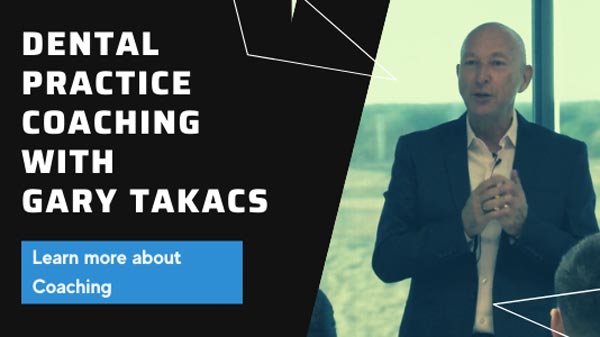
    Lester De Alwis: Exactly. And if today’s episode inspired you or opened your eyes to what’s possible, take the next step. Book a coaching strategy meeting with Gary. If you are looking for mentorship — if you want help reducing PPO dependence and mentorship — you can go to thriveindentist.com/csm.

    Or you can book a marketing strategy meeting with our team at Qua. If you want to grow your visibility or take a look at how well you’re doing in terms of your online visibility, create a steady flow of new patients, or check if your website is working — you can get a full health report by going to lessinsurancedependence.com/marketing-strategy-meeting.

    You can also get these links from the show notes if you go to lessinsurancedependence.com. And that’s basically the summary of the RIDA Summit. Don, any final words?

    Don Adeesha: Absolutely, Lester. I mean, this summit was special — right? It gave doctors and practice owners real hope and real direction. And I hope this episode did the same for our listeners today.

    Lester De Alwis: Thank you all for joining us. We appreciate you, and as always, keep reducing your insurance dependence.

Reducing insurance dependence is a hundred percent possible when you follow a system, not when you guess.

Lester De Alwis

It wasn’t just theory, it wasn’t just hype, it was a blueprint. Very practical and precise.

Don Adeesha

Resources


Gary Takacs

Gary Takacs One of Gary's most significant achievements as a dental practice management coach is transforming his own practice, LifeSmiles, from one that was infected with PPO plans, no effective marketing strategy, and an overhead of 80% to a very successful dental practice that is currently one of the top-performing practices in the US.
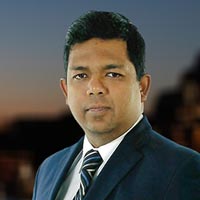
With over 2,200 coaching clients, Gary has first-hand experience transforming insurance-dependent practices into thriving and profitable practices.

Through his Personalized Coaching Program, Gary shares access to the systems, strategies, processes, and experience gained over 41 years of coaching dentists and transforming over 2200 practices worldwide.

Learn More: www.thrivingdentist.com/coaching/
Connect with Gary Takacs on Linkedin

Naren Arulrajah

Naren ArulrajahAs CEO of Ekwa Marketing, Naren has over a decade of experience working with dental practices and helping them attract the ideal type of patients to their practices. It is his goal to help dentists do more of the type of dentistry they love with the help and support of effective digital marketing.
Ekwa’s "Done-For-You" Digital Marketing model blends fundamental persuasion principles with an all-in-one Digital Marketing solution to help your ideal patients find you and choose you for reasons other than being on their insurance plan.

If you’re interested in finding out if Ekwa is the right fit for you and your practice, book a Free Marketing Strategy Meeting with Ekwa’s Marketing Director, Lila Stone.

Book Free Marketing Strategy Meeting: www.lessinsurancedependence.com/marketing-strategy-meeting/

Recent Episodes

Episode #370: How to attract more patients that prefer fee- for- service care?


Listen Now

Episode #369: Increasing Case Acceptance: How Dentists Can Grow Fee-for-Service Revenue with Joanne Villani


Listen Now

Episode #368: How today’s insurance and legislative environment are affecting dental practice sales and valuations.


Listen Now