Episode #379: Financial steps that help dentists reduce PPO pressure with Jim Alley
Listen Now
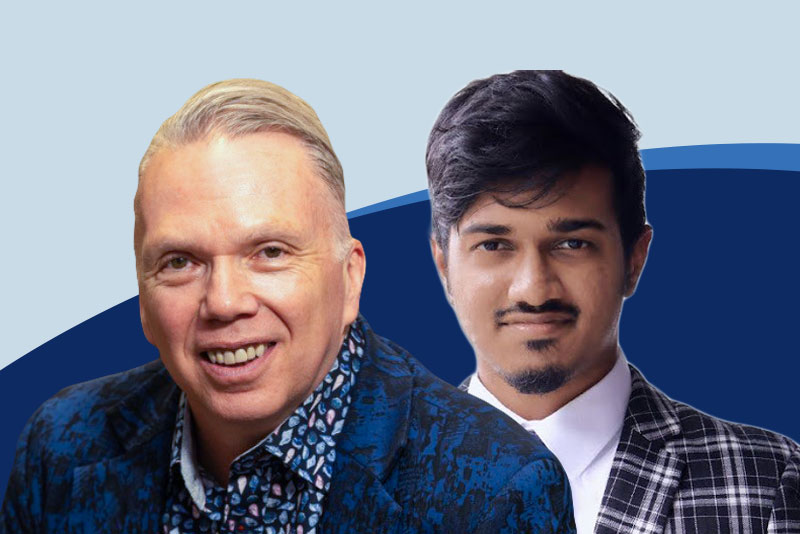
In this episode of the Less Insurance Dependence Podcast, Naren Arulrajah and Don Adeesha explore why traditional growth strategies like word of mouth referrals and insurance-driven patient flow are no longer sufficient for building a healthy, thriving dental practice. Naren explains how insurance patients are often conditioned to seek “free” or minimal treatment, limiting both clinical fulfillment and profitability. The conversation dives deep into the shift from traditional referrals to digital trust signals such as Google reviews, SEO, and online visibility. Dentists are encouraged to move from passive reliance to proactive marketing strategy, focusing on attracting the right patients instead of accepting whoever insurance sends. The key message is clear: marketing is not replacing referrals — it is the modern form of referrals.
Podcast: Play in new window | Download
Subscribe: RSS
Naren Arulrajah: This is the Less Insurance Dependence podcast show with my good friend Gary Takacs and myself, Naren Arulrajah.
Gary Takacs: We appreciate your listenership, your time, and most of all, we appreciate your intention to reduce insurance dependence in your practice. Our goal is to provide information that will help you successfully reduce insurance dependence and convert your practice into a thriving and profitable dental practice that provides you with personal, professional, and financial satisfaction.
Don Adeesha: Welcome back to another episode of the Less Insurance Dependence podcast. Today we are talking about something that many dentists are feeling, even if they haven’t put it to words. Word of mouth and insurance-driven patients are no longer enough to grow a healthy practice. I’m Don Adeesha, your co-host for this episode. For years, dentists built successful practices by doing good work, getting referrals from happy patients, and being listed on insurance plans. But today, that model feels less reliable and more stressful than ever. To talk through why this is happening and what dentists can do instead, I’m joined by my co-host, Naren Arulrajah, CEO of Ekwa Marketing and someone who helps dentists build growth they actually control. Welcome back, Naren.
Naren Arulrajah: Thank you so much, Don. Really appreciate it. I think this is going to be a fun conversation. I can’t wait to dive in. I think our listeners would find it a good idea to maybe have a pen or pencil and take some notes, because we are going to share some key insights that perhaps you can apply tomorrow at your practice.
Don Adeesha: Absolutely. So, Naren, first off, most dentists still rely heavily on word of mouth and insurance referrals. Why is that no longer enough on its own?
Naren Arulrajah: That’s a great question. Let me kind of tackle the insurance patient, right? See, insurance patients, most of the time, see humans are, we live our life on autopilot. I mean, when you’re driving a car, how many of you are very conscious, right? A lot of times I find myself like, I don’t know how I got there, but I got there. It just happened because I’ve been driving for so long and it just becomes automatic, right? Same way, in our habits, in our mindsets, like for example, maybe this is one cousin we haven’t spoken to for 10 years and everything she does, we see it through the lens of, oh, maybe she doesn’t like us and so forth, right? So it’s just that autopilot. We are not consciously asking questions and consciously doing things, and insurance patients are no different, right?
And they are told, hey, you have insurance. And their subconscious mind tells them that means it’s free, right? That’s the idea they get. It’s free. And if it’s not free, that means the dentist is trying to sell me something, right? So the challenge to run a practice where all of them are insurance-minded is, you know, you don’t go to dental school to do fillings and fixing people up and patching people. I mean, we all know insurance is just like the bare-bones, you know, stopping-from-falling-apart dentistry, right? Even then they have rules like, you know, the patient comes one day before the six-month timeline for a hygiene visit, they’ll reject it. So they’re trying everything in their power not to pay or not to, you know, do the right thing for the patient. So that’s part of the problem. So imagine you’re a practice, that’s all you do.
Every patient that comes through, you become institutionalized. You pretty much accept the fact that they’re not going to accept ideal treatment. So I become, you know, a fill-and-drill dentist, you know, who’s just doing patchwork, and then everybody’s like waking up in the morning and going to the salt mine. So forget about the monetary implications of this, because we know fill-and-drill doesn’t pay well, like, for example, Invisalign does, you know, sedation does, you know, beautiful smiles do, right? So the high-value dentistry does, but not the basic dentistry. So I really think the problem is if you are only dependent on insurance plans, you are going to get in trouble. You are not going to be able to do the ideal dentistry, perhaps make a little bit more profit, perhaps enjoy your work. And after a while, the team gets so used to only taking care of insurance patients, which is like free dentistry, and they kind of get trained with that.
Imagine if somebody works at a McDonald’s for 10 years and you want them to now work at a high-end restaurant where the average person is spending 10 times or 20 times what they would spend at a McDonald’s. They don’t know how to deal with it. They don’t know how to talk to that patient the right way, the client the right way. So this is a problem. So I really, based on my experience of 19 years of working with dental practice owners, and many of them are my good friends, and we had kids at the same time, and so I have tons and tons and tons of friends in dentistry, and one thing I know is everyone who takes control of their practice, and that starts by attracting the right patients instead of just taking the patients insurance gives you, are so, so, so, so happy.
Naren Arulrajah: I mean, their net worth is significantly higher than those who spend the same time just being an insurance practice. The kind of work they do is much more fun. They’re getting CE, they’re learning, and many of them end up working less and less as they age and their life priorities change, without compromising the quality of life or their income. And some of them even have gone on to build multiple practices. I have clients who have, since starting with one, now have four, five, six practices. So I really think step one to take control is decide what patients you want to see and figure out a way to attract them. That’s why I think marketing is critical, because that’s how you can attract the people you want.
Naren Arulrajah: Now referrals, in my mind, it’s a myth in the sense that in the old days, we would go and talk to, I remember having one of these family friends. He was the go-to person for anything tech. So, I’m talking 25 years ago. So, I’m like, okay, I’ve had my camera for two, three years, you know, what should I do? He’ll say, oh, go buy this. So, should I go with this brand? He would tell me all this stuff. I have Google now and for the last 20 years, right? So now we ask Google. So even if I don’t know if a dentist is good or bad, I don’t ask my friend. I Google it. I see how many reviews they have, how many stars they have. It takes me seconds. By the time I think about calling my friend and all that stuff, it just doesn’t work. So I think the reality is referrals have shifted to Google reviews and things like that because, you know, think about it, would I just listen to one friend’s opinion, or would I rather see the opinion of 100 people, 200 people, and the average opinion, which is 4.5, 4.6, 4.77 out of five? So I think the world is different. And I know sometimes we don’t change and we think the world doesn’t change because we don’t change. That’s not true. The world keeps changing, so we have to adapt.
Don Adeesha: Absolutely. And so, Naren, many dentists still assume marketing replaces referrals. Is that the right way to think about it?
Naren Arulrajah: Yeah, I do think it is correct, right? So what is marketing? Let me define marketing, right? Marketing, in my mind at a high level, is creating eager desire, like helping people want to do business with you. So, let’s take Apple for an example, right? Apple creates eager desire 24/7. How do they do it? For example, they have beautiful design products, and their logo is just distinct. So you’re at a Starbucks, you’re on an airplane, you see those logos, whether it’s an iPhone or a Mac, it just jumps out at you, and you know it’s double the price. Even pricing is part of their marketing. They kind of tell you this is good stuff. That’s why it costs double what every other product costs. Then they work with every TV show producer, every movie producer, and they make sure that these people get free Apple products to use.
So when you are watching a movie or a tele drama, you’re seeing them using iPhones. You see the iPhone ringtone, you hear the iPhone ringtone. So without you knowing it, you are getting subconsciously brainwashed that if you are someone important, you need to carry one of their products, as opposed to a half-price product from somebody else, right? That is marketing. So helping people find you, helping people like and trust you and choose you, and we can do all of that today. In the old days, you hoped and prayed that some guy is going to refer and you’re going to magically do well, but those days are gone. People don’t ask for referrals, and people know they’re stupid to tell people stuff unless they ask because you don’t want to go and intervene with somebody. Oh no, no, no, you need to hear about my dentist.
Nobody will do that, right? I mean, people will think you are weird or something. So I do think understanding what marketing is, helping people find you, like and trust you, and then doing it. Finding you is like Google and SEO and showing up again and again and again. Liking and trusting is things like Google reviews and video testimonials and so forth. And then connecting the dots, you need to have data. You need to know what’s working, what’s not. And then anytime there is a weak point in your funnel, then you need to fix it.
Don Adeesha: Okay. Can you expand a little bit more on that, the marketing elements that matter most when patients are deciding whether to trust a practice?
Naren Arulrajah: Yeah, so let me kind of provide some color to this, right? So trust is, you know, we have choices, and health is very personal and important to most of us because we don’t want, for example, I’m just giving you an example, I have crooked teeth and I want to get rid of it, and I go to a dentist and this person makes it worse. Now I’m walking around with teeth that look worse than what they used to. I don’t want that, right? It’s a big, big no-no. Or I’m in a lot of pain and I think I need a root canal, but I don’t want this dentist to do something sloppy and now it’s going to make it worse, right? So we are very afraid as consumers when it comes to health. So we want to take the safe bet, and the way we decide what is safe and what is not is we Google their practice.
Naren Arulrajah: I mean, I see this, like we study analytics. If the practice is getting 50 new patients, at least 200 people would have Googled the practice name and looked for reviews. And we know what pages they’re going to and what they’re reading. And many of them are even calling from the Google Maps page or Google My Business page because Google will give you that data. How many calls are coming from Google Maps? How many calls are coming from different places? So we know, like hundreds of calls, hundreds of people finding directions. So having those reviews and keep working on them, I think, is a really good idea. And I think the basic rule of thumb that I tell every one of my listeners and everybody in dentistry is try and get at least 10 reviews a month, at least 10.
Naren Arulrajah: To me, that’s like the baseline. And it’s kind of like, you know, the number one habit for good oral health is the way you brush and floss and how often you do it, right? So same thing for you guys. If you want to do well in 2026, where it’s all about trust, get 10 or more reviews. And I have an entire set of tools and expertise around how to get those 10 reviews. If anyone is interested, send us an email. Go to the website lessinsurancedependence.com and send us an email or contact us, and we’ll send you the whole resource kit. So it can be done. I have seen hundreds of practices using our methodology get 10 or more reviews every month. And the reviews I specifically like are love letter reviews. These are paragraph reviews. And I think you have to do this in 2026. I know a few practices will say, oh, it’s too hard, especially the insurance practices. Then you are going to pretty much be controlled by the insurance companies. You’re going to do free dentistry or the low-end dentistry, and you become this zombie practice where nobody gets excited because you don’t do fun, interesting things, and you’re just running faster and faster because insurance will keep paying less and less, even though cost of living and expenses keep going up and up and up. So that’s my two cents, Don.
Don Adeesha: Thank you very much, Naren. And for our dentists listening in who rely mostly on word of mouth or insurance today, what’s the next best step?
Naren Arulrajah: That’s a great, great question. I think the first step is awareness, right? Realizing that you need to have a strategy and a plan. The strategy that I talked about is don’t just take any patients who come through quote-unquote insurance because they’re kind of the wrong kind of patients. Instead, decide I’m going to attract the right kind of patients. Once you’ve made that decision, then I think you have to really go and figure out how are you doing compared to the world’s best when it comes to attracting the right kind of patients. And what is marketing? Helping people find you, like you, and choose you. So I would strongly recommend doing what we call a marketing strategy review. And in that marketing strategy review, you can see how you are doing on getting people to find you. Are you ranking for hundreds of keywords or not?
If you’re ranking for hundreds of keywords or not, you know how well that is working. So in our marketing strategy meeting, we will look at all the keywords and see if you’re ranking or not. If you’re doing well, then that’s great. If you’re not doing well, then again, we will point that out. In addition to that, we’ll also get to the root causes. Like, for example, the people who do really, really well with something, it’s because they’re doing the root causes really well or they’re taking care of the root causes. So, for example, for SEO, it’s site map, it’s Lighthouse score, it’s Google E-E-A-T, various things that Google is looking at. So we’ll look at those things and tell you how well you are doing. If you’re doing well, great. If you’re not, we’ll share that with you as well.
Naren Arulrajah: We’ll even look at AI. AI is becoming bigger and bigger. Google has incorporated AI into search. You have ChatGPT, you have Gemini. Our clients rank on all these platforms, and we focus on all of them. Even though Google still is like 97, 98, 99% of the market, we don’t want to lose that 1 or 2%. And who knows what if in 10 years things are different, or even in two years? So we want to play it safe. So we look at it from a comprehensive standpoint. We’ll give you a report card on how well or poorly you are doing, and we’ll give you a plan. And the link to book that meeting is lessinsurancedependence.com/msm.
Don Adeesha: There you go. Thank you very much for that, Naren. That really puts things into perspective. Word of mouth and insurance can still support a practice, but they shouldn’t control it. When dentists take ownership of how patients find and choose them, everything changes. Thank you, Naren, and thank you to everyone listening in. We’ll see you next time on the Less Insurance Dependence podcast.
Marketing is simply helping patients find you, like you, and trust you. In today’s world, Google reviews and online visibility have become the new word of mouth.
Naren Arulrajah
Insurance and referrals alone are no longer a growth strategy. Dentists have to be proactive and intentional about attracting the right patients for the practice they want to build.
Don Adeesha
 One of Gary's most significant achievements as a dental practice management coach is transforming his own practice, LifeSmiles, from one that was infected with PPO plans, no effective marketing strategy, and an overhead of 80% to a very successful dental practice that is currently one of the top-performing practices in the US.
 As CEO of Ekwa Marketing, Naren has over a decade of experience working with dental practices and helping them attract the ideal type of patients to their practices. It is his goal to help dentists do more of the type of dentistry they love with the help and support of effective digital marketing.