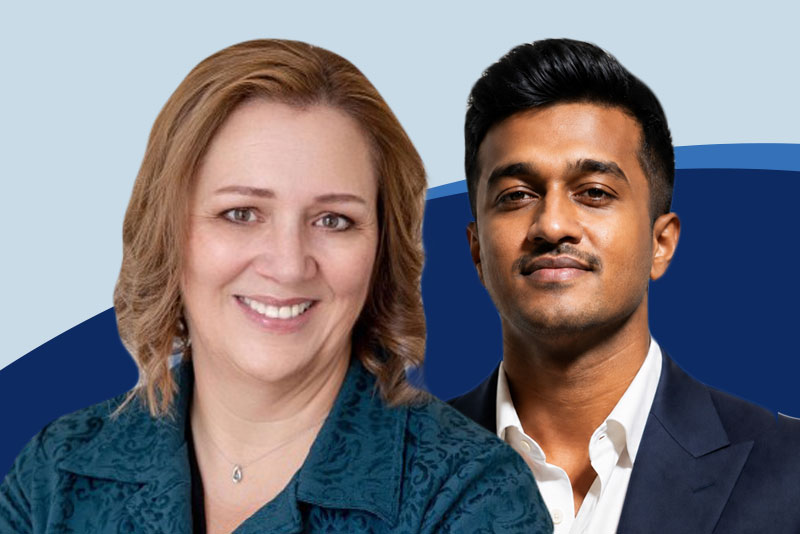
In this episode of the Less Insurance Dependence podcast, host Lester De Alwis welcomes Lisa Grogan, a dental business and leadership consultant. Lisa spent years in dental sales, including leading Invisalign distribution across Ireland, before becoming an international speaker and coach. She created the Platinum Practice Approach and the LENS Method, frameworks that help clinics attract higher-value patients and convert more cosmetic and premium treatment cases.
Lisa opens with a hard truth about scanner adoption and equipment investment: buying the technology is not the hard part; building it into the daily workflow is. Having sold scanners to clinics after using one herself, she has seen practices treat a scanner as a burden left in the corner rather than the conversion tool it should be. From there, the conversation turns to the core financial reality Lisa raises with every client: a full schedule does not always mean a profitable one, and most practices have never done the basic math to know their real hourly margin on the work filling their book.
The episode walks through Lisa’s ABC framework (Attract, Belief, Conversion) and her LENS Method for reading a team’s logical, emotional, neurological, and social influence on whether a patient accepts premium treatment. She shares specific, low-cost tools any practice can use immediately, including a Smile Assessment Form that reopens conversations with long-standing patients who have never been asked about cosmetic concerns. Lisa closes with a direct challenge to every dentist listening: stop being afraid of sounding salesy, and start treating every patient in the chair like a friend you’d tell the truth to.
Key Takeaways
- Equipment investment only pays off with disciplined adoption of workflow. Scanners bought but used inconsistently become a cost rather than a return. Lisa’s advice: pick a start date, use it in every consultation without exception, and expect scan times to drop from 30-40 minutes down to 5-7 minutes with repetition.
- A full schedule can hide a real profitability problem. With average daily surgery running costs around 800 euros, low-value work earning roughly 60 euros an hour after overhead leaves little room for a single gap in the schedule to wipe out the day’s margin. Most practices are running on a “vibe” rather than real numbers.
- The ABC framework drives higher value case acceptance: Attract, Belief, Conversion. Attract is the online messaging that brings in the work a practice wants more of. Belief is the mindset and confidence of the clinician and team. Conversion is the relationship and communication that turns interest into treatment.
- Existing patients are one of the largest untapped sources of premium treatment revenue. A simple Smile Assessment Form, given to every patient, new and returning, surfaces cosmetic concerns patients might not have thought to raise on their own, reopening conversations with people who have already trusted the practice for years.
Podcast: Play in new window | Download
Subscribe:
Episode Timestamps
- 00:00:05 – Introduction & Guest Overview
- Lester De Alwis introduces Lisa Grogan, dental business and leadership consultant. Lisa spent years in dental sales, including leading Invisalign distribution across Ireland, before becoming an international speaker and coach, and created the Platinum Practice Approach and the LENS Method.
- Today’s episode explores why a full schedule does not always mean a healthy practice, and what it actually takes to convert the cases that matter most.
View Transcript
Lester De Alwis: Welcome to the Less Insurance Dependence podcast. I’m your host, Lester De Alwis, and this show is dedicated to helping dental professionals build stronger, more profitable practices with less reliance on insurance. Today I am excited to welcome Lisa Grogan, dental business and leadership consultant. Lisa spent years in dental sales, including leading Invisalign distribution across Ireland, before becoming an international speaker and coach. She created the Platinum Practice Approach and the LENS Method frameworks that help clinics attract higher value patients and convert more cosmetic and premium treatment cases. Today’s episode is called This Is Not Profitable: The Path to High Value Dentistry. Lisa, welcome to the show.
Lisa Grogan: So great to be here.
- 00:01:08 – Why Practices Invest in Scanners and Never See the Return
- Lisa has seen equipment adoption from both sides, first as a clinician, then as someone selling scanners to practices. In both cases, the same pattern repeats: excitement at purchase, followed by inconsistent use because the workflow to support it was never built.
- Her fix: pick a start date, use the scanner in every consultation without exception, and give the team time to build speed. Scan times that start at 30-40 minutes routinely drop to 5-7 minutes with consistent repetition. Patients respond strongly to seeing their outcome before treatment begins, which directly improves conversion.
View Transcript
Lisa Grogan: When we got a scanner initially in clinic, we just weren’t using it consistently. There wasn’t the flow, it was taking too long. So we were picking and choosing when to use it. I’m sure it was costing us money more than anything else. So we decided, we need to change the workflow here. Literally everybody has to be doing the same thing. And the reactions we got off patients just blew us away, especially before and afters. For patients to see the outcome before they’ve even started treatment is a game changer. I have seen clinicians taking 30 or 40 minutes to scan down to 5 or 7 minutes. But there’s only one way through it, and that is practice, practice, practice. When you see your conversion rates going up, which they absolutely will, that’s the payoff.
- 00:04:35 – Why a Full Schedule Does Not Always Mean a Profitable Practice
- Lisa shares real numbers from her coaching work: the average daily running cost of a dental surgery is roughly 800 euros, meaning a practice needs to earn approximately 100 euros an hour just to cover overhead before any profit exists.
- Low-value work like checkups and hygiene, essential to protect the business, often nets closer to 60 euros an hour after overhead. A single empty gap in the schedule can erase that margin entirely for the day. Many practice owners are working harder to cover losses from underutilized associates without realizing it.
View Transcript
Lisa Grogan: Back in 2022, the average running cost of a surgery was roughly 450 euro a day. Now it’s on average about 800 a day just to run a clinic surgery, which means earning 100 euro an hour really to cover that. If you’re stuck doing low value work every day where you’re coming out with maybe 160 euro an hour, the balance of that is let’s say 60 euro. And then if you have a white gap in your diary, that’s eating into that little extra you’ve made. A lot of practices run on a vibe business. The book is busy, we think we’re doing well, but when they look at the figures, it can be quite shocking. Once we get the awareness, then we can do something about it.
- 00:07:47 – The Balance: Why the Schedule Doesn’t Need to Be Full of Complex Cases
- Lisa’s framework doesn’t call for overloading the schedule with high-complexity work. A practice needs a healthy mix, with enough higher-value cases, like crowns and veneers, that earn more per hour to offset the lower-margin recall and hygiene work that protects the business in the long term.
- Clear aligner cases, for example, average 3-4 hours of chair time and can earn a dentist 500-600 euro an hour, income that directly cushions slower or lower-value periods elsewhere in the schedule.
View Transcript
Lisa Grogan: Your book doesn’t need to be full of the complex stuff all day. There has to be that balance, but it’s a mix of more cosmetic work coming in, even crowns, veneers, there’s more to be earned per hour. If you do a clear aligner case, on average three to four hours, a dentist can earn about 500 to 600 euro an hour for that. That additional income will protect the low value times.
- 00:07:47 – The Smile Assessment Form: A Free Resource for Reopening Conversations
- FREE RESOURCE MENTIONED: Lisa describes the Smile Assessment Form as "a gorgeous free resource" she introduced into her own clinic that became a genuine revenue and relationship-building tool. It is a simple form where patients note things like "I don’t like the color of my teeth" or "I find my teeth difficult to clean."
- The form surfaces concerns that long-standing patients never thought to raise on their own, opening natural conversations about treatments like clear aligners with patients who have been in the practice for years without ever being asked.
View Transcript
Lisa Grogan: I would recommend dentists use something like a Smile Assessment Form, which is a gorgeous free resource. It’s so easy. We introduced it into the clinic, it was an absolute game changer, helped our reputation, helped our relationships with our patients, and earned us such a big revenue. It’s a simple form that just says, for the patient, I don’t like the color of my teeth, I find my teeth difficult to clean. And dentists will look at that and think, oh, Mary, you’ve been coming to us for years, you never told me. We do a thing called clear aligners, would you like to have a conversation about that? If I open a clinic tomorrow, that form would be given to every patient, new and old.
- 00:09:29 – The ABC Method: Attract, Belief, Conversion
- Attract is a practice’s online messaging and visuals, tailored to the type of work a practice wants to do more of. The more consistently a practice showcases the treatments it wants more patients for, the more that specific work starts to flow in, though it may take time to show up on the schedule.
- Conversion is the relationship-driven process from the first phone call through to word-of-mouth referral after treatment. Lisa notes patient loyalty is less reliable than it used to be; patients often see marketing elsewhere and leave for cosmetic work even after years with a practice, only to return for routine care.
- Belief, Lisa’s specialty as a mindset and neuroscience coach, is the internal confidence of the clinician and team. Without a genuine belief that a recommendation is right for the patient, conversations feel forced or salesy, and patients sense that hesitation immediately.
View Transcript
Lisa Grogan: With my ABC, the A is for attract. It’s your online messaging, it’s your visuals, it’s how you’re attracting the work you want to do more of. The C is for conversion. Once a patient likes what they see online, they’ll ring the clinic, if they like who they’re speaking to, they’ll come visit, if they like what they’ve heard, they’ll convert into treatment. The sad truth is patients are not as loyal as they used to be. The B is a little bit about my secret sauce, I’m a mindset and neuroscience coach as well, and B stands for belief. If you don’t believe you’re doing the right thing, or imposter syndrome kicks in, or you feel salesy, those thoughts creep in while a patient is sitting in the chair, and you won’t have the conversations, or they won’t flow well.
- 00:15:19 – Sponsor: Ekwa Marketing
- Lester pauses to recognize this episode’s sponsor, Ekwa Marketing, tying the message to the attract side of Lisa’s ABC framework, specifically online visibility and marketing quality.
- Ekwa Marketing is offering a complimentary practice growth audit for Less Insurance Dependence listeners, including a roadmap on where the practice’s marketing stands and where it needs to go. Book at lessinsurancedependence.com/msm, or book a complimentary coaching strategy meeting with Gary at lessinsurancedependence.com/csm.
View Transcript
Lester De Alwis: I want to take this time to give a shout out to Ekwa Marketing, who is the marketing sponsor for this episode. If you want to check how you’re doing with your online visibility and how your marketing is bringing in the kind of cases we’ve been talking about, the team at Ekwa Marketing is offering a complimentary practice growth audit at lessinsurancedependence.com/msm. You can get a roadmap on where you are and where you want to go from where your marketing is right now, or book a complimentary coaching strategy meeting with Gary at lessinsurancedependence.com/csm.
- 00:15:19 – The LENS Method: How Team Mindset Affects Premium Case Acceptance
- The LENS Method examines Logical, Emotional, Neurological, and Social influences on a patient’s acceptance of premium treatment. Logic is simply presenting the facts and pricing, but patients decide emotionally first and logically second.
- Emotion is the energy a team brings into the room. Lisa recalls being able to sense, within seconds of walking into a clinic, whether it was a happy place to work, and notes that patients feel that same energy immediately, especially when already nervous.
- Neurological refers to team members’ beliefs about whether they make a difference. Lisa shares an example of a receptionist whose absences dropped dramatically after simply being told she was valued and missed, once she understood she was "a cog in the wheel."
- Social is team accountability and culture, tracking lab work, following up with patients, and supporting each other, which Lisa identifies as the difference between a thriving clinic and one in trouble.
View Transcript
Lisa Grogan: The LENS method is a four D approach. The L is logical, we’ll tell the patient what they need, go through pricing, get them booked in. Patients decide to go ahead emotionally, logically second, emotionally first. The E is emotional, the energy the team brings. I would walk into a clinic and could tell within seconds if it was a happy place to work. The N is neurological, our belief systems. I talked to a dentist whose nurse was out sick constantly, and when the owner told her she was valued and missed when not there, that gave her a whole new sense of, my goodness, I am a cog in the wheel, and absences stopped. The S is social, that massive level of accountability within the team, has the lab work come back, who’s tracking finances, who needs to call back that patient.
- 00:21:33 – The One Move to Make This Week: Believe In What You’re Offering
- Lisa cites a statistic that 60% of patients surveyed wanted cosmetic work, yet most dentists would say that the percentage of their day involves cosmetic conversations. Patients don’t know what they don’t know, and won’t raise concerns unless invited to.
- Her philosophy: friendliness over professionalism. Treat every patient in the chair like a friend you would tell the truth to, someone you would naturally say, "have you ever thought about straightening your teeth?" without fear of sounding salesy. That shift in framing is what unlocks genuine, confident recommendations.
View Transcript
Lisa Grogan: I read an article recently that 60% of patients interviewed wanted cosmetic work. If you’re a dentist watching this, is 60% of your day patients asking about cosmetic work? I bet you not. Patients don’t know what they don’t know, so they’re not going to ask you about treatments. You need to be brave and find ways to open up these conversations. A philosophy we had in the clinic was friendliness over professionalism. When a patient is sitting in your chair, view that patient as a friend. We would have no problem saying, have you ever thought of straightening your teeth, to a friend or a sister. But that fear of being salesy holds dentists back. You’re not in the sales business, you’re in the solutions business.
- 00:25:25 – Free Scorecard & How to Reach Lisa Grogan
- FREE RESOURCE MENTIONED: Lisa recommends visiting her website, where a pop-up offers a free scorecard. It takes 2-3 minutes and walks through her ABC method to help a practice identify where its blind spots and breakdowns are happening.
- Website: lisagrogandentalcoach.com — includes the free ABC scorecard popup.
- Instagram: @lisagrogandentalcoach
View Transcript
Lisa Grogan: The easiest way is my website, lisagrogandentalcoach.com. My Instagram is Lisa Grogan Dental Coach. Something I’d recommend is go to the website, and the little popup will come up for a scorecard, it takes two or three minutes and goes through the ABC method, so you can really see where the blind spots and breakdowns are happening. The feedback from dentists has just been fantastic. If you don’t know where to start on this journey, this is going to give you a good place to start.
Lester De Alwis: Lisa, thank you so much for spending your time with us today.
Lisa Grogan: Been great. Really enjoyed it.
Patients really do not care about what the cost is if they receive a tremendous value — because the value you receive is more important than the money you spend. People don’t want to just buy something. What they want is a relationship.
Mike Sonick
Leadership is what holds everything together. If there’s no leadership, everything crumbles down.
Lester De Alwis
Resources

 One of Gary's most significant achievements as a dental practice management coach is transforming his own practice, LifeSmiles, from one that was infected with PPO plans, no effective marketing strategy, and an overhead of 80% to a very successful dental practice that is currently one of the top-performing practices in the US.
 As CEO of Ekwa Marketing, Naren has over a decade of experience working with dental practices and helping them attract the ideal type of patients to their practices. It is his goal to help dentists do more of the type of dentistry they love with the help and support of effective digital marketing.