Episode 413: Leadership That Sticks: Building Change That Lasts with Liz Lord
Listen Now
In this episode of the Less Insurance Dependence podcast, host Lester De Alwis sits down with Jofin Joseph, Co-Founder and CEO of Needletail AI, for a deep dive into the operational revenue leak that most dental practices are not even aware they have. Jofin brings 15 years of experience building AI-driven companies across sales intelligence, venture capital, and healthcare technology — and after seeing how inefficient and costly the insurance side of dentistry had become, he made it his focus entirely.
The conversation opens with a foundational diagnosis: in the dental insurance world, the providers absorb the cost of every inefficiency while the carriers benefit from them. Jofin explains why that dynamic, left unchallenged, will never self-correct — and why the combination of mature AI capabilities and deeply entrenched workflows makes this the right moment to intervene. His platform, Needletail AI, launched in late 2025 and has already verified over 500,000 patient benefits across 400+ payers, with practices reporting error rates dropping from 25% to under 3%.
The episode is anchored in eligibility verification — the single most consequential step in the revenue cycle, and the one most practices handle manually at enormous cost. Jofin walks through exactly what goes wrong when eligibility data is inaccurate: overestimate a patient’s contribution and you drive them to the practice down the street; underestimate it and you’re chasing denials and collections two months later. Either way, the practice loses. His platform addresses this with AI agents that connect directly to practice management systems, log into payer portals automatically, and place phone calls to insurers when portal data is incomplete — with human-in-the-loop quality checks at every stage.
Lester and Jofin also discuss what this shift means for the front desk. The front desk exists for patient experience, not payer portals. When AI handles the time-consuming eligibility work, the front desk gets their hours back and gains access to accurate, auto-populated insurance data — enabling them to have confident, definitive pricing conversations with patients the moment they walk in. The result is better collections, fewer denials, and a practice that operates predictably enough to grow on its own terms. The episode closes with Jofin’s encouragement to every dental team: start with AI in the smallest possible way, and build from there.
Podcast: Play in new window | Download
Subscribe: RSS
Lester De Alwis: Welcome to the Less Insurance Dependence podcast. I’m your host, Lester De Alwis, and this podcast is dedicated to helping dental professionals build stronger, more profitable practices with less reliance on insurance. Today I am thrilled to welcome Jofin Joseph, Co-Founder and CEO of Needletail AI. Jofin spent 15 years building companies across sales intelligence, venture capital, and healthcare technology before turning his focus entirely to dental. His platform launched in late 2025 and has already verified over 500,000 patient benefits across 400 plus payers with teams reporting error rates dropping from 25% down to under 3%. Jofin, welcome to the show.
Jofin Joseph: Absolutely, Lester. Thanks for having me. Your podcast name itself is amazing — Less Insurance Dependent. I’m excited to share a bit of what I’ve learned from the market, of course.
Jofin Joseph: The problems and the inefficiencies were too hard to ignore in healthcare and specifically in the healthcare insurance space. I’ve been building startups primarily in the machine learning AI space for quite some time — before AI was even a buzzword or made popular by ChatGPT. As I got introduced to the healthcare insurance landscape, I was so surprised to see how difficult and inefficient the whole process is. The most important thing is that all these inefficiencies land on the provider, while the carrier is a beneficiary of the inefficiencies. If we simply expect the system to change, it would never change. I felt that with all the new technologies available — which I was very close to — all these challenges could be solved. This is the right time with AI and its capabilities to actually solve that problem. And that’s what got me into dental. In dental, it’s still a few years behind general medicine when it comes to technology adoption. We found some really deep pain points worth solving that could create amazing impact.
Lester De Alwis: Dental teams are spending close to an hour per patient on hold and in portals before the day even starts. What’s the real damage that does to a practice’s bottom line?
Jofin Joseph: We are solving the full cycle of RCM — revenue cycle management — and automating it with AI agents. What a team in-house does, or what a dental practice outsources, the whole thing can be automated. The vision we are building is that revenue cycle management — currently a very complex process with a lot of people, a lot of processes, a lot of money, and a lot of inefficiencies involved — will turn out into a simple API call in the near future. And we are driving towards that future.
Jofin Joseph: Eligibility verification is an unnecessarily complex process. You just need to understand the eligibility of the person — but if you don’t do it right, you either overestimate the patient’s contribution, which results in denials down the line and a huge collections book, or you underestimate it, which drives patients away because their out-of-pocket expense at your practice looks higher than at another practice. You want the exact information so you can give the perfect payment plan to the patient. Now, to do that is very expensive in terms of time and effort. Your front office ends up spending a lot of time on payer portals — logging in, finding the information, copying and pasting it back into your practice management system — or worse, 30 to 40 minute phone calls with carriers. Those are painful, and no one wants to do them.
Jofin Joseph: We are starting to do the rest of the steps as well — claims, accounts receivable follow-ups, denial management, parsing those EOBs and payment posting. This whole RCM cycle we are making much easier. The additional benefit is that when these activities are done by humans, there is a high probability of error because you’re copying and pasting and dealing with a lot of numbers — all those steps are error-prone. We reduce that to a great extent by automating it and doing it with AI.
Jofin Joseph: Needletail AI is like this invisible teammate that you have. Needletail connects with your practice management system, reads new appointments automatically while you’re sleeping or while your office is working on other things. We do this on the backend. We have AI agents who can go into the insurance portals and collect all the information. If all the information is not there in the portal — sometimes history or coverage details might not be there — we have an AI agent who places a phone call and talks to the insurance company and brings back all the information. At the end of it all, if AI fails in any case, we put a human in the loop and complete it. And there are human-in-the-loop quality checks as well to make sure that the data coming out of AI systems is always perfect and vetted.
Jofin Joseph: Our belief is the only reason why a front desk has called a front desk is because they are supposed to be doing one thing: patient experience. They’re there to talk to the patients, give an amazing experience, talk them through everything. There are two parts to a great patient experience: one, having enough time to actually talk to them, and two, knowing exactly what to talk to them about. That’s exactly what a system like ours does. Instead of the front desk person being on the phone when the patient walks in, the front desk person is there, present, to talk to the patient. And when the front desk looks at the data in the practice management system, all the data required to talk to the patient about pricing will be available right there. We automatically populate it. We make the front desk more efficient by freeing up their time and enabling them with the right information.
Jofin Joseph: The core part of collections — probably 50% of it — happens on the treatment day, where you collect from the patient. You can either overcharge the patient or undercharge the patient depending on how much you think you can collect from the insurance company. Deciding how much to collect from the patient on treatment day completely depends on how much you know about the patient’s insurance plan. If you do not know enough, you either end up overcharging — which affects the patient experience because you become more expensive than the next door dentist — or undercharging, which results in denials, appeals that get rejected, and eventually going back to the patient a month or two later to collect more. That’s a painful process and it often leads to revenue leakage.
Jofin Joseph: When I say all the data, it’s not just that the patient’s insurance is active or not — it’s going deep to understand what the coverages are, what the percentages of coverage are for each of the codes, and the history of the patient. Because there are frequency-limited treatments — you want to understand how many times the patient has claimed that particular treatment in the year or in the last two years. All this deep-level information will enable you to collect exactly the amount that you should be from the patient on the day of treatment, which eventually means fewer denials, fewer hours for your team to work on those denials, and more money collected.
Lester De Alwis: When you have a predictable practice — one that can grow on its own terms — that’s exactly the point where a right marketing strategy starts to make a real difference. The team at Ekwa Marketing is offering a complimentary practice growth audit or marketing strategy meeting. What makes it different is that it’s not just a generic consultation. They look specifically at what it would take for your practice to grow from less reliance on insurance based on where you are right now. You can book a complimentary session at lessinsurancedependence.com/msm. It’s completely free and specific to your practice. You can also book a complimentary Coaching Strategy Meeting with Gary Takacs at lessinsurancedependence.com/csm
Jofin Joseph: AI is coming and changing the landscape completely — from clinical aspects to marketing. There is a wide array of things AI is making a huge impact on, and early adopters are already seeing that value. I would encourage everyone to explore AI in the smallest possible way. That can be as simple as using ChatGPT in your regular day-to-day in different things. We have an array of free resources on our website, needletailai.com — starting from prompts for very specific use cases. Everyone in your office, from the front desk person to the office manager to the hygienist to the doctor to the billing person, can use these to make ChatGPT their better friend in day-to-day work. If you download our free "10 AI Hacks for Practices," that alone will save at least 30 minutes of combined time in your office every day.
Jofin Joseph: Not just for eligibility verification or RCM — it’s fine if you’re not looking at that right now. You can go to the website for a bunch of free resources. You can directly reach out to me through the website or at jofin@needletailai.com. Always happy to help in whatever ways I can, even if it’s not directly connected to our product.
Lester De Alwis: What you shared is a reminder that some of the biggest revenue wins in the dental practice aren’t clinical — they’re operational. And AI is making them more accessible than ever. Keep going, and thank you for listening to the Less Insurance Dependence podcast.
Patients really do not care about what the cost is if they receive a tremendous value — because the value you receive is more important than the money you spend. People don’t want to just buy something. What they want is a relationship.
Mike Sonick
Leadership is what holds everything together. If there’s no leadership, everything crumbles down.
Lester De Alwis
 One of Gary's most significant achievements as a dental practice management coach is transforming his own practice, LifeSmiles, from one that was infected with PPO plans, no effective marketing strategy, and an overhead of 80% to a very successful dental practice that is currently one of the top-performing practices in the US.
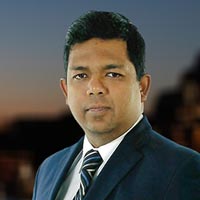 As CEO of Ekwa Marketing, Naren has over a decade of experience working with dental practices and helping them attract the ideal type of patients to their practices. It is his goal to help dentists do more of the type of dentistry they love with the help and support of effective digital marketing.