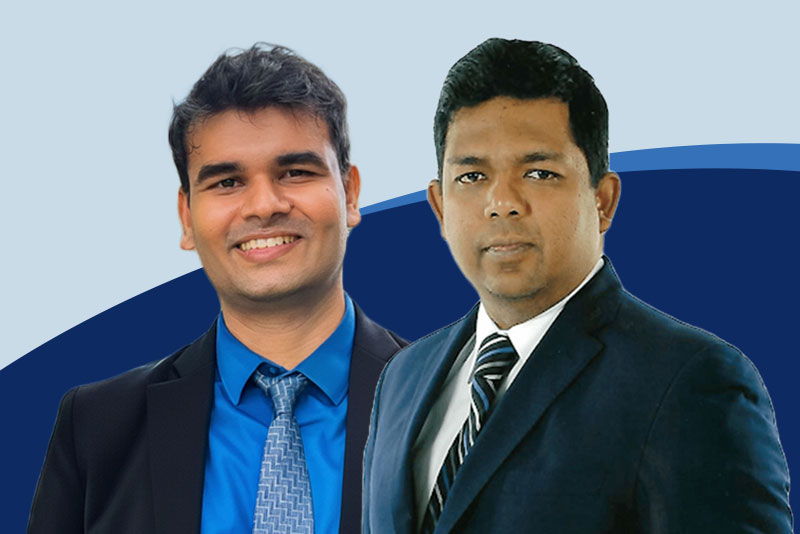
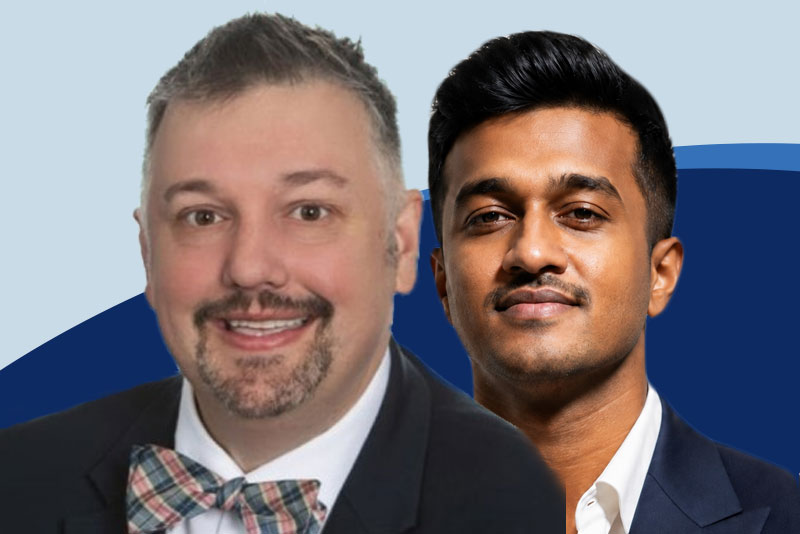
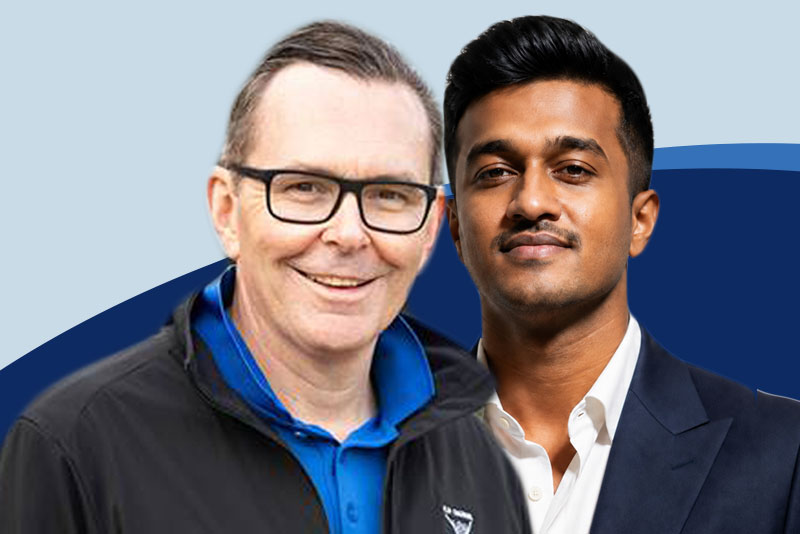
In this episode of the Less Insurance Dependence podcast, host Lester De Alwis welcomes Rushi Ganmukhi, founder and CEO of Bola AI. Rushi previously worked on natural language processing research at MIT, including projects for the Department of Defense and the FDA, before founding Bola AI in 2017 to bring voice AI technology to dental practices. The conversation explores how documentation, often treated as an unavoidable administrative burden, is actually one of the biggest hidden drains on both time and revenue in a dental practice.
Rushi walks through how Bola AI started with perio charting and has expanded into restorative charting, treatment planning, and clinical notes, all built around a simple vision: a dentist or hygienist hits a microphone button, focuses entirely on the patient, and the documentation populates accurately on its own. He shares a striking case study with one of the largest DSOs showing that voice AI adoption led hygienists to perform more comprehensive and more frequent perio charting, which in turn led to more disease detection, better patient education, and ultimately higher case acceptance and treatment revenue, all from solving a documentation problem.
The episode also covers why incomplete records are the primary cause of down-coded or rejected insurance claims, and how capturing a patient’s own words directly in the chart (not a copy-pasted template) creates more comprehensive, defensible documentation. Rushi closes with a clear first step for any practice curious about voice AI: reach out and get a real conversation about what specifically will change in that practice’s numbers, not just a generic product pitch.
Key Takeaways
- Documentation is not just a time problem. It is a revenue problem. Rushi’s DSO case study found that once the documentation burden was lifted, hygienists performed more frequent and more comprehensive perio charting, catching more disease (over 50% of the population has some form of periodontal disease) and driving higher case acceptance.
- Incomplete documentation, not incorrect treatment, is the most common cause of down-coded or rejected insurance claims. Templated, copy-pasted clinical notes routinely miss the single most powerful piece of information: what the patient actually said about their own symptoms in their own words.
- An hour-long appointment routinely has 90 minutes of real work packed into it, and documentation is one of the first things to get cut. Patient education and the softer parts of patient experience are the other casualties. Removing roughly 20 minutes of documentation time per exam gives that time back directly to the patient.
- More face time with patients is the direct mechanism connecting better documentation to higher case acceptance. When a dentist has time to explain what they are doing and why it matters, that explanation builds trust, and trust is what drives a patient to say yes to treatment.
Podcast: Play in new window | Download
Subscribe:
Episode Timestamps
- 00:00:05 – Introduction & Guest Overview
- Lester De Alwis introduces Rushi Ganmukhi, founder and CEO of Bola AI. Rushi previously worked on natural language processing research at MIT, including projects for the Department of Defense and the FDA, before founding Bola AI in 2017 to bring voice AI technology to dental practices.
- Today’s episode explores how voice AI frees dentists from insurance paperwork and how that shift ripples into patient care and case acceptance.
View Transcript
Lester De Alwis: Welcome to the Less Insurance Dependence podcast. I’m your host, Lester De Alwis, and this podcast is dedicated to helping dental professionals build stronger, more profitable practices with less reliance on insurance. Today I’m excited to welcome Rushi Ganmukhi, founder and CEO of Bola AI. Rushi previously worked on natural language processing research at MIT, including projects for the Department of Defense and the FDA, before founding Bola AI in 2017 to bring voice AI technology to dental practices. Today’s episode is called Talk to Your Charts: How Voice AI Frees Dentists From Insurance Paperwork. Rushi, welcome to the show.
Rushi Ganmukhi: Thank you for having me, Lester.
- 00:01:00 – From MIT Research to Solving a Problem for Dentists Specifically
- Rushi’s background is in natural language processing, teaching computers to understand human language. Around 2017, with Alexa and Siri taking off, he explored voice AI applications across a wide range of industries, from manufacturing to healthcare, all of which shared the same underlying problems: documentation, admin overhead, and operational inefficiency.
- After visiting dental offices for two weeks through friends who were dentists, Rushi saw a clear need for voice AI in dentistry. Bola AI started with perio charting and has since expanded into restorative charting, treatment planning, and clinical notes.
View Transcript
Rushi Ganmukhi: My real passion is natural language processing, basically getting computers to understand human language. Came out of research and always knew I wanted to start something. At the time, Alexa and Siri were taking off, everything was gonna be voice enabled. I looked at a lot of different industries, manufacturing, car parts ordering, and they all had the same problem: documentation, admin overhead, operational efficiencies. Then dental came up pretty quickly, I had a few friends who were dentists, I visited their offices for two weeks and quickly saw the need for a voice AI product. We started off with perio charting many years ago, that’s still our old faithful, and we’ve added restorative charting, treatment planning, clinical notes, and a bunch of different things over the years.
- 00:03:02 – Where Practices Actually Lose Time and Money to Documentation
- Rushi explains the two lives of a dentist: the clinical side they trained for and love, treating patients and explaining treatment, and the administrative side required for legal compliance and getting paid, perio charts, restorative charts, treatment plans, insurance documents, and coding.
- Bola AI’s vision: a dentist or hygienist hits a microphone button, focuses entirely on the patient, hits it again when finished, and the documentation populates the first time accurately.
View Transcript
Rushi Ganmukhi: You have these two lives of a dentist. One is clinical, what they were trained to do, what they love to do, treating patients, explaining treatment, spending time with the patient. But now to get paid for all of this, for legal compliance, we need all this documentation around perio charts, restorative charts, treatment plans, insurance documents, and coding. We want to take care of this side of things as seamlessly as possible so they can really focus on the patient. That’s the vision of the company: dentist walks in, hygienist walks in, hits the microphone button, does everything focused on the patient, hits the button once when they’re done, and it all populates perfectly the first time. We’re close, not there yet, but that’s what we’re building toward.
- 00:04:47 – The DSO Case Study: How Better Documentation Led to Higher Case Acceptance
- Bola AI ran a case study with one of the largest DSOs, which brought in outside data analysts to verify the results. The first-order effect within week one: offices save time and staff are happier.
- Within the first 30 days, hygienists began doing more comprehensive, more thorough, and more frequent perio charting on patients, putting the saved time back into patient care. Since over 50% of the population has some form of periodontal disease, this led to more disease detection, better patient education, and ultimately higher case acceptance and treatment revenue.
View Transcript
Rushi Ganmukhi: We did a case study with one of the largest DSOs. They brought in a data analysis team to verify everything. Basically what they found is with our product, the first order effect is offices are saving time and staff is happier, that’s week one. Then in the first 30 days, hygienists are doing more comprehensive, more thorough, more frequent perio charts on their patients. They’re putting that time back into the patient. And because 50% of the population has some form of periodontal disease, they’re detecting more disease. With our patient education tools, they’re actually able to help patients learn what SRP is, scaling and root planing. And because of that, the trickle down effect is higher case acceptance, higher treatment revenue, all from helping them with documentation.
- 00:06:27 – Why Incomplete Documentation Is the Real Cause of Down-Coded and Rejected Claims
- Rushi’s direct point: when a claim is down-coded or rejected, the treatment was probably done correctly, but it probably was not documented correctly. Templated, copy-pasted clinical notes miss critical details.
- The single most powerful missing piece is capturing what the patient actually said in their own words, symptoms, timing, and severity, directly in the note, which the doctor can then build their diagnosis and treatment plan around.
View Transcript
Rushi Ganmukhi: Typically when a claim is down-coded or rejected, you probably did the thing you were supposed to do, you probably did not document it correctly, that’s pretty broad stroke what happens. Right now, common clinical notes that offices use, a lot of them just copy and paste, which you’re not supposed to do, and it’s templated, but there’s a lot it doesn’t capture. One of the most powerful things it captures is what the patient actually said. That is straight from the patient’s mouth, what problem they’re facing. Then the doctor can go through his or her diagnosis, what plan they’re doing. That’s one crucial thing that’s even missing from most people’s notes without AI. More comprehensive notes are better for insurance, there’s no penalty for sending more information.
- 00:08:43 – Patients Are Already Comfortable With Ambient Charting
- Rushi notes that patients are already very familiar with ambient charting technology (something recording quietly in the background), primarily from their experience with primary care physicians, most of whom now use similar tools.
- That familiarity is making dentists more comfortable adopting the same kind of technology in their own practices.
View Transcript
Rushi Ganmukhi: Patients are very used to this kind of ambient charting, something going in the background recording, primarily from their primary care doctors. Most primary care physicians now use something like this. The average consumer or patient is very aware of these tools now, and because of that comfort, dentists are getting more comfortable using it in their offices as well.
- 00:09:13 – Sponsor: Ekwa Marketing
- Lester pauses to recognize this episode’s sponsor, Ekwa Marketing, connecting the theme of implementing the right tools to building the right online visibility.
- Ekwa Marketing helps dental practices with online visibility, reputation management, social media, and all digital marketing. Book a complimentary practice growth audit or marketing strategy meeting at lessinsurancedependence.com/msm or book a complimentary coaching strategy meeting with Gary at lessinsurancedependence.com/csm.
View Transcript
Lester De Alwis: This is where I want to introduce Ekwa Marketing, who is the sponsor of this episode. Big shout out to Ekwa Marketing, who is there to help dentists create amazing online visibility, not just websites, but reputation management, social media, marketing, everything digital when it comes to dental practices. If you’re looking to do a practice audit and grow your practice, you can schedule a practice growth audit or a marketing strategy meeting with the team at Ekwa Marketing. You can book a complimentary session at lessinsurancedependence.com/msm or book a complimentary coaching strategy meeting with Gary at lessinsurancedependence.com/csm.
- 00:10:30 – How Extra Time From Better Documentation Translates Into Case Acceptance
- Rushi notes that most offices run hour-long or 90-minute appointments, but dentists and hygienists routinely have an hour and 30 minutes of actual work to fit into that time. Documentation, patient education, and the softer parts of patient experience are usually the first things to get cut.
- Bola AI removes roughly 20 minutes of documentation per exam (10 minutes for perio, 5 for restorative, 5 for treatment plan and notes), and that saved time goes directly back into patient care, more thorough examinations, and education, which has a significant trickle-down effect on case acceptance.
View Transcript
Rushi Ganmukhi: Every office we go into usually has hour-long appointments, sometimes 90 minutes. In that hour, every dentist and hygienist will tell you they have an hour and 30 worth of work to do. So something gets cut, and a lot of times it’s documentation, patient education, anything around the patient experience. What we try to do is take that documentation, let’s say 20 minutes total, and save you that time completely. We see people putting that time back into patient care, more thorough examinations, and education. And if you’re able to spend more time with the patient, explain what you’re doing and why it’s important, that has a massive trickle-down effect into case acceptance.
- 00:12:18 – The First Step to Trying Voice AI This Week
- FREE RESOURCE MENTIONED: Rushi recommends reaching out directly at www.bola.ai to learn more. He emphasizes that implementation matters as much as the technology itself, and Bola AI offers personalized onboarding, including both in-person and virtual options, with the first 30 days treated as the most critical window for adoption.
- Even practices not fully sold on voice AI yet are encouraged to reach out and talk to the sales team, whose role is explicitly to educate rather than pressure.
View Transcript
Rushi Ganmukhi: I’d say, well, I’m biased, but definitely reach out to us at www.bola.ai. The technology and the product is one part of it, but also the implementation, when the rubber hits the road. We do personalized onboarding, we have options for in-person and virtual onboarding, and we really take care of offices in that first 30 days, that’s the most crucial amount of time. Get one person using it the first week, 10 people using it by week two or three, it grows very nicely. If you’re not a hundred percent sold on this technology yet, still reach out, talk to my sales team, learn more. My sales team is there to educate and talk to you.
Lester De Alwis: All that information, where you can find Rushi’s website, will be on the show notes of this episode. Rushi, thank you so much for spending your time with us today.
Rushi Ganmukhi: Thank you for having me, Lester.
Patients really do not care about what the cost is if they receive a tremendous value — because the value you receive is more important than the money you spend. People don’t want to just buy something. What they want is a relationship.
Mike Sonick
Leadership is what holds everything together. If there’s no leadership, everything crumbles down.
Lester De Alwis
Free Resources From Bola AI
Get a Demo: www.bola.ai/demo
SOAP Checklist: Download here
Free Ebook: Download here
Resources

 One of Gary's most significant achievements as a dental practice management coach is transforming his own practice, LifeSmiles, from one that was infected with PPO plans, no effective marketing strategy, and an overhead of 80% to a very successful dental practice that is currently one of the top-performing practices in the US.
 As CEO of Ekwa Marketing, Naren has over a decade of experience working with dental practices and helping them attract the ideal type of patients to their practices. It is his goal to help dentists do more of the type of dentistry they love with the help and support of effective digital marketing.