Episode 413: Leadership That Sticks: Building Change That Lasts with Liz Lord
Listen Now
In this episode of the Less Insurance Dependence Podcast, host Lester De Alwis welcomes Dr. Michael Sonick, internationally recognized clinician, educator, and thought leader in implant dentistry and practice leadership, for a wide-ranging conversation on what it truly takes to build a high-value, fee-for-service dental practice. Drawing on more than 40 years of experience, Dr. Sonick shares the mindset shifts, leadership principles, and patient communication strategies that allowed him to grow a thriving practice from $20 in first-month revenue to one of the most respected periodontology practices in the country — entirely without insurance. From the disease model of dentistry he was taught under legendary periodontist Harold Lowe, to the career-defining moment of a patient named Hansen, this episode is packed with honest, practical, and deeply human insights for any dentist ready to reclaim control of their practice.
Podcast: Play in new window | Download
Subscribe: RSS
Intro: This is the Less Insurance Dependence podcast show with my good friend Gary Takacs and myself, Naren ArulRajah. We appreciate your listenership, your time, and most of all, we appreciate your intention to reduce insurance dependence in your practice. Our goal is to provide information that will help you successfully reduce insurance dependence and convert your practice into a thriving and profitable dental practice that provides you with personal, professional, and financial satisfaction.
Lester De Alwis: Welcome to the Less Insurance Dependence podcast. I’m your host, Lester D. Alwis. This podcast is designed to help dental professionals build profitable, patient-focused practices with less stress and less reliance on insurance. Before we begin, a quick message from our sponsors. Ekwa Marketing is offering a complimentary marketing strategy meeting to help practices attract high-quality patients and grow through strong online visibility. You can book a complimentary session at lessinsurancedependence.com/marketing-strategy-meeting. If you’re looking for guidance on building a thriving insurance independent practice, you can also schedule a complimentary coaching strategy meeting with Gary Takas at thrivingdentist.com/CSM today.
Lester De Alwis: I’m honored to welcome a very special guest, and that is Doctor Michael Sonick. Doctor Sonick is an internationally recognized clinician, educator, and thought leader in implant dentistry and practice leadership. His work has helped countless dentists elevate their clinical care and build practices centered on value, trust, and long-term success. And in today’s episode, titled Building a High-Value Dental Practice Beyond Insurance, we will explore how clinical excellence, leadership, and patient education allow dentists to move away from volume-based insurance-driven models. Dr. Sonick, thank you for joining us. We’re so excited to have you here.
Dr. Michael Sonick: Well, thank you so much for having me. It’s a pleasure to be here and I look forward to our next few minutes together.
Lester De Alwis: So let’s begin with the big picture. How does focusing on value over volume help practices reduce their dependence on insurance?
Dr. Michael Sonick: Well, that’s a great question because it really is all about value, isn’t it? One of my mentors, the founder of Kaine Waters Management Company — one of the largest leadership companies and financial advisors in dentistry with over 3,000 clients — he says patients really do not care about what the cost is if they receive a tremendous value, because the value you receive is more important than the money you spend. And if you think about all the experiences that you’ve had in your life, it’s not always transactional, and oftentimes in dentistry we make it a very transactional relationship. It’s gonna cost $1,000 and this is the procedure — as opposed to: we’re gonna take good care of you, we’re gonna get you healthier, we’re gonna improve your aesthetics, we’re gonna give you great function, you’re gonna feel good.
Dr. Michael Sonick: So value is the most important thing in any transaction. We’re professionals selling our services, but people really don’t want to just buy something. What they want is a relationship. You build the value by developing that strong relationship, and it’s all based upon trust.
Dr. Michael Sonick: Today, after this, I have two doctor’s appointments with physicians. The last time I was there with this young cardiologist — he’s been helping me for many years, but I see he’s in his 40s, he’s burnt out. And I said to him, what’s that on the screen? It was a CAT scan of my heart, and I said, I really don’t understand what I’m looking at. And you know what he said? He says, you don’t have to understand. He goes, I do. And what he did was he minimized me as a human being. He looked at me like, you’re OK, trust me or don’t trust me, I don’t really care because you’re gone in 3 minutes. That’s what insurance does to providers. In our practice, I don’t look at my patients as procedures. I look at them as individuals that I want to help.
Lester De Alwis: From your experience, what mindset shift must dentists make before they can successfully reduce reliance on insurance?
Dr. Michael Sonick: I went to the University of Connecticut School of Dental Medicine. I graduated in 1979, and the dean was Harold Lowe — probably one of the most prominent periodontists of all time, the father of modern periodontology. He told us the first day of school that we are now going to be called doctor. He said: I’m going to give you immediate respect. You’re going to be a doctor, but you’re not dentists — you’re physicians of the oral cavity, which means you have to take care of the whole patient.
Dr. Michael Sonick: We weren’t allowed to trade patients. If we had a patient, we had to do everything that patient needed dentally. But before we could even do the dentistry, we’d have to get them periodontally healthy. And so he taught us about the disease model of dentistry. That’s what happens in dental schools — people trade patients like baseball cards. Do you have a root canal? Yeah, I got a crown. Can I trade? And that’s not a really good way to treat humans because they become monetized. They become the procedures, not patients. And in my book, Treating People, Not Patients, it’s all about developing strong, in-depth human connection. We weren’t given one hour on hospitality. We weren’t given one hour on human connection. We weren’t given one hour on managing a patient with fear. We were given thousands of hours on biology and microbiology and how to prepare a tooth.
Dr. Michael Sonick: How do you differentiate yourself? You look at the patient not as a procedure, but as a human being that needs help. When most patients come into our practices, they are filled with anxiety, with fear. And so I tell every patient on their first visit two things. One, I congratulate them for coming in because I know it’s a big deal. I say: you’re in the right place. We’re gonna diagnose a number of things today which I call problems, but I’m gonna immediately give you a solution. I’m not gonna leave you hanging. I’m gonna give you a future that’s brighter than your past where your life is going to be better. Three things are gonna happen if you go through treatment: one, I’m gonna get you healthier; two, I’m gonna improve function; and three, we’re gonna improve your aesthetics. I talk to their feelings, because people really don’t buy crowns. What they want to buy is a better life. And this only takes 90 seconds — and by the time I’m done, they trust me.
Dr. Michael Sonick: Yesterday I saw two patients who both needed a tremendous amount of implant work and bone grafting. They found me on their own or because they knew me. Neither of them had insurance, and both of them needed a tremendous amount of work — probably about $30,000 to $40,000 worth of work — and they both said yes. Our case acceptance rate, my personal case acceptance rate, is 92%. My partner’s is 83%. With no insurance. And that’s because people do not get that kind of time and attention and care from many other people. We’ve distinguished ourselves by being present with the patient. By looking at them eye to eye, knee to knee, as my friend Bob Levine says.
Dr. Michael Sonick: If I take insurance, let’s say my fee is $100 and the insurance pays $70. So I’m making $70, but my overhead is $50. If I charge $100 and my overhead is $50, I’ll make $50 on a patient. If I charge $70, I just lost $30. So now I’m making $20. My overhead is now 80%. So I’m filling my chair, doing treatment that really is not in the patient’s best interest, and I’m reducing my profitability.
Dr. Michael Sonick: I know a young dentist that just opened her practice and her hygienist makes $65 an hour, but the insurance only pays $55 for a cleaning. And unless she stacks the procedures and bills for things they may not need, she’s not going to be able to make a living. And that creates a tremendous amount of stress. So the stress level goes up, profitability goes down, and the quality of treatment drops.
Dr. Michael Sonick: When I opened up my practice, I was in Fairfield, Connecticut. There were 5 periodontists within 200 yards of my practice. Everyone said don’t open there, but I wanted to be there — it was 200 yards from my high school. Not only did I want to be there, I decided I wasn’t going to take insurance. So on day one, with no patients and $400,000 in debt — which was a lot in 1985 — I opened a fee-for-service practice.
Dr. Michael Sonick: Do you know what I took in my first month? $20. I took in $20 my first month. For the year, I took in $35,000. My overhead was $90,000. My second year, I took in $90,000. My overhead was $125,000. My third year I did $130,000 — and I didn’t make any money my first three years in practice. So how did I support it? I worked in a mall in White Plains, New York two days a week just to support the private practice.
Dr. Michael Sonick: Both of my partners said to me, I want to take insurance. I said, don’t — because then you become a slave. Not only do you make less money, but you do a less quality job and your integrity really has to be managed by insurance companies. Now I’m saying this to an audience where 90% of you are taking insurance and you’re scared to drop it. My suggestion is: you just play with it. Sometimes you have to take it just to fill the chair, but start to look at your profitability. And it doesn’t matter what location you’re in. I’m in Fairfield, Connecticut — Bridgeport is 2 miles from me, which is the poorest city in the state. We get patients from Bridgeport and we get them from New York City and Greenwich. I always say they can take the bus or the limo — they all get the same diagnosis and treatment planning.
Lester De Alwis: What role does leadership play in guiding the team and patients through a transition away from insurance-driven dentistry?
Dr. Michael Sonick: It’s everything. Without leadership, nothing gets done. I just came back from a cruise. There was a captain on the cruise. I wasn’t steering that ship, nor were the people who were cooking, or making the beds. There was somebody else doing it. And how many courses do you think dentists get in leadership in dental school? None. We’re taught procedures and we’re taught biology — which you need to know. But it’s only part of it.
Dr. Michael Sonick: I always say there are 4 things we look at in practice: the individual, the team, our patients, and the referrals. Every team needs a strong leader. The most important group of people in my practice is not my patients — it’s my team. The leader has to take care of the team with the vision of giving good care.
Dr. Michael Sonick: There’s a really good book I’m going to recommend: Leaders Eat Last by Simon Sinek. It’s a phenomenal book. It really breaks down leadership into a lot of different aspects — what makes a good leader, and what the impact is biologically on the leadership person. What does it do to your dopamine, your serotonin? Because what a good leader does can change things dramatically.
Dr. Michael Sonick: So what the leader does — and if your practices don’t have it, you really want to develop a series of core values and a mission statement or statement of purpose. Unless that is defined, everyone’s lost. I have 25 people from 11 different countries. We speak 7 to 8 different languages in the practice. That whole team has to be cohesive and coherent. Unless the leadership is there to guide the team — to let them know what their responsibilities are and what’s expected of them — it all falls apart.
Dr. Michael Sonick: My job in the practice is to rehire everybody every day. You heard that right — rehire them. Because my patients come because I have a great team, but my team has to come because they’re motivated to give good care. Did you know that the average length of time someone stays in a job today is 18 months, and that 70% of your employees are looking online while they’re at work for another job? So every day I have to make sure that they’re happy.
Dr. Michael Sonick: I had some rumblings — I want to work at home. So I talked to everybody individually. And one person said to me: we’re not making as much money as we did the year before. I go, why not? Because I’m working really hard. I thought, that doesn’t make sense because your hourly wage is up. So I looked at the numbers and they had worked 100 fewer hours last year. I said, you’re not making less — you’re working less. Once they saw that, the whole administrative team came around. I showed them the numbers and they said, OK, sorry. And I said: I can give you an extra $100 bonus plus time and a half for working a fifth day. Won’t take much longer before you’re making a lot more money if you want to work.
Dr. Michael Sonick: I have to be the one that is a role model for them. When packages come in, I pick them up and bring them to the basement. If it snows, I make sure there’s salt spread. My team is looking at me all the time. I never ever draw attention to the negative. I always talk about the positive. If there’s a problem, I have a whole strategy for that.
Dr. Michael Sonick: I play games. I sometimes will take light bulbs and I’ll unscrew them so they’re no longer in. I’ll see how long it takes somebody to find it. Sometimes 2 or 3 weeks will go by. I go: why don’t you try screwing it in first? They screw it in. Oh. I always make it about the team. I never blame any one person. Leadership is there to provide a vision for the team so that they know where to go — to give them what we call the banks of the river. You know you can’t go in or out. People love leadership because most people want to know what they’re supposed to do. Nobody comes to work saying I want to be a lousy employee.
Lester De Alwis: What is one mistake dentists make when trying to elevate their practice too quickly?
Dr. Michael Sonick: The biggest mistake is not creating a vision, not creating a proper timeline, and cutting corners to get there quicker. I remember a co-resident who was very successful at Emory. He went to private practice and his patients followed him. But in a few months his patients started leaving. I asked them how come you left — he’s charming, he’s nice, he’s eloquent, he’s a good surgeon. They said: well, he changed. I said, how? They said: it was in his eyes. He had cash register eyes. When he went into private practice, the money mattered, and the patients felt it.
Dr. Michael Sonick: I’ve always thought: I don’t want them to think I’m looking at them with cash register eyes. Early in my career I was in a tremendous amount of debt. At one point I was $2.5 million in dental debt because I built my building, renovated it, and had to make $150,000 a month just to pay my overhead. And during that period of time, I never pressured a patient. I never said, you’ve got to get this done this week or you’re going to have an abscess. I never did that.
Dr. Michael Sonick: In my first year in practice, 1985, a gentleman named Hansen needed some periodontal surgery. He said to me: it’s June now, I’ll do the surgery — if you think I really need it — but I’d like my insurance to kick in. Do you mind if I wait till January? And at that moment I was in tremendous debt. It was my first year in practice. I paused for a second and it was like a vision came down and said: Mike, what you say to Hansen today is going to impact your entire life. What road do you want to go down — a road of integrity, or a road of quick success? So I said to Hans: we can wait till next year, it’s not a problem.
Dr. Michael Sonick: Hans left. Two months later his wife came in for a cleaning and I asked, how’s Hans? And she said he died of a massive heart attack three weeks ago. That was two months after I told him he could wait. And when that happened, it was like another message I was getting. If you did not do the right thing — how guilty would you feel? So: there is no shortcut to success. Everybody that’s successful, whether you are Michael Jordan or the Beatles, have worked their butt off for many years. Take it slow. Do it the right way. I guarantee you, if you follow the principles of integrity and proper treatment, you’ll have a niche practice and you’ll be very successful.
Lester De Alwis: For a dentist who wants to start building a higher-value practice this year, what are the first steps you recommend?
Dr. Michael Sonick: Create a vision. What does it look like? Work backwards. Create a vision of what you’d like your practice to be in 10 years. Then look at 5, then 3, then 2. What does it look like? Create all the steps to be there. And very importantly: find a mentor. Find someone who has what you want and ask them to mentor you.
Dr. Michael Sonick: When I go up to somebody who’s really well known, who I really respect, and I ask them for help with their phone number — 90% of them give it to me. They’ll say I can’t talk to you now, but here’s my cell, call me. Danny Meyer is one of my mentors — he’s the founder of Shake Shack, owns 50 of the top restaurants in New York City. About 8 years ago I reached out to him. I never thought he’d respond. Well, I walked into the restaurant and the maître d’ came over and said: Danny can’t be here, but here’s a signed autographed copy of his book — saying, to Mike, hospitality in the dental chair. And today, the cover of my book reads: Mike’s higher calling is to use hospitality gifts to make people feel better. His lessons apply to any customer-facing business. Danny Meyer wrote that. Without even knowing me. Just because I emailed him.
Dr. Michael Sonick: And one other thing I’m going to recommend: find 5 or 6 people that have the same situation you have and say, let’s form a study club. Let’s talk about how we can become more successful. Because we all have the same problems. You want to talk to me — give me a call: 203-209-7029. I’m very easy to get, and I find that the greats are always easy to get.
Lester De Alwis: Is there any way our listeners can reach out to you or access your resources?
Dr. Michael Sonick: My name is Michael Sonick — S-O-N-I-C-K. Just go to michaelsonick.com. I have two websites — one for the practice, but michaelsonick.com is all the courses and education. You can get some of the stuff for free online. There’s a lot of material there. My book is $14 on Amazon. It’s pretty much a guide to how to build a successful practice. At the end of each chapter there are 3 or 4 pages that ask you questions so you can look at your own practice and determine if you’re doing it the right way — decor, showtime, customer service.
Dr. Michael Sonick: If you go to YouTube on my YouTube channel, I have 250 videos. They’re all free. You can follow me on Instagram — I put a lot of this material out every Wednesday and Friday. My strong recommendation is that you sit down with your team — I recommend Wednesday, in the middle of the week. Buy them lunch and have them watch the video, which is about 8 minutes, and within months your practice will change just by listening to some of the things I talked about.
Dr. Michael Sonick: I have a whole video series where you have 10 modules and you can become credentialed. It is about 4 or 5 hours of training. It comes with a workbook, and once you fill out the form and the test, you can put the logo on your site. We actually have somebody in our office that we call Chief of Hospitality. They’re there just to give everybody a great experience.
Dr. Michael Sonick: My email is mike@michaelsonick.com. You don’t need me to come — you can just do it on your own. Like my mentor says: I want to provide more value than the money I receive. I just give a lot of value out there. This coaching and teaching business is slow, and I’m not pushing it. I’m not going too fast. I’m taking it slow and I see this slow organic build — and that’s how it has to be with your practice. It does take time.
Lester De Alwis: So, Doctor Sonick, thank you for sharing your insights and experience today.
Dr. Michael Sonick: My pleasure. Thank you for having me, Lester.
Lester De Alwis: The key takeaway from this conversation is simple. Practices that lead with quality, education, and strong leadership create value that insurance cannot define. That value allows dentists to regain control of their time, care, and profitability. If you are ready to take action and are looking to do a health checkup on your online visibility or your website, you can start by scheduling a complimentary marketing strategy meeting with Ekwa Marketing at lessinsurancedependence.com/marketing-strategy-meeting. If you’re looking for mentorship, you can also book a complimentary coaching strategy meeting with Gary Takacs at thrivingdentist.com/CSM. All these resources are complimentary and can help you towards a stronger and more independent practice. If you found value in today’s episode, please share it with a colleague or a friend who could benefit from reducing their insurance dependence.
Thank you for spending your time with us today. I look forward to connecting with you again on the next episode of the Less Insurance Dependence Podcast. Until then, keep moving forward towards a thriving independent practice.
Patients really do not care about what the cost is if they receive a tremendous value — because the value you receive is more important than the money you spend. People don’t want to just buy something. What they want is a relationship.
Mike Sonick
Leadership is what holds everything together. If there’s no leadership, everything crumbles down.
Lester De Alwis
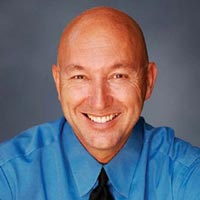 One of Gary's most significant achievements as a dental practice management coach is transforming his own practice, LifeSmiles, from one that was infected with PPO plans, no effective marketing strategy, and an overhead of 80% to a very successful dental practice that is currently one of the top-performing practices in the US.
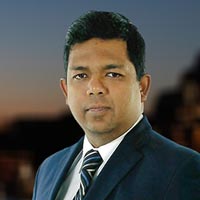 As CEO of Ekwa Marketing, Naren has over a decade of experience working with dental practices and helping them attract the ideal type of patients to their practices. It is his goal to help dentists do more of the type of dentistry they love with the help and support of effective digital marketing.