Episode 413: Leadership That Sticks: Building Change That Lasts with Liz Lord
Listen Now
In this episode of the Less Insurance Dependence Podcast, host Lester De Alwis sits down with Dr. Robert Convissar — a pioneer in laser dentistry with over 30 years of experience, author of Principles and Practice of Laser Dentistry (the number one selling laser dentistry textbook in the world), and Director of Laser Dentistry at New York Hospital Queens — for a conversation that reframes lasers from a niche soft-tissue tool into a doorway to insurance-free revenue. Dr. Convissar’s opening point is the one most dentists need to hear: most practitioners buy the wrong laser, get no real training, and end up with what he calls a $50,000 coat rack. The problem is not the technology. It is the assumption that a cheap device can do what only a serious one can.
The conversation moves from the laser purchase decision into the procedures that insurance will not cover — airway dentistry, infant tongue and lip tie release, facial aesthetics like nasolabial folds and crow’s feet, periodontal pocket decontamination, peri-implantitis treatment, and laser-assisted dry socket prevention. Dr. Convissar makes the case that airway dentistry will become one of the most important areas of the profession over the next five to ten years, with the potential to reshape orthodontics if dentists learn to guide maxillomandibular development from infancy. He also reframes dental insurance itself: it is not insurance in the conventional sense — it is a method of payment, run by companies whose obligation is to their shareholders, not to the patient.
The episode closes with the most practical segment: the one elective procedure a dentist should add first depends on the personality of the practice — aesthetic, periodontal, or prosthetic — and Dr. Convissar lays out simple, low-friction entry points like laser-assisted dry socket prevention and oral cancer screening that require almost no shift in clinical workflow. The path off insurance does not require a single dramatic decision. It requires introducing one cash-pay procedure at a time, with proper training.
Podcast: Play in new window | Download
Subscribe: RSS
Naren Arulrajah: This is the Less Insurance Dependence podcast show with my good friend Gary Takacs and myself, Naren Arulrajah,
Gary Takacs: We appreciate your listenership, your time, and most of all, we appreciate your intention to reduce insurance dependence in your practice. Our goal is to provide information that will help you successfully reduce insurance dependence and convert your practice into a thriving and profitable dental practice that provides you with personal, professional and financial satisfaction.
Lester De Alwis: Welcome to the Less Insurance Dependence podcast. I’m your host, Lester De Alwis. This podcast is dedicated to helping dental professionals build stronger, more profitable practices with less reliance on insurance. Today, I’m thrilled to welcome Dr. Robert Convissar, a true pioneer in laser dentistry with over 30 years of experience and the author of Principles and Practice of Laser Dentistry, the number one selling laser dentistry textbook in the world. Dr. Robert has presented over 300 seminars on 5 continents and serves as the director of laser dentistry at New York Hospital Queens. What sets him apart is simple. He’s been teaching dentists how to use lasers for cash pay procedures long before the rest of the industry caught on. So in today’s episode, which is titled as Lasers, Airway and Aesthetics, Building an Insurance-free revenue stream, we’ll explore how laser dentistry opens the door to airway treatment, facial aesthetics, and elective services that don’t depend on insurance. So if you’ve been looking for a real way to add cash pay income without changing who you are as a clinician, this conversation is for you. Dr. Convissar, thank you for joining us today.
Dr. Robert Convissar: My pleasure.
Lester De Alwis: Amazing. So, I know you’ve been practicing and teaching laser dentistry for over 30 years, long before lasers were on most dentists’ radar. You trained dentists on 5 continents and written what’s become the number one selling laser dentistry textbook in the world. So what does it tell you about where dentistry is headed that more dentists are finally turning to lasers right at the same moment they’re trying to break free from insurance?
Dr. Robert Convissar: Well, laser dentistry is stratified, just like dentistry in general is stratified. You have the private practice model, not insurance-based, and then you have the DSOs and the insurance-based practices. Similar to lasers, we have lasers that cost $5,000 and we have lasers that cost $50,000. And what boggles my mind is that people will say, OK, let me get into laser dentistry. This one costs $5,000, that one costs $50,000. I’m gonna buy the $5,000 device, and they think it’s going to do the same exact thing. I give two seminars a month worldwide, and the first question I ask is how many people have a laser. 75% of the people in attendance will raise their hand, and I’ll say, how many people use their laser on a regular basis, and virtually all the hands go down. Lasers need training, and training is one thing that most laser companies don’t give. And the other thing is that people almost always buy the wrong laser.
Dr. Robert Convissar: So tomorrow, I’m driving cross country from New York to Los Angeles, 3,000 miles. I could drive in a Volkswagen Beetle for a couple of thousand dollars, or I can drive in a Rolls-Royce Silver Spur. They’re both cars, but how I get from point A to point B in terms of gas mileage, in terms of comfort, in terms of reliability, in terms of so many things is so different. There’s no comparison between a Rolls-Royce and a Volkswagen Beetle, and there’s no comparison between a $5,000 laser and a $50,000 laser. So for most of our listeners out there that are ready to get involved with laser dentistry, if they have a $5,000 laser, sure, they’ll get a return on investment because they’re only spending $5,000. But is it gonna fill their coffers? No. Is it going to enable them to do procedures that they otherwise couldn’t do? No. Is it going to be able to get them away from insurance? Absolutely not. You need to spend money to make money. You need to buy something that works, something that can do airway, something that can do infant tongue tie release, something that can do nasolabial folds and mental labial folds. So we’ve got to get dentists out of the rut that thinks, all right, I’m gonna buy this cheap little dial device and it’s gonna be able to do everything that I need. It just doesn’t work that way. And if you want to be insurance independent, you need to spend money, you need to get trained. I’ll say that again, you need to get trained. One more time, you need to get trained, because without training, you’ve got a $50,000 coat rack.
Lester De Alwis: Amazing, that’s a very nice way you framed it about the company, there’s no comparison between the Rolls-Royce and the Volkswagen, and like you said, you need to invest in yourself. So let’s get specific about what most practices or practice owners are still missing today. A lot of dentists still see lasers as a clinical tool, something for soft tissue or a frenectomy. What are most practice owners missing about what lasers can actually do for their bottom line, especially when it comes to the kinds of procedures insurance won’t touch?
Dr. Robert Convissar: Well, once again, the operative word of the day for this entire talk is training. Most lasers, you just buy it and it’s delivered and you take it out of the box and you start playing around with it, and that’s it. And the training is rudimentary, if any. Take a look around any operatory that’s doing well with implants. Did the dentist just call Nobel or Straumann and say, hey, send me a bunch of implant material and I’m gonna put the first implant in on my mother-in-law? No, they got hours and hours and hours of training. When somebody bought a scanner to do crown and bridge, did they just have the scanner delivered and start scanning? No, they got hours and hours and hours of training. When somebody bought a cone beam, was the cone beam just delivered and that was it? No, they got hours on image acquisition, breaking down and putting together the device between patients, disinfecting it, image acquisition, and on and on and on. So once again, I can’t emphasize enough training, training, and training.
Dr. Robert Convissar: So when you purchase a device that, number one, can do everything, and number two, comes with training, you’re gonna be able to do airway dentistry, which is one of the hottest topics in continuing education these days. In 5 to 10 years, airway dentistry is gonna be the most important thing. It’s getting there right now. The field of orthodontics is going to undergo a massive change because if we understand what’s doing with airways in a 1 week old and a 1 month old and a 3-month old, 6-month old, 1 year old, and we can guide the development of the maxilla and the mandible, and adjust the tongue and adjust the palatal arches and adjust all the soft tissue so that the maxillomandibular complex grows the way it should, the amount of orthodontic problems is going to decrease tremendously. So we need a device that’s going to be able to do airway. We need a dentist to be trained to understand airway, facial aesthetics. There are dentists that are removing nasolabial folds, mental labial folds, crow’s feet, softening the jawline. And all of these things can be done with a laser, not with a $5,000 diode, but with a more expensive device. So all of these things can be done. All of these things are cash on the barrel head. They are not insurance-based, and the more procedures you do that are not insurance-based, the easier it is to segue from an insurance-based practice to a fee-for-service practice.
Lester De Alwis: Amazing, amazing, and you just mentioned about airway dentistry. So I think those are the big growth areas. When we talk about airway dentistry and aesthetics, where lasers can help patients get off CPAP machines and facial aesthetics, like nasolabial folds and mental labial folds and crow’s feet — so walk us through how a general dentist actually makes the move into these elective cash-based services. What does readiness look like?
Dr. Robert Convissar: OK. Once again, the operative word of the day is training. Get trained. Buy a laser from a company that is going to give you training. And by training, I don’t mean a webinar, I don’t mean a CD. I mean a 2 or 3-day comprehensive participation workshop, followed by at least a full day in the dentist’s office with the laser technician guiding the dentist on what to do and how to do it and where to do it and when to do it and when not to do it. Once they get the training, it’s simple. And it’s very easy to just gently, slowly introduce this to the practice. You’re doing some laminates, you’re doing some cosmetic bonding, you’re doing something in the aesthetic zone, and when you’re finished, the mouth looks great, but the perioral area doesn’t look so great. So you can suggest, you know, you have this little nasolabial fold, let me take care of it for you. You have this little mental labial fold, let me take care of it for you. You know, everything looks beautiful with your smile now, but those crow’s feet take away from your beauty. Let me take care of it for you. And you just slowly tell the patient what you can do, how you can do it, what the results are going to be, and how they’re gonna look younger. And if they look younger, they’re gonna feel better. And once again, you don’t have to do a lot of external marketing. This is gonna be primarily internal marketing because one patient that’s thrilled with their results, they’re gonna tell their friends and their other friends and their other friends, and it’s just gonna grow exponentially.
Lester De Alwis: What you’re describing is exactly the moment a lot of practice owners get stuck — they can see the opportunity, but they don’t have a clear plan to bring patients in for these kinds of services. So if anyone listening is sitting with that feeling, the team at Ekwa Marketing is offering a complimentary marketing strategy meeting at lessinsurancedependence.com/msm. It’s a great place to start mapping the path. You will get a free audit where you can understand things you don’t know about your practice or your online visibility, because your website is the first place your patients will see, so you need to have a great website. Now, Dr. Robert, I want to push on something you touched on earlier. There’s a connection here that I don’t think gets enough airtime, and that’s better clinical care and stronger profit margins often come from the very same procedure. So when a dentist helps a patient breathe better at night or feel more confident about their smile lines, they are also building income that’s 100% insurance free. How do you help dentists see that those two things aren’t separate goals, that they actually pull in the same direction?
Dr. Robert Convissar: Well, dentists have to realize that anything that’s high-ticket is not gonna be covered by insurance. Insurance companies will pay for an extraction. They’ll pay for an endo, they’ll pay for a crown, they’ll pay for dental-related services, but they’re not gonna pay for things where there’s a large outlay. Airway dentistry is something that insurance companies don’t cover, and it’s a great way to start telling patients, I can do this, but insurance companies won’t pay for this. The thing that dentists are afraid of is they’re afraid of telling their patients what dental insurance is — it’s a method of payment. It really isn’t insurance in the conventional sense. They have to tell their patients that insurance companies are in business for one reason and one reason only, and that one reason many dentists just don’t realize or don’t communicate well to their patients is that insurance companies are in business to make a profit for their shareholders, not necessarily to pay out claims, and they want to keep as much money in as possible and pay out claims as infrequently as possible. So don’t think of dental insurance as your friend. Think of dental insurance as a way for people to make money by being stockholders in the insurance company. So the insurance company is not looking out for the patient’s benefit. It’s looking out for their stockholders’ benefit. Once dentists start to understand that mindset, it becomes easy.
Dr. Robert Convissar: I want to develop this a little bit further. Some of our listeners out there may not want to get involved with airway at first, or may not want to get involved with nasolabial folds and aesthetics. There are so many other things — infant tongue tie and lip tie treatment. I’m a general practitioner, but I have treated thousands of 1 week old babies who can’t latch on to mommy’s nipple and nurse. And that is something — though I accept dental insurance for some procedures, that’s a procedure for which I absolutely positively do not accept dental insurance. So that’s a way of seguing in. And I’ll give you an even simpler way of doing it. Everybody knows about the possibility of dry socket. You do an extraction and for whatever reason a patient develops dry socket, and it can be uncomfortable for a week, and that’s not a good thing. How about starting with insurance-free billing for certain procedures that you’re doing now, such as — well, Mr. Jones, we’re going to extract that tooth, and I’m sure you’ve heard of the term dry socket. It’s where the extraction socket for whatever reason doesn’t heal. It can be uncomfortable for a few days. You may need antibiotics, you may need pain medications, you may not be able to chew a full diet. But you see, I have this laser. And what this laser can do is, number one, it kills bacteria at the surgical site, and number two, it gives you a beautiful thick fibrin blood clot in the socket, a much more densely organized blood clot than you would get normally by normal healing. And if I use this laser immediately after the extraction in your extraction socket, I can practically guarantee that you won’t have a dry socket. However, this is a procedure that is an elective procedure. You don’t have to have it done, but the insurance company certainly will not pay for it. So this is a procedure that’s out of your pocket. And the fee for me using the laser, which is a high-tech piece of equipment to prevent dry socket — the fee is $50, the fee is $75, the fee is $100, the fee is whatever. So you can make up fees for certain procedures just by using a laser for very simple procedures without initially getting into facial aesthetics, without getting into airway, without getting into infant tongue tie and lip tie. Another very fast example: most dentists do biopsies, or at the very least should perform biopsies. Why do you do a biopsy? Well, because you’re looking for oral cancer. There are oral cancer detection devices. There’s the VELscope, among many, many others. There is a code for oral cancer detection — D0431. Most insurance companies will not pay for it. And you can introduce oral cancer detection as a private, non-insurance procedure. And this is something that works out beautifully, and you need some verbal skills. Mr. Jones, I know you’re a smoker. I know you’ve had that axial CT to check for lung cancer. I know you’ve had your PSA drawn for prostate cancer. I know you’ve had your colonoscopy to look for colon cancer. Mrs. Smith, I know you’ve had your mammograms and sonograms for breast cancer. I know you’ve had your Pap smear for cervical cancer. All of these evaluations, all these procedures are to detect cancer early. Early detection is critical. Well, see, I have this device. And this device can detect cancer well before it could be noticed visually by my loupes and the lighting in the room. So this is a special device, and I can use this. I can do an oral cancer screening. Oral cancer has a treatment success of less than 50% because it’s not caught early enough. So this is a procedure that I can look for and identify early stage cancers before anybody’s aware of them, but it’s not covered by insurance. The fee for this exam is $50, $75, $100, whatever. So once again, you don’t have to start working with tongue ties, with airway, with nasolabial folds. There are so many minor little procedures that you can do to start getting your patients on the road to: this is an extra benefit, this is something that new technology can do, this is something not covered by insurance. And slowly as you introduce more and more of these procedures, you can get off of the insurance cycle.
Lester De Alwis: Amazing. So many great nuggets, and I think what you just mentioned is so important for anyone listening in. Now, of course, this podcast is all about taking action. So for a dentist listening in right now who’s nodding along but doesn’t know where to start, what’s the one elective laser procedure that they should look at adding first — something realistic to learn, with clear patient demand, that gives them their first taste of insurance-free income?
Dr. Robert Convissar: It depends on what the dentist is more interested in. Some dentists are more interested in a periodontally focused practice. Some are more involved in an aesthetic practice. Some are more involved in a preventative practice. If you’re more involved with aesthetics, before you put on your laminates, a little bit of cosmetic recontouring of the gingiva to give you the golden proportion of your anterior teeth makes a world of difference in the success rate of a laminate case. If you’re more periodontally oriented, using lasers for pocket disinfection, pocket decontamination, pocket shrinkage — and there are correct ways to do it, and there are many incorrect ways to do it. So you’ve got to learn the right way. If you’re a more prosthetic-driven practice and you see a fair amount of peri-implantitis, there is a boatload of literature showing how lasers can be used to successfully treat peri-implantitis. So it’s not a matter of what’s the one golden procedure that’s going to introduce your patients. It depends on where your practice is, where you want to locate your practice, and what you want to do. There are simple, easy procedures for virtually every type of practice where we can get you started with non-insurance based procedures and get you off of the insurance merry-go-round.
Lester De Alwis: Dr. Convissar, of course, like I said, anyone listening today would want to have a conversation with you about certain things they’d like to start with their journey, with their career, with their practice. In that case, what is the best way they can reach or contact you?
Dr. Robert Convissar: My email is so dumb, nobody will ever forget it. I use a laser. My name is Bob and I’m a DDS. So my email address is laserbobdds — L-A-S-E-R-B-O-B-D-D-S — laserbobdds at gmail. So just email me. You have any questions, any concerns, any thoughts whatsoever — I’ve been using lasers for 37 years. I spend a good hour every single day, 7 days a week, answering emails from dentists literally worldwide. I’ve taught laser dentistry in 25 different countries, so I get emails every day. So please, pick my brain, use my knowledge. I’ve been where you are now. When I bought my practice decades ago, it was an insurance-based practice, and slowly but surely, I was able to get off of the insurance merry-go-round. It didn’t take a day, it didn’t take a week, it didn’t take a month, but slowly, carefully, thoughtfully, we can get you off of the insurance merry-go-round. But you’re not getting off of it unless you introduce new technologies such as lasers, you get educated on how to use the lasers, and we can get you off of the insurance.
Lester De Alwis: Exactly. So if today’s conversation sparks something and you want hands-on training with Dr. Convissar — Dr. Convissar runs two-day evidence-based participation courses across the US and Canada, covering general laser certification and his PEEL technique for pediatric tongue tie release. They are not manufacturer-driven, and they cover multiple laser wavelengths, so you walk in ready to use what you already own. So if you want to find out about these courses, you can visit the website, which is fullspectrumseminars.com. I repeat, fullspectrumseminars.com. You can find the upcoming course dates and all of that information on the website. And also if you want more details, you can check the show notes of this episode, where you can find Dr. Convissar’s details and the website of the courses. So Dr. Convissar, thank you so much.
Dr. Robert Convissar: Just to that quickly for a minute — virtually every tongue tie course out there is manufacturer-driven, which means it’s not an educational course. It’s a thinly veiled sales seminar. At all of my tongue tie courses, at all of my laser courses, I guarantee multiple wavelengths. There will be erbiums, there will be diodes, there will be CO2s, there will be PBMs, there will be multiple manufacturers. That’s the only way to know that you’re at a bona fide educational experience, not a manufacturer-driven sales seminar masquerading as an educational venue.
Lester De Alwis: Exactly. So, Dr. Convissar, thank you so much for spending your time with us.
Dr. Robert Convissar: My pleasure. Anytime you need me, just give a call, give a shout out, and laserbobdds@gmail.com. I’m ready to answer your questions.
Lester De Alwis: There you go. So the takeaway is very clear — lasers aren’t just a clinical upgrade, they’re a doorway into elective, insurance-free care that helps your patients breathe better, look better, and pay you directly for the value you bring. So if you’re ready to take action on the marketing side, you can schedule a complimentary marketing strategy meeting with Ekwa Marketing at lessinsurancedependence.com/msm. And if you want mentorship and you’re looking for practice management help, you can schedule a complimentary coaching strategy meeting with Gary Takacs at thrivingdentist.com/csm. The freedom to practice on your own terms doesn’t come from working harder inside the same insurance model — it comes from opening new doors. Lasers are one of the clearest doors available to you right now. So thank you for listening to the Less Insurance Dependence podcast. I’m Lester De Alwis, and I look forward to seeing you on the next episode.
Patients really do not care about what the cost is if they receive a tremendous value — because the value you receive is more important than the money you spend. People don’t want to just buy something. What they want is a relationship.
Mike Sonick
Leadership is what holds everything together. If there’s no leadership, everything crumbles down.
Lester De Alwis
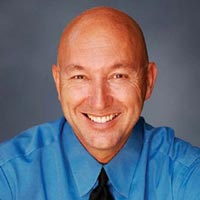 One of Gary's most significant achievements as a dental practice management coach is transforming his own practice, LifeSmiles, from one that was infected with PPO plans, no effective marketing strategy, and an overhead of 80% to a very successful dental practice that is currently one of the top-performing practices in the US.
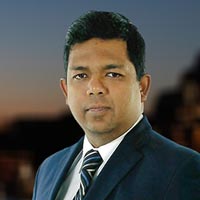 As CEO of Ekwa Marketing, Naren has over a decade of experience working with dental practices and helping them attract the ideal type of patients to their practices. It is his goal to help dentists do more of the type of dentistry they love with the help and support of effective digital marketing.