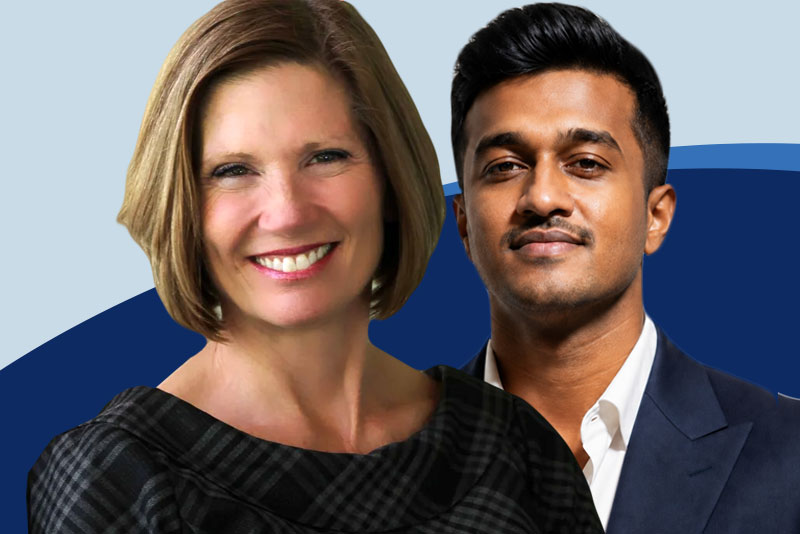
In this episode of the Less Insurance Dependence podcast, host Angie sits down with Naren Arulrajah, CEO of Ekwa Marketing and co-host of the show, to unpack a challenge many practices don’t realize they’re facing: marketing to PPO and fee-for-service patients as if they were the same audience. Naren argues the difference isn’t really about insurance at all, it’s about mindset. A patient who expects free care doesn’t value the practice the same way a patient who pays for a beautiful, healthy smile does, and that mindset shapes everything downstream, from how the phone gets answered to how confidently a team presents treatment.
Naren walks through why PPO reimbursements have quietly fallen further and further behind rising costs, why the shift toward fee-for-service often happens organically rather than through a dramatic master plan, and shares a client story of a doctor who grew from $700,000 working four days a week to $1.3 million working three, simply by letting new fee-for-service demand replace her worst PPO plans one at a time. The conversation closes with a practical audit: are the right patients finding you, do they like what they see once they do, and is your phone conversion turning those calls into booked, paying patients?
Key Takeaways
- Mindset determines everything, and it starts before the patient ever sits in the chair. A patient trained to ask “Is it covered?” isn’t shopping for ideal care, while a patient who pays out of pocket is investing in an outcome. That mindset difference shows up in how teams present treatment, how the phone gets answered, and how much pride the practice takes in its own work.
- PPO reimbursements have barely moved in decades, while practice costs have exploded. PPO maximums have roughly doubled over about 40 years, while expenses, such as rent, payroll, and supplies, are up as much as 20 times, and costs have jumped roughly 50% since COVID alone. Practices absorb that gap by working harder for less.
- The transition away from PPO usually happens one plan at a time, not through a dramatic master plan. In Naren’s favorite client story, a doctor working four days a week and earning $700,000 a year let new fee-for-service demand naturally crowd out her worst PPO plans. Three years later, she was earning $1.3 million working three days a week without ever sitting down to plan the exit.
- Readiness for fee-for-service patients comes down to a four-part audit. Are the right patients finding the practice through Google and AI search? Do the landing pages and before-and-afters make them like what they see, are there 10 or more new five-star Google reviews every month, and is the phone converting calls into booked appointments at 70% or better?
Podcast: Play in new window | Download
Subscribe:
Episode Timestamps
- 00:00:06 – Introduction: Marketing to Two Different Mindsets
- Angie introduces the episode’s core tension: a practice serving both PPO and fee-for-service patients cannot assume both groups make decisions the same way.
- Naren Arulrajah, CEO of Ekwa Marketing and co-host of Less Insurance Dependence, joins to unpack how to market to both audiences without weakening the message for either, and how to protect patient trust during a transition away from insurance dependence.
View Transcript
Angie: A practice serving PPO and fee-for-service patients cannot assume that both groups are making decisions in the same way. Welcome back to Less Insurance Dependence. I’m your host, Angie, and today I’m joined by Naren Arulrajah, CEO of Ekwa Marketing and co-host of Less Insurance Dependence, to discuss how to market to PPO and fee-for-service patients without weakening the message for either audience, and to help you understand how to communicate value clearly while protecting patient trust during a transition away from insurance dependence. Naren, welcome to the show.
Naren Arulrajah: Thank you so much, Angie. I’m really looking forward to this conversation. One practice, two mindsets marketing to PPO versus fee-for-service patients. Everything starts with a mindset. Someone who comes in asking, "is it covered by insurance?" isn’t looking for ideal care. That mindset becomes an infection that impacts your practice, because I listen to calls all day long, and I notice some people just get resigned. They stop presenting cases. They spend half their time on insurance paperwork instead of winning the patient and providing a great experience.
- 00:02:39 – Why One-Size-Fits-All Marketing Fails
- When patients expect care for free, they don’t value it the same way Naren compares it to children who never have to do chores versus children who contribute and, as a result, appreciate what their parents do for them.
- The mindset creates a toxic financial squeeze: PPO maximums have roughly doubled in 40 years while expenses are up as much as 20 times, and costs have jumped roughly 50% since COVID, so doctors do more for less every year.
- Naren shares the story of a longtime client who told his wife he’d rather quit dentistry than keep working harder for half of what he made five years earlier, the moment that pushed him to start dropping his worst PPO plans one at a time.
View Transcript
Naren Arulrajah: When somebody expects things for free, they don’t value you. It’s like a child whose parents do everything for them versus a child who has to do chores and set the table that child appreciates the parent. Adults are no different. When the mindset is "I’m on the list, so I get free dentistry," it creates a really toxic environment, because your expenses keep going up. PPO maximums haven’t budged much in 40 years, maybe doubled, but expenses have gone up like 20 times. Everything is up 50% since COVID, but your insurance reimbursement isn’t. I had one client tell me he’d rather quit dentistry than work more for half of what he made five years ago. He eventually started dropping one PPO plan, then the next, and the next now he can pick and choose patients who value him, and pay his team better.
- 00:07:42 – From Selling Network Participation to Communicating Value
- Naren’s reframe: decide who you want to be a hero to, patients who only show up because it’s free, or patients who appreciate a healthy mouth and a beautiful smile.
- The practical starting point is to read 10 to 15 of your own five-star Google reviews to find the three or four specific things your best patients already appreciate about you, then lean into those rather than "selling" network participation.
- PPO practices tend to drift into an order-taker mindset, with no skill development for the doctor or the team; practices built around patients who value the work create compounding positive momentum instead.
View Transcript
Naren Arulrajah: You have to ask: who do I want to be a hero to? People who don’t appreciate me because it’s free, or people who appreciate a beautiful smile and a healthy mouth? Once you decide, read your Google reviews ten or fifteen of those five-star paragraph reviews and you’ll find the three or four things your best patients appreciate about you. Just do more of those things. You don’t have to sell network participation, because as soon as you sign up it’s free and there’s no skill development for you or your team. It becomes a lowest-common-denominator practice. One path is a doom-and-gloom loop; the other is a positive snowball that gets stronger the further it rolls.
- 00:13:06 – Why Practices Struggle to Grow Fee-for-Service — and a Success Story
- Change is stressful when it’s treated as a master plan; Naren’s favorite example is a Virginia doctor who never set out to drop PPO.
- She grew her Google visibility for hundreds of search terms, started getting 30 to 40 new patient calls a month for the specialty services she was known for, and simply didn’t want to add a fifth workday, so she and her husband dropped one PPO plan, then the next.
- Three years later, she was working three days a week instead of four and earning $1.3 million instead of $700,000, because she was doing $30,000 cases instead of $300 ones, and eventually sold the practice from that position of strength.
- Naren’s caution: dropping PPO plans without first building fee-for-service demand can leave a practice half-empty and lead to panicked, poor decisions. Build the marketing first, then let PPO plans fall away one by one.
View Transcript
Naren Arulrajah: This lady in Virginia was working four days a week making $700,000 and getting sick from working too hard. She started working with us, began dominating Google in her city, and got around 30 to 40 new patient calls a month many not even asking if it was covered by insurance. She didn’t want to work a fifth day, so she and her husband dropped one PPO plan, then the next. Before you know it, she was working three days a week and making $1.3 million, almost doubling her practice working one day less, because she was doing bigger cases instead of drill-and-fill. She never had a master plan she just took one step and let it compound. I’ve also seen the opposite: someone drops their PPO plans without a proven strategy for new patients, gets half-busy, panics, and it turns into a fire sale. Beef up your marketing first, then let PPO take care of itself.
- 00:18:59 – Auditing the Patient Journey for Fee-for-Service Readiness
- Step one: are the right patients finding you across Google, Google Maps, and AI search tools by the time an AI-assisted search answers someone’s question, they may have already decided on a dentist before they even call.
- Step two: do your landing pages include what they see before-and-after photos for high-value cases, simple welcome videos, and content that lets a prospective patient visualize themselves as your patient.
- Step three: Are you earning 10 or more new five-star Google reviews every month, since reviews are what people check before an important healthcare decision?
- The last, least visible piece is phone conversion. Naren notes that a team used to running a PPO "soup kitchen" often needs coaching to handle fee-for-service calls differently, since it’s a different mindset, not a different skill set.
View Transcript
Naren Arulrajah: Marketing is helping the ideal patient find you. With AI search, people trust the answers they get by the time they call, they’ve already decided you’re their dentist. So are you showing up, whether it’s AI or regular Google SEO? Second, do you have wonderful landing pages, before-and-after pictures, simple videos so people feel like they know you? Third, are you getting ten or more five-star Google reviews every month? The piece that’s not very visible is how the phone is being answered. We track calls and coach clients who are struggling with phone conversion, especially when a practice moves from PPO to fee-for-service, because it’s like working in a soup kitchen your whole life and then trying to work in a high-end restaurant. It’s not that people can’t be trained they’ve just never been used to it.
- 00:22:29 – What to Examine First in a Marketing Strategy Meeting
- Naren’s starting point: are you the practice people find again and again for the searches that matter, without having to run ads, practices that dominate organic and AI search capture roughly 95% of potential new patients.
- A marketing strategy meeting benchmarks a practice against its top three local competitors, diagnoses root causes using tools like Google CRUX and Google Lighthouse, and delivers a report card with a plan.
- From there, the sequence is landing pages and case presentation, then Google reviews, and finally phone conversion, the last mile that turns calls already coming in into booked, paying patients.
- Naren points listeners to a complimentary marketing strategy meeting at lessinsurancedependence.com/msm for a full audit and report, or book a complimentary coaching strategy meeting with Gary at lessinsurancedependence.com/csm.
View Transcript
Naren Arulrajah: Are you the one people are finding again and again without having to run ads? Those who dominate organic and AI search get 95% of the potential new patients. In our marketing strategy meeting, we’ll tell you how you’re doing against your top three competitors and why, using tools like Google CRUX and Google Lighthouse. Then we look at your landing pages, the before-and-afters, the videos, then your Google reviews, and finally phone conversion — if you’re getting a lot of calls but can’t book them, that has to be fixed too. The link is lessinsurancedependence.com/msm, or book a complimentary coaching strategy meeting with Gary at lessinsurancedependence.com/csm.
- 00:25:00 – Closing
- Angie summarizes the episode’s core message: the strongest transition marketing addresses different patient concerns while keeping one clear, consistent practice promise.
- Listeners are pointed to the show notes for more on Naren and Ekwa Marketing.
View Transcript
Angie: That was Naren Arulrajah on how to market to PPO and fee-for-service patients without weakening the message for either audience. The key takeaway is simple: the strongest transition marketing addresses different patient concerns while keeping one clear, consistent practice promise. To learn more about Naren and Ekwa Marketing, visit the link in the show notes. I’m Angie, and this has been Less Insurance Dependence. Thanks for listening, and keep on leading.
Patients really do not care about what the cost is if they receive a tremendous value — because the value you receive is more important than the money you spend. People don’t want to just buy something. What they want is a relationship.
Mike Sonick
Leadership is what holds everything together. If there’s no leadership, everything crumbles down.
Lester De Alwis
Resources

 One of Gary's most significant achievements as a dental practice management coach is transforming his own practice, LifeSmiles, from one that was infected with PPO plans, no effective marketing strategy, and an overhead of 80% to a very successful dental practice that is currently one of the top-performing practices in the US.
 As CEO of Ekwa Marketing, Naren has over a decade of experience working with dental practices and helping them attract the ideal type of patients to their practices. It is his goal to help dentists do more of the type of dentistry they love with the help and support of effective digital marketing.