Episode 413: Leadership That Sticks: Building Change That Lasts with Liz Lord
Listen Now
In this episode of the Less Insurance Dependence Podcast, host Lester De Alwis sits down with Kristie Kapp — founder of Ebitdent Co and a 30-year dental industry veteran who has owned her own practices, coached hundreds of dentists, and built a consulting model around one core mission: helping practice owners understand their true financial picture and build toward independence.
The conversation covers two converging themes that Kristie is speaking about extensively right now — AI in dental practice operations and the path to reducing insurance dependence. She shares the three questions every dentist should ask before adopting any AI tool, the invisible ceiling that keeps practices stuck even when new patients are flowing, and the three red flags that tell her a practice has deeper systemic issues before any insurance exit can succeed.
Kristie also gives the practical first steps for dentists who are ready to start the journey — and the honest truth about what happens to practices that try to resign from insurance before the foundation is built. If you want a clear-eyed, numbers-first view of what insurance independence actually requires, this episode delivers it.
Podcast: Play in new window | Download
Subscribe: RSS
Naren Arulrajah: This is the Less Insurance Dependence podcast show with my good friend Gary Takacs and myself, Naren Arulrajah
Gary Takacs: We appreciate your listenership, your time, and most of all, we appreciate your intention to reduce insurance dependence in your practice. Our goal is to provide information that will help you successfully reduce insurance dependence and convert your practice into a thriving and profitable dental practice that provides you with personal, professional and financial satisfaction.
Lester De Alwis: Welcome to the Less Insurance Defenders podcast. I’m your host, Lester De Alwis. This podcast is dedicated to helping dental professionals build stronger, more profitable practices with rest, less reliance on insurance. Before we begin, a quick message from our sponsor. Quick shout out to our sponsor. Echo Marketing is offering a complimentary marketing strategy meeting to help practices attract high quality patients and growth and growth through strong online visibility. You can book your session at lessinsurancedependence.com/marketing-strategy-meeting, and if you’re ready to move ahead or looking for mentorship, to create a thriving insurance independent practice, you can also schedule a complimentary quoting strategy meeting with Gary takacs at thrivingdentist.com/csm. So today I’m excited to welcome Kristie Kapp, an international speaker and dental practice performance coach. With more than 30 years of experience in dentistry, she has worked in nearly every role in the profession, from dental assistant and hygienist to practice owner, consultant, and CEO of a multi-location group practice.
Lester De Alwis: Through her company, Ebitdent Co Kristie helps dent dentist owners bring clarity to the business side of their practices by focusing on key performance indicators, financial matrix like EBITDA and culture, and operational systems that improve both profitability and team culture. So, EBITDA is also pro is also providing specialized bookkeeping and fractional CFO services for dental practices, ensuring financial data is accurate, timely, and structured in a way that supports smarter decisions. Kristie works with practices across the country to reduce administrative overwhelm, strengthen leadership, and implement practical technologies including AI and automation. So practices become more profitable, more predictable, and far less stressful to run. So in today’s episode, it’s titled as Systems AI and Strategic Timing We will Explore. Yeah, so it’ll, it’s about systems A, about systems, AI and strategic timing, and we will explore how timing your transition to fee for service is critical and how insurance companies are leveraging AI and what is real practice freedom looks like. So Kristie, welcome to the show. We’re so glad to have here.
Kristie Kapp: Thank you. Thank you so much for having me. It’s my pleasure.
Lester De Alwis: Amazing. So let’s start with the start with the roots. I think you’ve spent 30 years moving through virtually every role in dentistry. Mm-hmm . What is the single biggest shift in how you see the insurance re insurance relationship today compared to when you started?
Kristie Kapp: Yeah. before I answer question directly, I, you know, I’m, that was very kind of you and a nice bio. I, that just means that I’m really old . I’ve done this a long time, but I remember, I grew up in my dad’s practice, he was a dentist. Mm-hmm . And I remember when, back in the 19 hundreds when, you know, insurance maximums are around a thousand dollars, and I even looked back at his church clear back in 1974 ish when he was, you know, early in his career and a crown cost $60 and fillings were $5 for one surface and $10 for two surface, and 15 for three surface. So patients could actually pretty much get all our dentistry done in a year using that a thousand dollars benefit. fast forward to today, you know, and you’re lucky if you know, it’s 1,002, 1500 if you’re lucky.
Kristie Kapp: And so it hasn’t really changed much as far as benefits and, but a crown now is $1,200 or more. So most of us know that the benefit really hasn’t grown with the cost of care. Mm-hmm . And what that means is dental insurance isn’t really insurance anymore at all. It’s more of a small annual discount for patients. You know, instead of getting all of your teeth fixed in 1974, in one year, you get one tooth fixed and it just doesn’t make sense. You know, you go to the ER and you cut off all your fingers, they’re gonna put ’em all back on and medical insurance will pay for it. But with perio, you know, you can only get one quadrant done in, you know, a week or two, and it’s just kind of ridiculous. So even though it’s limited, unfortunately it still matters to consumers that they have a benefit or a small discount, and that’s how families budget for dental care.
Kristie Kapp: And one, I own my practices myself. I saw this reality firsthand. So to answer your question, the biggest shift I see is this, dentists are increasingly frustrated with insurance companies. I mean, the whole profession we are, we’re in, we just hate the control they have over the way we practice. But at the same time, consumers or patients still consider these benefits when deciding where to go. I mean, I go to inward network medical providers, I check what if I need an MRI if the facility is in network. So that tension is what needs to be considered deeply when becoming a PPO provider or a fee for service practice.
Lester De Alwis: Amazing. And that’s fascinating. So how things have been moving through the years. Yeah. So, yeah. So you mentioned that insurance is becoming more powerful and, with ai, can you unpack that for our audience? Yeah,
Kristie Kapp: Yeah. I am so excited about this, and I’m speaking a lot on AI and dentistry, and it mm-hmm . It’s just exciting to me. One, of course, one of the big shifts, right? Ha right now that is happening is AI is changing the balance of power, with, between insurance companies and practices. Yes, insurance companies are incredibly sophisticated with data. They already analyze millions of claims, and now they’re laying layering AI on top of those systems. That means faster claim reviews, automatic denials and algorithms, flagging patterns that may not have been noticed before. So in many ways, insurance companies are becoming more efficient and more powerful administratively. Mm-hmm. But the story doesn’t end there because the exact same technology is becoming available to dental practices. I mean, can I get an amen? This is so exciting. We actually have a fighting chance against insurance companies.
Kristie Kapp: And so one of these big themes that I talk about in my AI presentations is that AI adoption and dentistry is inevitable, but the question is whether practice is adopted in a way that is successful for patients, staff, and the profitability of the practice, which may I say, isn’t to benefit the owners of the practice, but the smart owners invest those profits back in the practice, so the patients and the staff benefits as well. So, but I digress. Let’s talk about AI. Right now across healthcare, we’re seeing, unfortunately, 70 to 95% of failure rate in AI pilot programs, depending on the report you look at. But what’s interesting, if you read the entire reports, this specifically one from MIT, is that those failures are almost never because of the technology. They happen because leadership adopts tools without solving the real problem first, what is the bottleneck in your practice that needs to be fixed by ai?
Kristie Kapp: That’s what you need to ask yourself. Do not adopt AI because you think it’s the new shiny thing right now, your staff and your practice will fail at it. So in dentistry today, universally we’re we all experience bottlenecks and they’re usually administrative. For example, clinical documentation and soap notes, insurance verification and claims management, patient intake and scheduling, marketing analytics and patient acquisition tracking, accounts receivable and claim details. And I would add, one thing that I find very exciting is case presentation. You know, things like, the colorized radiographs that can make, you know, picture wor is worth a thousand words. And so you can save a lot of verbal vomit in your case presentation, me as a hygienist, doctors in their exam by showing, an image that are colorized. So that’s super exciting. These are areas where teams lose hours every week and they can save a lot of money with or time with ai.
Kristie Kapp: So these repetitive tasks, instead of doing what they love, they’re getting bogged down and burned out by these administrative bottlenecks. And AI can help increase time to care for patients and fellow teammates. So when I tell clients, and when I speak, I talk about how when a practice chooses an AI tool or company, the tool needs to do several things. Again, don’t just invest because it’s the shiny new thing. Right now, ask yourself, does this tool save time, reduce administrative burden, improve job satisfaction, or meet or has a meaningful increase in revenue? It, if it doesn’t, it shouldn’t be adopted or invested in, then ask if this na new AI tool is compatible. I mean, is it gonna be a huge problem with your existing workflows or practice management systems or clinical processes or team habits and values? Then ask yourself, is it easy to understand and use?
Kristie Kapp: Does it have a low risk triability? Can you test this tool or technology on a small scale with like a 30 day money back guarantee type deal? If you can say yes to these things, then intentionally schedule time to train you and your staff on this new tool or new company that you tire or outsource something to. If you don’t train on it and everybody doesn’t know how to use it, then you’re gonna fail. You’re gonna be in that 80% of failure rate. Yeah. If you can do these things, then once you adopt, ask yourself, if you and your team can clearly see that it’s working, visible winds matter, you’ve gotta see this makes my life better. And it expanded that bottleneck, and it’s not a bottleneck anymore. So if staff can easily see that time is saved and errors are reduced, and stress is lowered, than enthusiasm will be adopted for this, and the patient or the team will really love it. These things make AI adoption successful instead of that 80% failure rate. And then something really important happens, the team gets back to serving their patients and serving their teammates and each other, and burnout fades, and people love their jobs again. Yeah. So our EENT philosophy isn’t that AI should reduce or replace people. It should give caregivers their time back to serve the patients and teammates and feel more freedom to, from the litigious and insurance bureaucracy that has burdened us for so long. Can you tell, I’m excited about it, .
Lester De Alwis: It is. I mean, I was excited, like when you said, you know, I mean, the sovereign reality is like you said, 80% have a failure rate of adopting ai and that’s because, you know, you don’t understand the use case. basically understand your bot link. Yeah. So that’s very, that’s very important for anyone trying to, tap ai. I mean, of course it’s, look, it looks very nice on the paper, but if you don’t know right how to put it, implement it, that’s not gonna help you. So now, you work with practices on systems and matrix, through , and how do matrix and data actually help dentists make the transition to for service
Kristie Kapp: Service? Yes, this is so important. when a practice wants to move to fee for service, the biggest fear is losing patients and cashflow disruption. So that’s where metrics become incredibly valuable. Instead of making an emotional SI decision, we look at the numbers in the metrics to make an objective decision. The TQM total quality management guru of the late 19 hundreds, Edward Deming said, and God, we trust all others must bring data. And I learned this the hard way. I was at one of my first in office consultants 20 years ago when a disgruntled office manager caught my ear for about an hour, and I changed my whole presentation for the day based on her emotional perspective instead of the numbers. And I blew it. The doctor was not happy with me because the per his perspective was completely different than the office managers emotions were high.
Kristie Kapp: And I missed the opportunity to get all, get the entire team on the same page and have the same perspective of what was really going on in the practice. So in a practice where everyone wants to go fee for service, because who doesn’t want that first, find out if you’re ready by looking at the numbers and making an objective decision. And some of those objective decisions and metrics and questions you need to ask yourself is the practice actually capacity? And are all ops full at the time? Are you set in a saturated market or rural? This matters when we weigh consumerism choices and ask yourself, is cashflow consistent enough or is it on a roller coaster? Another question would be, are providers production per hour at its maximum and potential? Is it healthy and above average? What about percentage of treatment plans accepted? And is your EBITDA margin healthy?
Kristie Kapp: If the practice is full and bursting into the seams? Consumers don’t have a lot of choices, or I should say, and consumers don’t have a lot of choices. Your competition is far and few between. Cashflow is good and all providers are there and maximizing their hourly production. EBITDA looks good, and then the practice has leverage, and that’s a wonderful luxury. Those are the practices that have the operational strength to absorb some patient loss during this transition because it is a transition and it takes time, and there’s some speed bumps along the way to become feed for service. So if those metrics are weak or inconsistent, then going free for service can expose the weaknesses very quickly. And I have taken on too many clients over the years who emotionally love the idea of fee for service. I mean, who doesn’t? We’d all do. Yeah. But they didn’t take care of first things first. So practices need to look at the data and the metrics to get an objective view of where the practice is at, on paper, on, because it helps dis dentists make decisions with clarity and objectiveness instead of the emotion and excitement of it all.
Lester De Alwis: Wow. Now, one of the things you mentioned, I think in that answer, you just me, you just mm-hmm . mentioned is that, is that, the timing is basically very critical. So timing of going for fee for service is very critical. So what are the red flags that tell you a practice is not ready?
Kristie Kapp: Yeah, good question. when I talk to a client about going fee for service, let’s go back to those first two questions I asked, are you at capacity? And if you’re not, then that’s a red flag. Mm-hmm. Second, are you rural or in a saturated de dental market? If saturated, be careful. I would just suggest that could be a red flag. I’m in, I’m in Provo, Utah, and that, I think Utah is one of the states that have more dentists per capita than any other state there. It’s a heavy competition market. So you gotta look at the metrics before pulling the trigger on this other red flags. I see a lot are messy p and ls and chart of accounts. I can’t tell you how many times my partner Joey, has looked that dentists account data and it’s inaccurate or messy, and really how can anyone make an objective decision with messy books?
Kristie Kapp: That’s a red flag. And then the last red flag is when profit margins are already thin. readiness, on the other hand looks awesome and different green flags. Mm-hmm . Are a practice that is ready. It has really great systems. SOPs are documented, they have consistent teams and low turnover. it has a full profitable schedule. And I, and I wanna really emphasize full profitable schedule, because busyness doesn’t always mean the practice is financially healthy, but when it is, they have leverage and it’s a beautiful thing, and they can afford to be selective. So I often say fee for service is a privilege of operational strength. It works beautifully at the right time, but timing matters to the success of becoming fee for service.
Lester De Alwis: Amazing. Amazing. Now, through your work, and evident, mm-hmm . You health practices, radios, burnout while improving profit, which is the most important thing. So how connected are these two goals?
Kristie Kapp: Yeah, I mean, I’m not gonna lie. If when I start consulting with a practice that has general burnout, I don’t start with, Hey, let’s go make a whole bunch of money , you know? Mm-hmm . That’s not the place to start when they are, you know, bottom of the barrel, everybody’s burned out and drained. No, there’s some real emotions that need to be acknowledged and validated and worked through, but it doesn’t take long. It, you know, when you can validate and acknowledge and kind of sit in it with them and, empathize with them, which I can, because I’ve been a practice owner and I’ve been an employee as well, and I’ve been there. So that’s where I start. But here’s the thing. Most dental burnout doesn’t come from patient care teams usually love taking care of patient burnout usually comes from those broken systems or administrative overload and financial stress.
Kristie Kapp: So that’s why I’m so excited about ai. I feel like for the first time in a long time, we have a fighting chance with the litigious and insurance bureaucracy that we talked about, and that’s really what creates a lot of burnout. along with, you know, that new AI weapon, when SOPs are defined clearly and practices can get help, with the potential of their practice, then they can get financial clarity and they can understand their p and ls and what EBITDA means, and you know, their chart of account. Then something interesting happens, the team experiences less burnout and less chaos, and the doctor or owner has more predictability, then the practice often becomes actually more profitable at the same time. So when in turn those profits can go back into the practice, I think the most successful owners at least, will let the benefit of more profitability benefit the patients and the team as well, not just try and make owners rich. yeah, that’s when culture really, you know, is it people love to go to work, the culture’s fun, they enjoy, you know, they can care for the patients. And so improving margins and reducing burnout are not opposing goals. In many cases. They’re the same operational improvements and they can happen together.
Lester De Alwis: Yeah. It’s not a trade off. Yeah. So before we wrap up, I want to ask something, actionable, and that is, if a dentist is listening and thinking, I want to move, I want more freedom from insurance, and, but do not know where to start, what is the first move you would recommend?
Kristie Kapp: Yeah. If a dentist is thinking about reducing their reliance insurance, the first move is understanding the numbers behind the practice, for sure. Get an objective view of what’s actually going on. You know, are you a capacity? What’s your competition demographic? Do you know your true ebitda? Are your books clean? Or is it telling a real story in real time? Are they closed on time? You know, or your p and ls. You know, do you not have an, a p and L in the last six months? That’s accurate. yeah. And ask, you know, are your hygiene and doctor production per hour where they should be? If those fundamentals are strong, then you can begin experiment experimenting with insurance participation. But if they’re not strong yet, you can, you can get there pretty quickly. I do. That’s what we do at ebitda, and I encouraged dentist to start improving their systems and watch their p and l, their cash flow and their KPIs, and they will tell you when you’re ready.
Kristie Kapp: In the meantime, those not ready owners, I tell them, don’t stress. Mm-hmm . Stop staring at the glass half empty numbers. That means those that are staring at the write off numbers, they can be super depressing. Instead, focus on your minimum revenue needed to run the practice. What do you need to pay the bills and take home what you need to take home and look at any additional procedures and collections as gravy for now. Once the practice becomes operationally strong, schedule and ops are completely full, and cash flow is consistent, EBITDA looks good, then the options get super exciting and the practice can expand dramatically. So I’m not anti fee for service, I’m just anti premature change and making emotional decisions instead of objective decisions and the strongest practices earn that luxury and the ability to be selective.
Lester De Alwis: Amazing. Amazing. Now, I know there was a lot of, there was a lot of nuggets chat in this, episode. A lot of great advices. Thank you. And great recommendations. So Kristie, if anyone wants to get in touch with you, or even have a consultation with you, or even, you know mm-hmm . Talk to, have, talk to you or have a chat with you about their practice, what is the best way that they can reach out to you?
Kristie Kapp: Yes. I’m on Facebook, all the, all the social medias. Kristie Kapp, K-R-I-S-T-I-E-K-A-P-P. you can find me at kristiekapp.com,, LinkedIn, Facebook, Instagram. You can DM me. we’d be happy to hear from you and have a free discovery call just to see where your practice is at, and if you’re a good candidate for our profit opportunity analysis and see what your options are. We love what we do.
Lester De Alwis: Exactly. Kristie, thank you so much for sharing your insights today. Mm-hmm . Thank you for having me. It’s been my pleasure. So the biggest takeaway is this. So timing of your transition to people service is not arbitrary. It is something you can engineer through the right systems and data. Absolutely. If you’re ready to take action, this podcast is about taking action. And that is basically what I was just mentioning in the intro of this episode, is if you’re looking to, check your online visibility of your practice, which is your marketing engine, you can start by scheduling a complimentary marketing strategy meeting with Ekwa marketing at lessinsurancedependence.com/marketing-strategy-meeting. And if you’re looking for mentorship, you can also book a complimentary coaching strategy meeting with Gary Takacs at thrivingntdentist.com/csm. Now, all these, all these, all these, all these are shared with you to basically take action and help you build a thriving practice. And if you found value in today’s episode, please chat with a colleague or friend who could benefit from reducing their insurance dependence. Thanks again, Kristie, and thank you all for listening to this Listen Insurance Defenders podcast. I am Lester De Alwis, and we look forward to seeing you in the next episode.
Patients really do not care about what the cost is if they receive a tremendous value — because the value you receive is more important than the money you spend. People don’t want to just buy something. What they want is a relationship.
Mike Sonick
Leadership is what holds everything together. If there’s no leadership, everything crumbles down.
Lester De Alwis
 One of Gary's most significant achievements as a dental practice management coach is transforming his own practice, LifeSmiles, from one that was infected with PPO plans, no effective marketing strategy, and an overhead of 80% to a very successful dental practice that is currently one of the top-performing practices in the US.
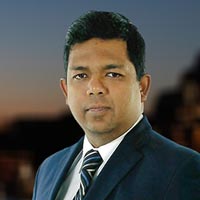 As CEO of Ekwa Marketing, Naren has over a decade of experience working with dental practices and helping them attract the ideal type of patients to their practices. It is his goal to help dentists do more of the type of dentistry they love with the help and support of effective digital marketing.