Episode 413: Leadership That Sticks: Building Change That Lasts with Liz Lord
Listen Now
In this episode of the Less Insurance Dependence Podcast, Naren Arulrajah joins Don Adeesha to unpack why some dental practices successfully reduce insurance dependence while others remain stuck. The conversation explores the critical shift from reactive, insurance-driven dentistry to proactive, value-based care. Naren shares practical insights on attracting ideal patients, building trust through marketing, and implementing systems that drive long-term growth. If you’re looking to move away from PPO reliance and build a thriving, patient-centered practice, this episode delivers both mindset shifts and actionable strategies.
Podcast: Play in new window | Download
Subscribe: RSS
Naren Arulrajah: This is the Less Insurance Dependence podcast show with my good friend Gary Takacs and myself, Naren Arulrajah.
Gary Takacs: We appreciate your listenership, your time, and most of all, we appreciate your intention to reduce insurance dependence in your practice. Our goal is to provide information that will help you successfully reduce insurance dependence and convert your practice into a thriving and profitable dental practice that provides you with personal, professional, and financial satisfaction.
Don Adeesha: If you ever wondered why some dental practices walk away from insurance networks and still have a full schedule while others feel completely stuck, this episode is for you. Welcome back to the Less Insurance Dependence podcast. I’m your host, Don Adeesha. It’s great to have you here. Today, we’re going to be digging into what actually separates thriving fee service practices from those that feel trapped by PPOs. I’m joined by none other than our very own co-host, Naren Arulrajah, the CEO of Ekwa Marketing, and someone who has spent years helping dental practices grow on their own terms. Naren, it’s great to have you back.
Naren Arulrajah: So, it’s nice to be back, Don. Really looking forward to this topic. Why do some dentists thrive without insurance while others with insurance, at least many of them, struggle?
Don Adeesha: Absolutely. Now, like you just mentioned, some dentists really do thrive without insurance. What is the biggest difference you see between those practices that thrive and those practices that struggle?
Naren Arulrajah: Yeah, so you asked a really good question, but let me kind of say this out loud. Like, I’m not saying those with PPO plans always struggle, and I’m not saying those without insurance always do well. That is not correct, right? However, the ones who have mastered the game of attracting quality patients from multiple sources and taking care of them and doing the things that they want, that they’re willing to pay for out of pocket, tend to do better. Because, you know, it’s kind of like, imagine having a coffee shop where people love the ambience, love the quality, and they’re willing to pay five, $10 per drink and maybe a snack, versus some other place. You know, they say low-end coffee, and they complain even though you are only charging $1. So, I think we have to understand human beings.
Naren Arulrajah: We love to pay for things we value, and we don’t really want to pay for things we don’t value. And the challenge, at least with a lot of PPO patients, is what is covered by insurance. So, if you are in that world where you get used to taking care of people who keep saying no, no, no, no for ideal dentistry, after a while, you kind of give up and you just become a machine that processes patients with insurance, do the minimal care, you know, drill and fill, you know, keep them from falling apart. But that’s not why dentists went to dental school to become. They wanted to change lives. They wanted to help people become healthier. They wanted to, you know, do amazing, high-quality smiles that change people’s lives. So, it’s kind of tricky if you have succumbed to this PPO patient overwhelm where, because a large number of them are all PPO patients, and their first question is, “Is it covered by insurance?”
Naren Arulrajah: You kind of give up. But, so I do think the best approach is to start attracting patients who value you, value beautiful smiles, value oral health, and they usually won’t ask the question, “How much does it cost?” Because when they value something, they pay for it. Remember, it’s the same people, before they go to that wedding, spend thousands of dollars on Botox, or the same people who go on vacations, you know, when they know they could sit home and watch Netflix, but they choose to save money and plan for something, take time off, and lose $10,000, $15,000, $20,000 between expenses and the time they took off and whatnot. But they still want to do it. So, when we want to do something, we are willing partners in that journey. When their mindset is, “Is it free?”
Naren Arulrajah: Meaning, you know, “Is it covered?” then, of course, they’re not willing partners. So, I think if I were to kind of give you one takeaway to remember as a practice owner, it’s start looking at the other side of the world, right? Half the people don’t even have insurance, so they still need dentistry. They still need oral health. They still need smiles that’s going to help them with their careers or their social happiness. So, we all have these needs, so why not cater to the needs versus becoming almost like a soup kitchen that just gives free stuff because you’re the only place that gives free stuff and people are there for the free stuff? I’m not saying drop all your plans, but why not drop one plan that is the worst offender? In many cases, when you do the math, you’ll realize you are losing money with certain PPO plans. Literally, you are better off not taking those patients in. So, why not start getting rid of these negative influences, these negative PPO plans, just one at a time, but at the same time, start attracting patients who appreciate you, who value you, who want your experience, who want your expertise, and are willing to pay for it?
Don Adeesha: Absolutely. It’s truly a realignment and looking for that value-driven, high-quality patient instead of always the high shopper, or a game changer. And now, Naren, how does marketing maturity impact the practice’s reliance on insurance?
Naren Arulrajah: That’s a great question. See, marketing maturity is a really important question. See, if you are reactive, I mean, let’s go back to basics. Do you think anyone who was reactive ever became a dentist? In other words, they just woke up one morning and just did whatever they thought. Do you think any of them ever became a dentist? No. The ones who ended up becoming dentists, they were not reactive, they were proactive. They decided to go through the pain of doing well in high school, doing well in university, getting selected to these selective, highly competitive, very expensive dental programs, going through those programs, years and years of hard work. It didn’t happen because you were reactive. It happened because you were proactive. But when you become a practice owner, nobody taught you how to be proactive about your business.
Naren Arulrajah: So you do what you were taught, which is, hey, I’m in the business of treating patients, and somebody said, sign up to this insurance plan or PPO plan and I’ll send you patients, and you did that. But the problem is now the table is being set by not you, just like you set the table in deciding to become a dentist. Now the table is being set by this third party, the PPO plan, right? They say, “Oh, the patient came one day early, we are going to deny the claim. Oh, that’s not covered. This is not covered. We’ll only cover barely enough stuff to keep the person alive. We are not going to do anything that’s going to make them happier, better smile, good for their overall health, just going to do the bare minimum,” right? So start by taking control of that. So understand what a business is.
Naren Arulrajah: A business is something that attracts the right kind of customers, takes care of them consistently, and now those customers help bring in other customers who are also the right type of customers for you. Now, having done this for 19 years, I’ve seen different models. I’ve seen practices that are very niche; they focus on a few things. I’ve seen practices that are holistic, you know, where they are really focused on the materials, and there’s a group of people who appreciate the time and effort you put into picking the right materials, doing things in a way that’s plus one in terms of a holistic standpoint versus negative, right? So there’s all kinds of people out there who are looking for different flavors of dentistry. And there are some people who are afraid to go to a dentist, and sedation is very powerful for them because they want to get a lot done, and they don’t want to have to go through the pain of getting it done, and they have stopped going there because they’re afraid of that pain.
Naren Arulrajah: There are a lot of people who want beautiful smiles, you know, fix their crooked teeth because they just hate the way their smile looks. So these people exist, and these are things they’re willing to pay for. So I think start by sitting and thinking about who is your ideal patient. It doesn’t have to be one type. It could be two or three groups, but whatever it is, what are you passionate about? What kind of dentistry makes you want to jump out of bed and build a practice that attracts those patients? Definitely, you’re not going to get them from PPO plans. We all know that because PPO plans only want the free stuff, right? So are you showing up on Google? Are you the one they are finding when they look for the things that you are passionate about, or are they finding your competition?
Naren Arulrajah: Yes, you can sign up for PPO plans, but you’re not going to get those patients from the PPO plans. Yes, you can run ads, but ads are going to be 10 times more expensive than organic search-based marketing. Why? Because these ad companies want to make more and more money every year, and the number of business owners doesn’t keep growing every year, so they have to somehow squeeze more money from you. So they’ll keep charging you more and more every year. The second thing is everyone knows it’s an ad, so they don’t trust you. They start the relationship with distrust. When they start the relationship with distrust, you will have a lot of people fall through, like no-shows, and they don’t come back, and all that kind of issues. And it’s really, really hard to earn their trust. So I really think start by understanding what is good marketing in the context of a good business.
Naren Arulrajah: Good marketing is something that helps you attract the ideal patient and get them to like you and trust you. That’s what good marketing is. And then, are you doing those things that make sense from the perspective of good marketing? Like, for example, are you showing up or ranking for hundreds of keywords? When I type in specific keywords related to dentistry in your area, if you are, then hey, you are an A-plus when it comes to helping people find you. If you are not, go fix it. How do you show up for every type of keyword to do with all the types of dentistry you are willing to do, especially the ones where people are willing to pay money for? If you’re not showing up, go fix it. And now, okay, fine, you are ranking. Let’s say you are in the top 5%, you are being seen a lot, but for some reason you’re not getting calls.
Naren Arulrajah: Is your website easy to load on mobile? Is it easy for somebody to call? One of the mistakes I see practice owners making is putting a “Book Now” button that’s linked to some kind of third-party software. And this third-party software is really, really complex, meaning so many screens, takes 10–15 minutes. They don’t know you, they don’t like you, they don’t trust you. Why would they spend 10–15 minutes answering very private information when they don’t even know you, they haven’t even spoken to you? Instead, are you working on your phone so where you are converting, hopefully, 70–80% of new patients who are calling you? Do you even know what your call conversion rate is? Do you even know how many new patients are calling your office? So once you understand this whole funnel, you can start really looking at which part of the funnel is broken and you can start fixing it.
Naren Arulrajah: If SEO is broken, meaning people are not finding you, fix that. If your landing pages are broken and they’re not really convincing people to call you, fix that. If your phone experience is broken, fix that. If you have these “Book Now” buttons that are taking away from your number of new patients and instead killing them because they don’t trust you, and therefore they jump out of that page, the “Book Now” page, and they never call you, fix that. So find out what’s wrong. I think the most successful people I know, they know what the problems are, and they focus on putting their time and energy into fixing those problems. They don’t waste their time going in circles.
Don Adeesha: Absolutely. And that’s a big shift from relying on insurance to really refocusing on a full-funnel, trust-based marketing framework. Now, Naren, some dentists believe that success without insurance is mostly about mindset. Others say it’s about systems. Which one matters more?
Naren Arulrajah: No, that’s a great question. I do think it’s both. Like I talked about, nobody who is reactive became a dentist. Similarly, nobody who’s reactive with their practice, taking any patient from a PPO plan and hoping and praying somehow things will work out, has become successful. The proactive ones who know what they want, like who is my ideal patient, how do I attract them, am I attracting them, are they finding me versus my competition, you know, what are my Google reviews, do I have enough new five-star Google reviews showing up every month, because that’s key to continue to make this marketing machine a successful marketing machine, attracting the ideal patients better and better, stronger and stronger. So I think the mindset is where everything starts. So you have to understand, if you want to take control of your life, if you want to take control of your practice and jump out of bed and go to work on Monday morning, and you want your team to feel that way, then you have to attract your ideal patient.
Naren Arulrajah: There’s no two ways about it. If you start with the wrong patients whose first question is, “Is it covered by insurance?” then it’s like going to a mine and working underground and hating your life and hating your job. It’s just so hard and so painful, right? Versus if you are attracting the right patients and you get to spend time with them, take care of them, do the kind of dentistry you want, and get paid handsomely for it, and they thank you for it and they appreciate you for it, that’s a fun experience. That’s the experience not only you want to jump out of bed and go to work for, but your team wants to jump out of bed and go to work for. So understand the mindset is key because without that, nothing changes.
Naren Arulrajah: Just like the mindset that made you a dentist, like the commitment and the mindset, then the systems. Like when you became a dentist, I bet you had study habits. Those were the systems that made you successful. You knew all the key things that were important. Perhaps you had to face an interview. I bet you prepared for that interview. So you figured out all those key things you need to do to succeed in every step of the way. Same way, you have key things you need to do in your business to succeed. Those are called systems. Those are things you never not do. Like, for example, are you getting 10 or more five-star Google reviews every month, love-letter paragraph reviews? Is your conversion rate, like the number of new patients who are calling who are booking appointments, 70% or higher?
Naren Arulrajah: What percentage of your calls are being missed? Is it less than 5%? Are you wasting leads with all these “Book Now” buttons that are killing your business? Again, those are the systems. You will have incorrect systems and you’ll have correct systems. Once you know what the correct systems are, are you making sure you are looking at it consistently every month, some every week, some every quarter? If you do those things, you will do well. I mean, those who became successful in anything, right, whether you became a dentist or whatever, they didn’t kill themselves. They figured out how to play the game. Those are the systems. They figured out what are the key things they need to pay attention to. It starts with the mindset, and then, of course, systems finish the story.
Don Adeesha: Absolutely. Now, help us figure out this game. Naren, what are some of the lessons that you have learned from practices that have successfully reduced or completely eliminated PPO participation over the years?
Naren Arulrajah: That’s a great, great, great question. So I’m talking about, you know, if you are not going to depend on PPOs, you have to depend on an alternative, right? You have to depend on another way of attracting patients. Once you know your ideal patients, one of the things you need to focus on is visibility. So are you being seen again and again organically without ads when people in your local area are looking for these things? That’s where AI search, local search maps, SEO, all of these things come into play. Of course, nowadays you also have to pay attention to ChatGPT and Perplexity and Gemini, in addition to Google, which is still, like, a hundred times bigger than all these other guys in terms of sheer volume of how many times we use Google.
Naren Arulrajah: So are you showing up? So that’s visibility. So solve the visibility problem, because you can have the dream you want, but if the people who you need to get to that dream are not finding you, who cares? You’re going to lose the game. Second is the trust game, right? That’s where the 10-plus five-star paragraph reviews come in. That’s where those cases on your website come in, making it easy for them to call your office. Is the language easy? Are you giving them the information they want? If I’m on your implants page, don’t tell me about anything outside of implants, just tell me about implants because I’m interested in implants. If I’m on sedation, tell me about sedation. Tell me how you can make me enjoy this experience versus dread going to a dentist. So are you personalizing things?
Naren Arulrajah: So these are all things you can do on the visibility and trust side. So those are some of the lessons that I have learned over the last 19 years. Success, there’s like a few tricks, a few keys to success you need to focus on: visibility, trust. Those are huge. So are you doing those things? Are you doing well? And I think we talked about the mindset, right? That’s the other part of the lesson, right? If you are resigned, and if you imagine you being a dental student and you just are like, “I give up,” you’d think you’ll become a dentist? You won’t. You never gave up. You had a vision, you had a mindset, you had a set of things you wanted to achieve with your life, and you went after it and you did all the systems or the success factors. So start with the mindset.
Naren Arulrajah: I’m sick and tired of letting PPOs dictate who my patients are and what kind of dentistry I do. I’m going to take that into my own control and start recruiting people. Start motivating your team to say, “We are going to make the shift. We are going to do the dentistry we love. We are going to take care of patients the way we want to be taken care of,” versus, “Oh, it’s not covered by insurance. Too bad, too sad.” Would you do that to your son, like ignore something because it’s not covered by insurance? You won’t. Why are your patients indifferent, right? You came there for a reason. You gave 10 years of your lives to become a doctor for a reason. Why not follow through? So start by attracting the ideal patients, then put the systems in place that make you successful, and then just keep at it.
Naren Arulrajah: Like, you know, call conversion, check it every month. If it’s down, have call coaching. So that’s something we help our clients with, you know, so find out where the problems are and solve it. Once you solve it, you will have a perfect mindset and a perfect set of systems all working together, and every year will be better than last year. Like, this is why 90% of our clients never leave us. As they understand this success formula, just like the success formula to becoming a dentist, and they start following it, they’ll get better and they get better outcomes for less effort, less money.
Don Adeesha: Gotcha. Visibility, trust, mindset, and then, of course, perseverance, keeping at it. For our dentists listening in today who want to move toward thriving without relying on insurance, what should they focus on first?
Naren Arulrajah: Yeah, I think the first step is understanding how patients currently find and choose your practice. At Ekwa Marketing, one of the things we offer at no cost is what we call a marketing strategy meeting, where we spend a lot of hours looking at you, looking at your competition, telling you what you’re doing right, what you can improve, like giving you a report card, of course, in the context of your competition. If you have no competition, you know, a C student might be okay, but if you have competition, you have to rate, you know, it’s kind of like dental school, right? There is competition. If you are a C student, you’re not going to become a dentist. Same thing here. So looking at the competition in the world you live in versus where you are, and then getting that report card that tells you where you are.
Naren Arulrajah: And then second, giving you the root cause. Okay, you’re getting a C in chemistry. Okay, here are some of the things you can do to turn that C into an A or a B next semester and an A the following semester. So you need a plan, you need a strategy, right, to solve these problems. So that’s what we do. And the link for that is lessinsurancedependence.com/marketing-strategy-meeting. We are going to make it also easy, and we are going to give you another link, lessinsurancedependence.com/msm. So just go to that link, book that meeting, and, you know, crush it.
Don Adeesha: There we go. Naren, I would like to say thank you once again for coming in and really giving us the keys to reducing insurance dependence and reframing the conversation and empowering our dentistry. With that being said, that’s a wrap for this episode on the Less Insurance Dependence podcast. It’s been my pleasure. Your host, Don Adeesha, thanks for listening, and we’ll see you on the next one. Take care.
Naren Arulrajah: Thank you so much, Don. I really enjoyed our conversation. Appreciate it.
We love to pay for things we value, and we don’t want to pay for things we don’t. The key is attracting patients who truly value what you do.
Naren Arulrajah
It’s really about a shift, from relying on insurance to building a practice around value-driven, high-quality patients.
Don Adeesha
 One of Gary's most significant achievements as a dental practice management coach is transforming his own practice, LifeSmiles, from one that was infected with PPO plans, no effective marketing strategy, and an overhead of 80% to a very successful dental practice that is currently one of the top-performing practices in the US.
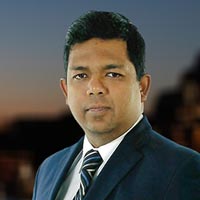 As CEO of Ekwa Marketing, Naren has over a decade of experience working with dental practices and helping them attract the ideal type of patients to their practices. It is his goal to help dentists do more of the type of dentistry they love with the help and support of effective digital marketing.